
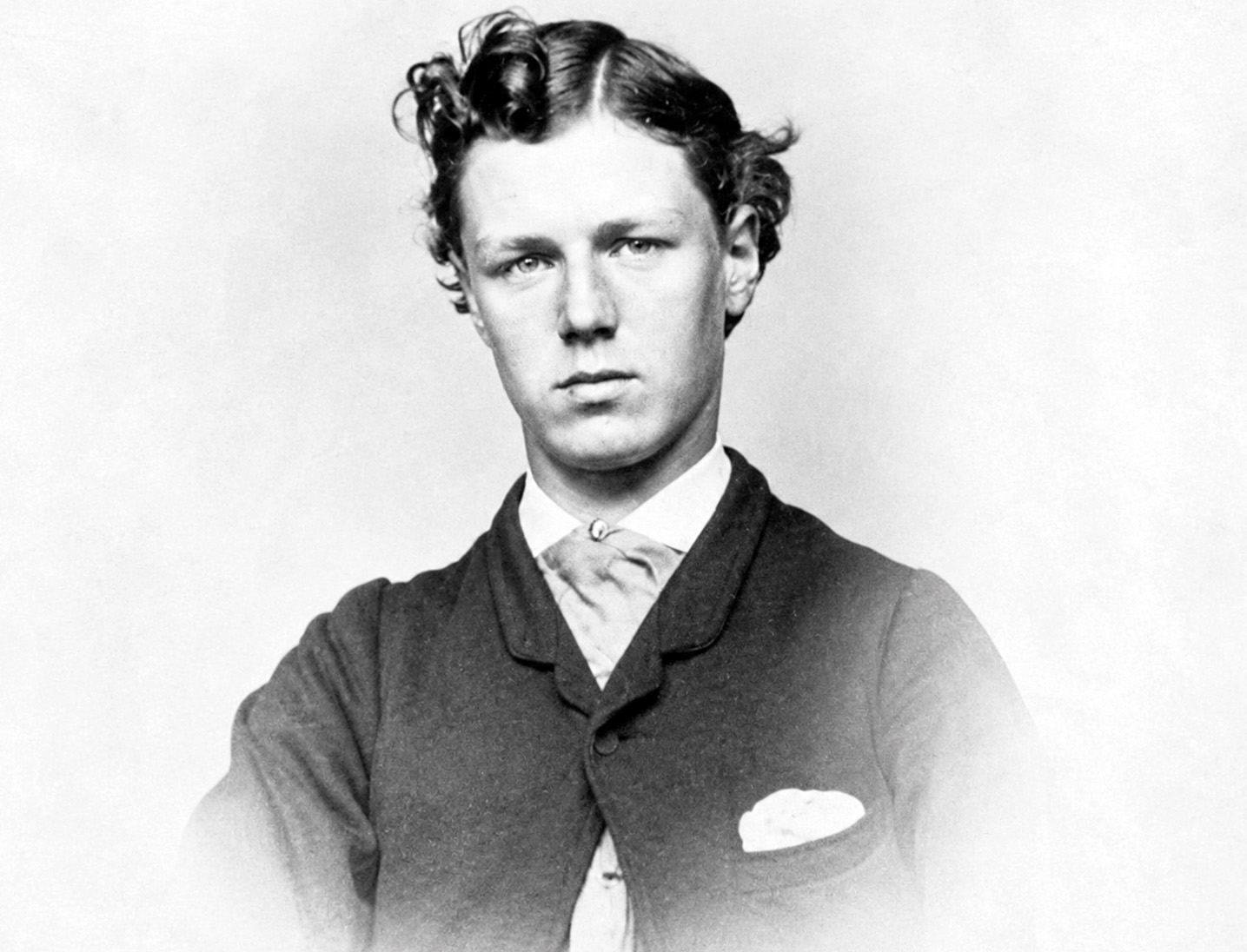
Young man in a Carte de Vista photograph taken by William Bell of Jedburgh, Scotland /
Some might think selfies, photos people take of themselves and share online, were one of the first ways people used photography for self-branding. But I think photography had been used for that purpose much earlier.

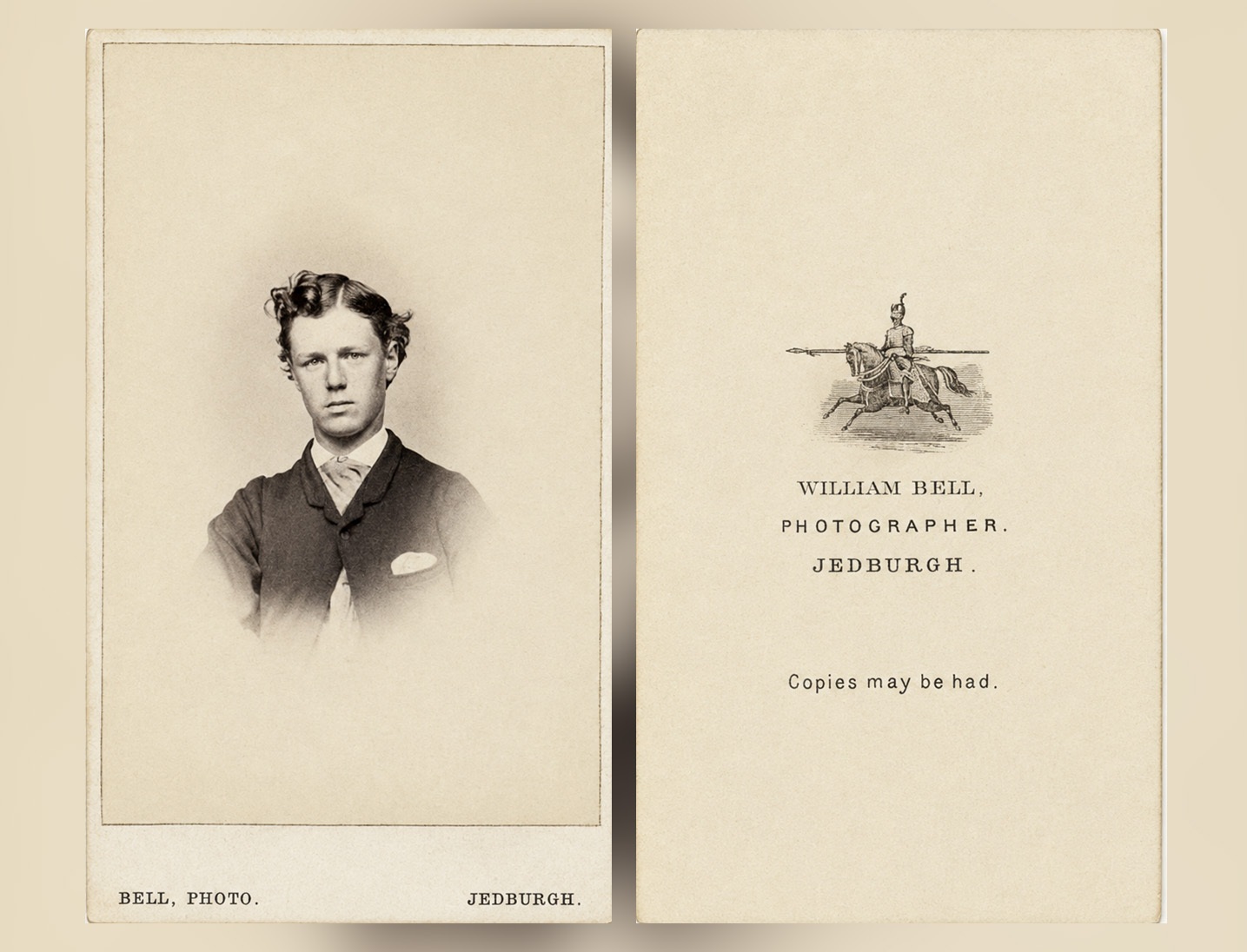
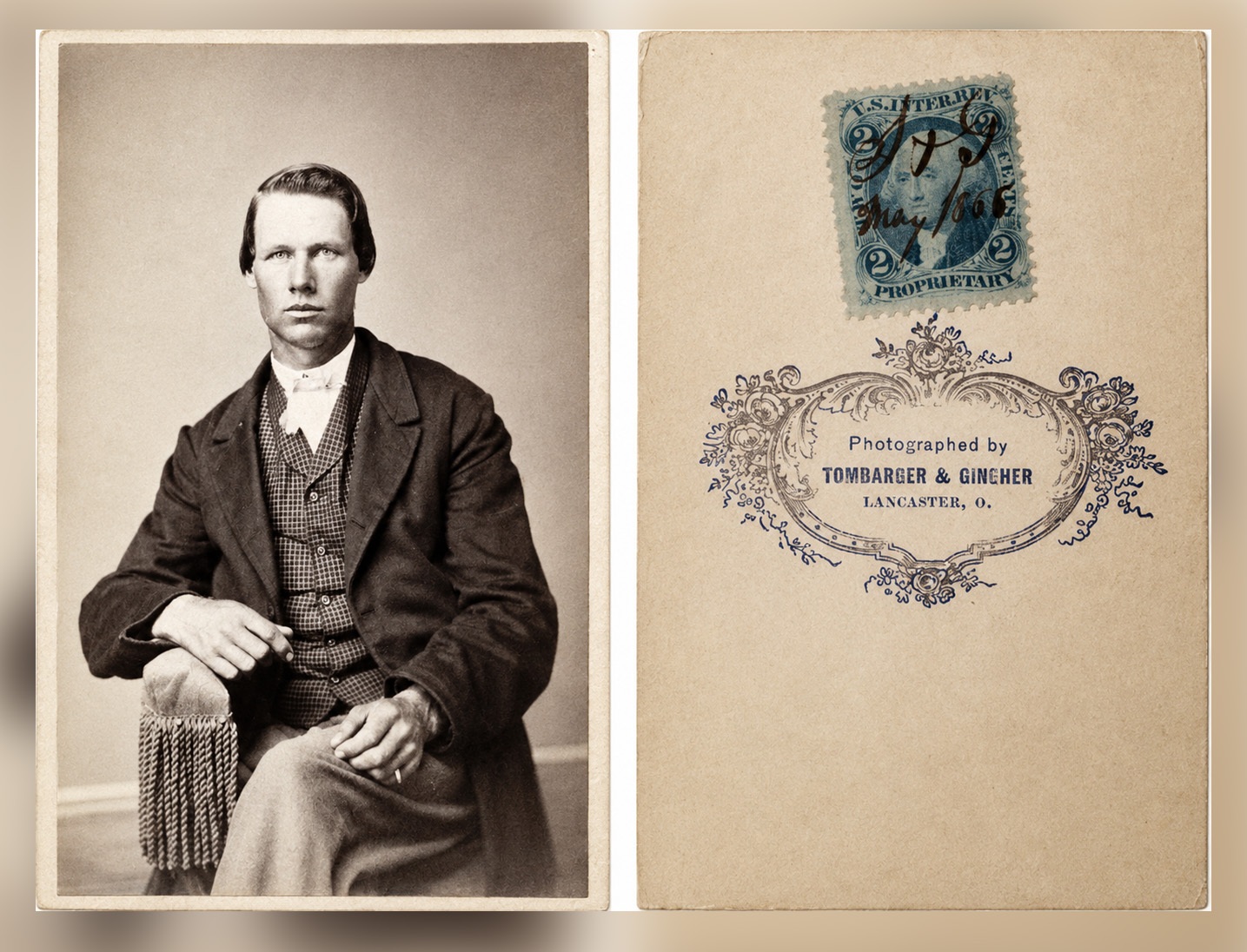
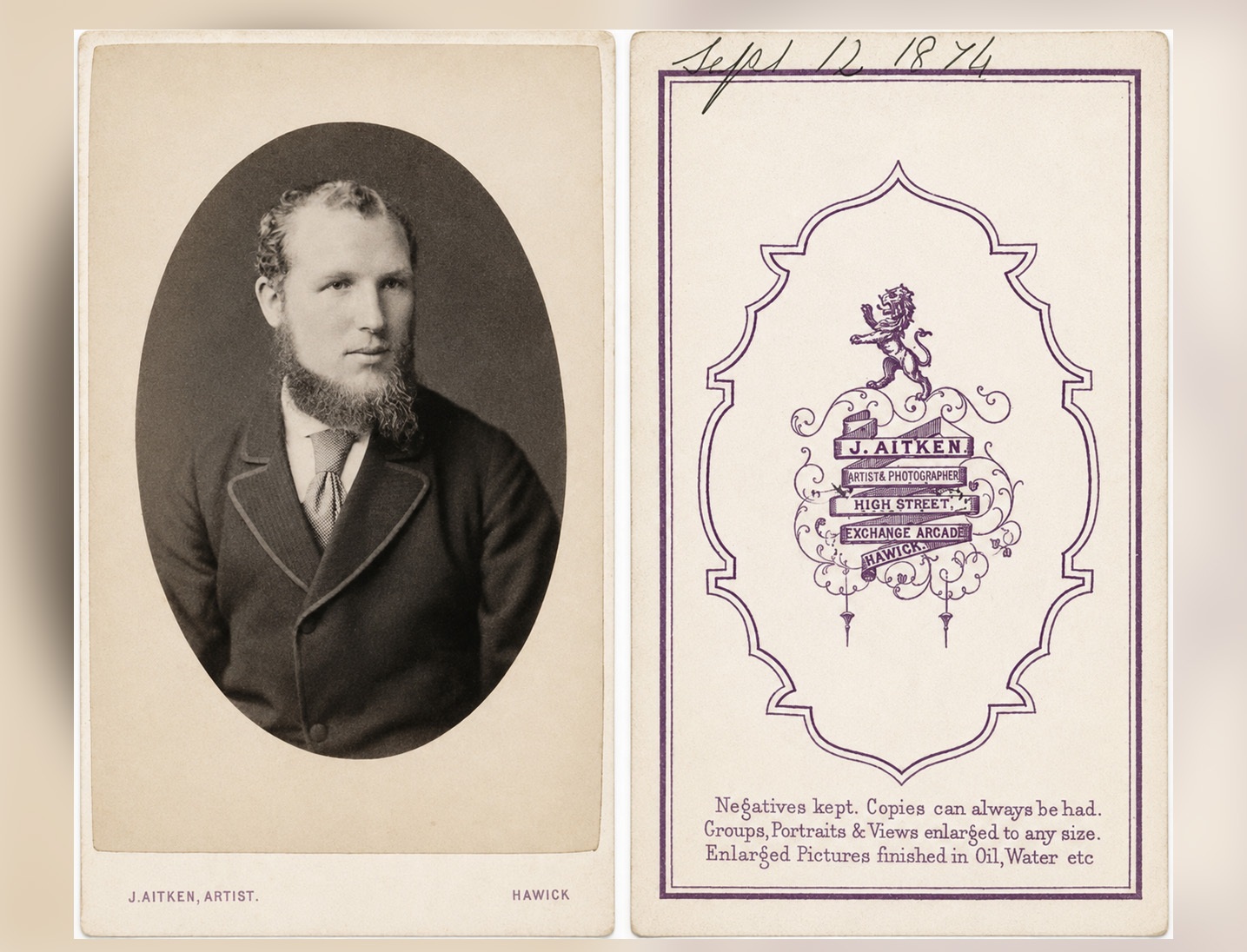
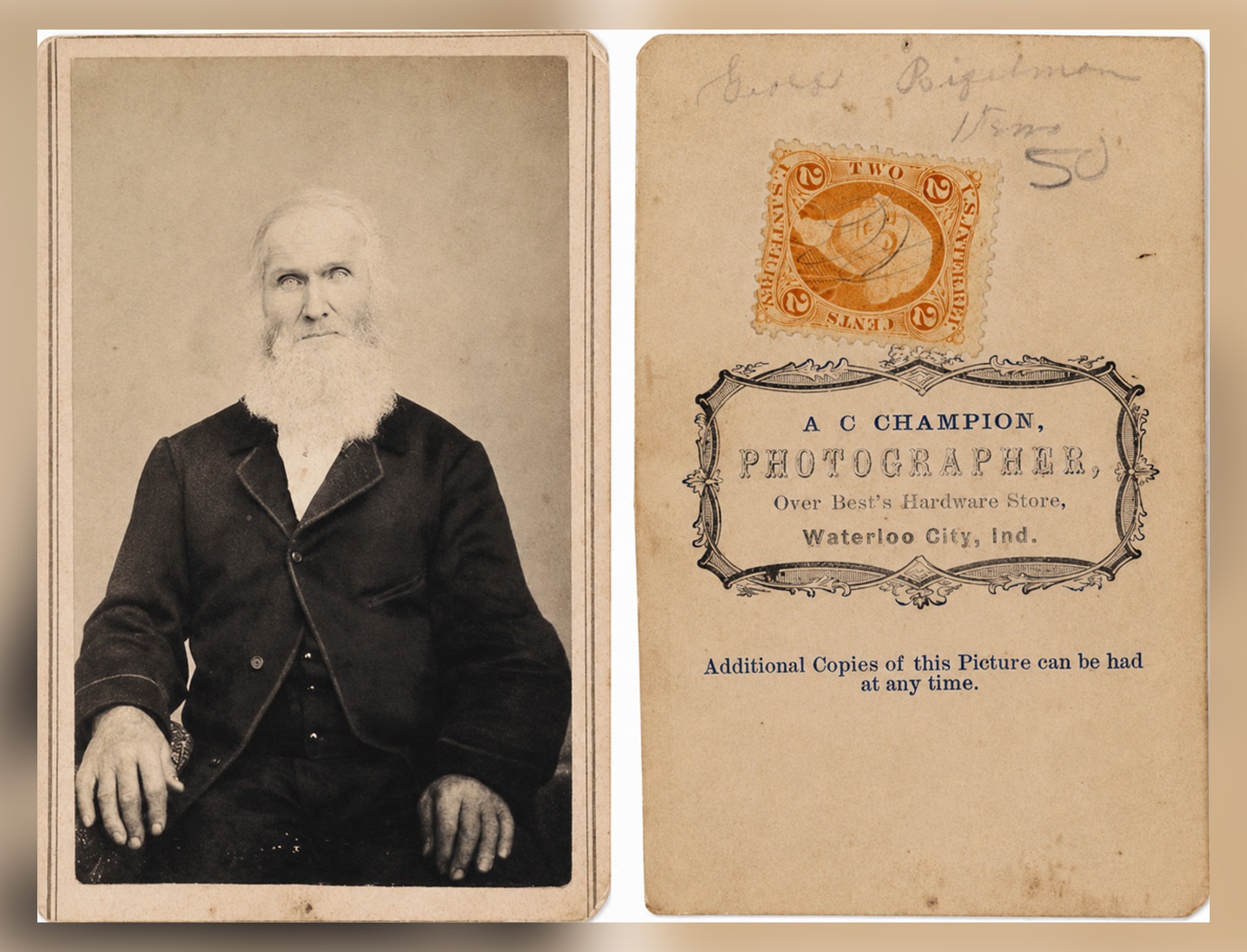
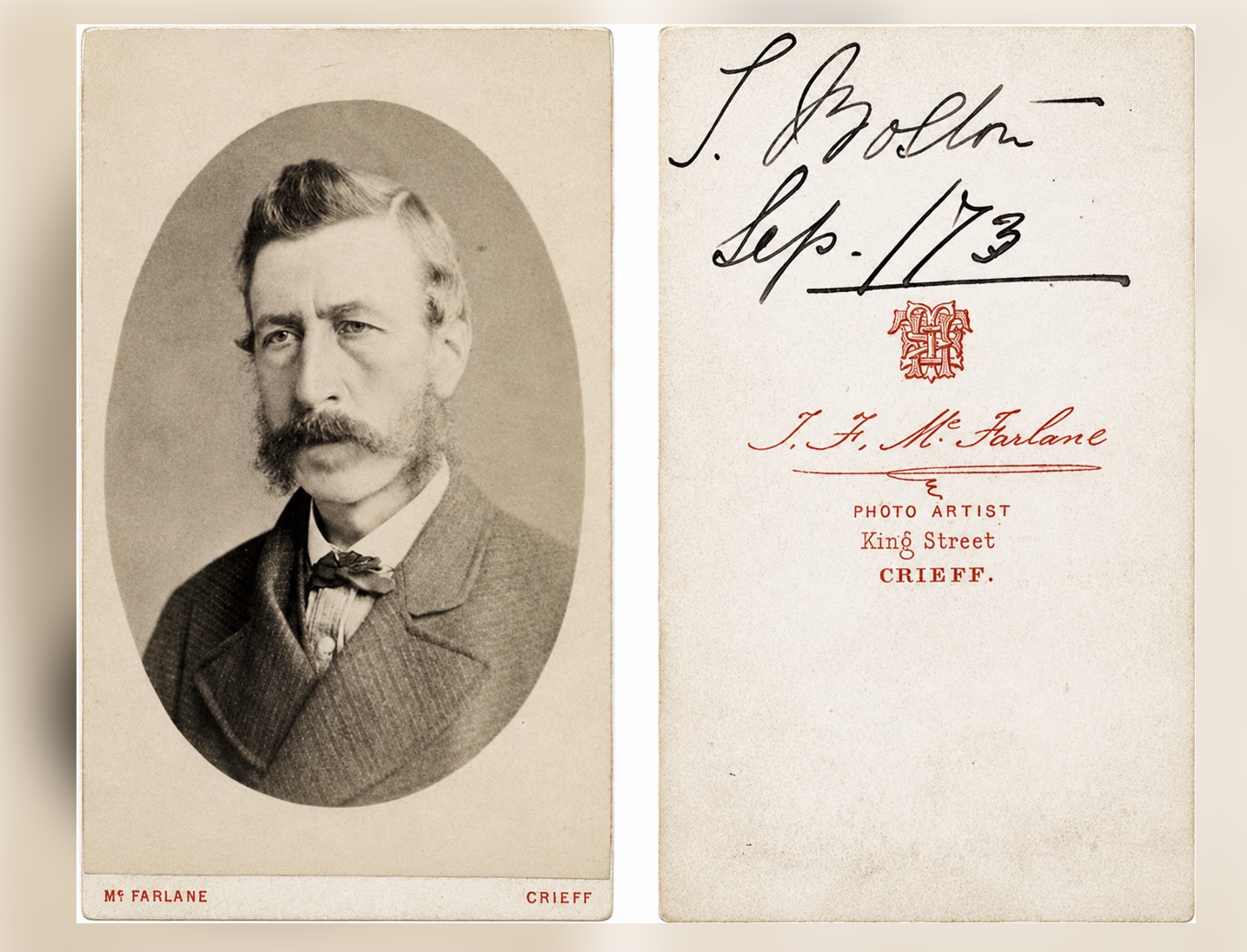
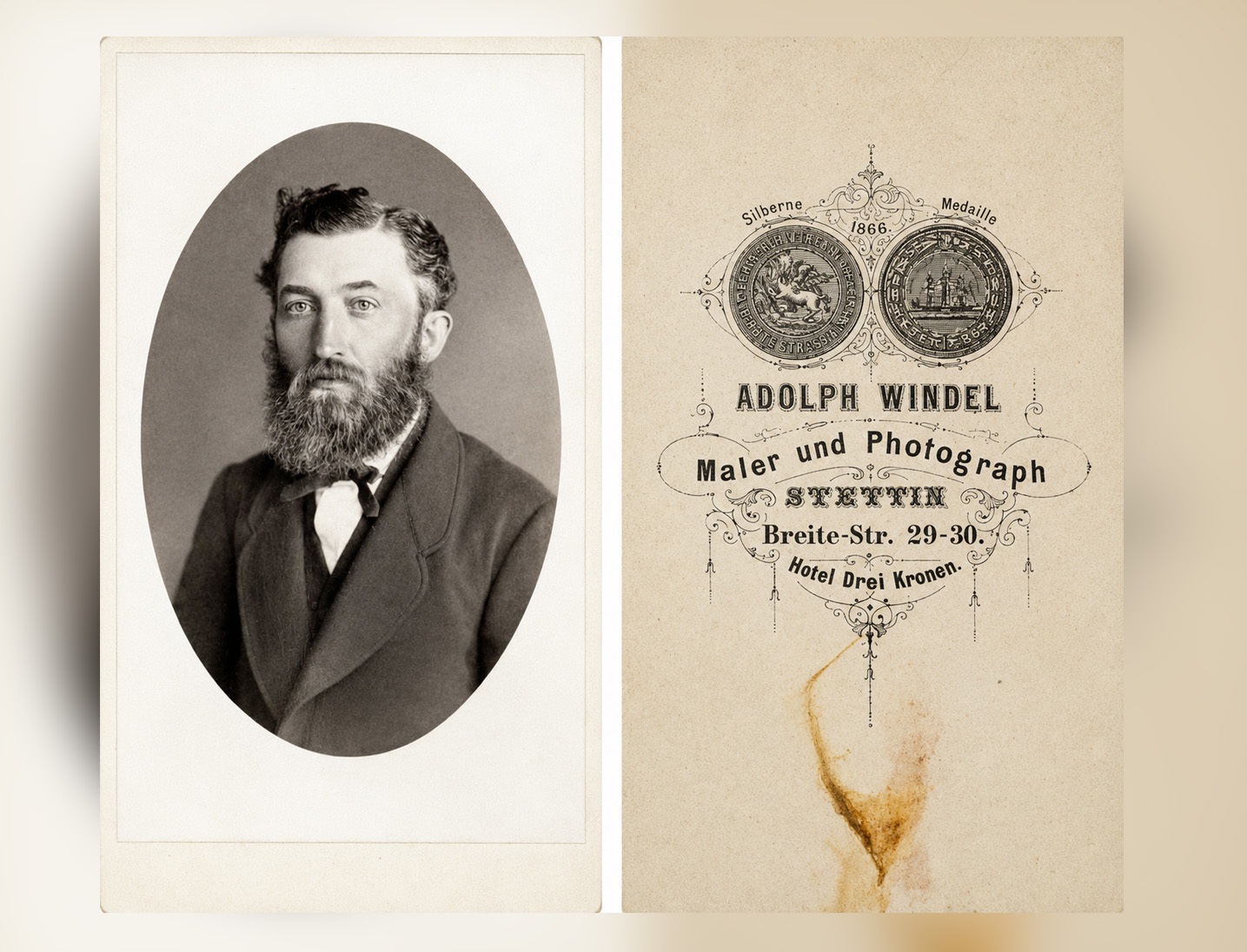
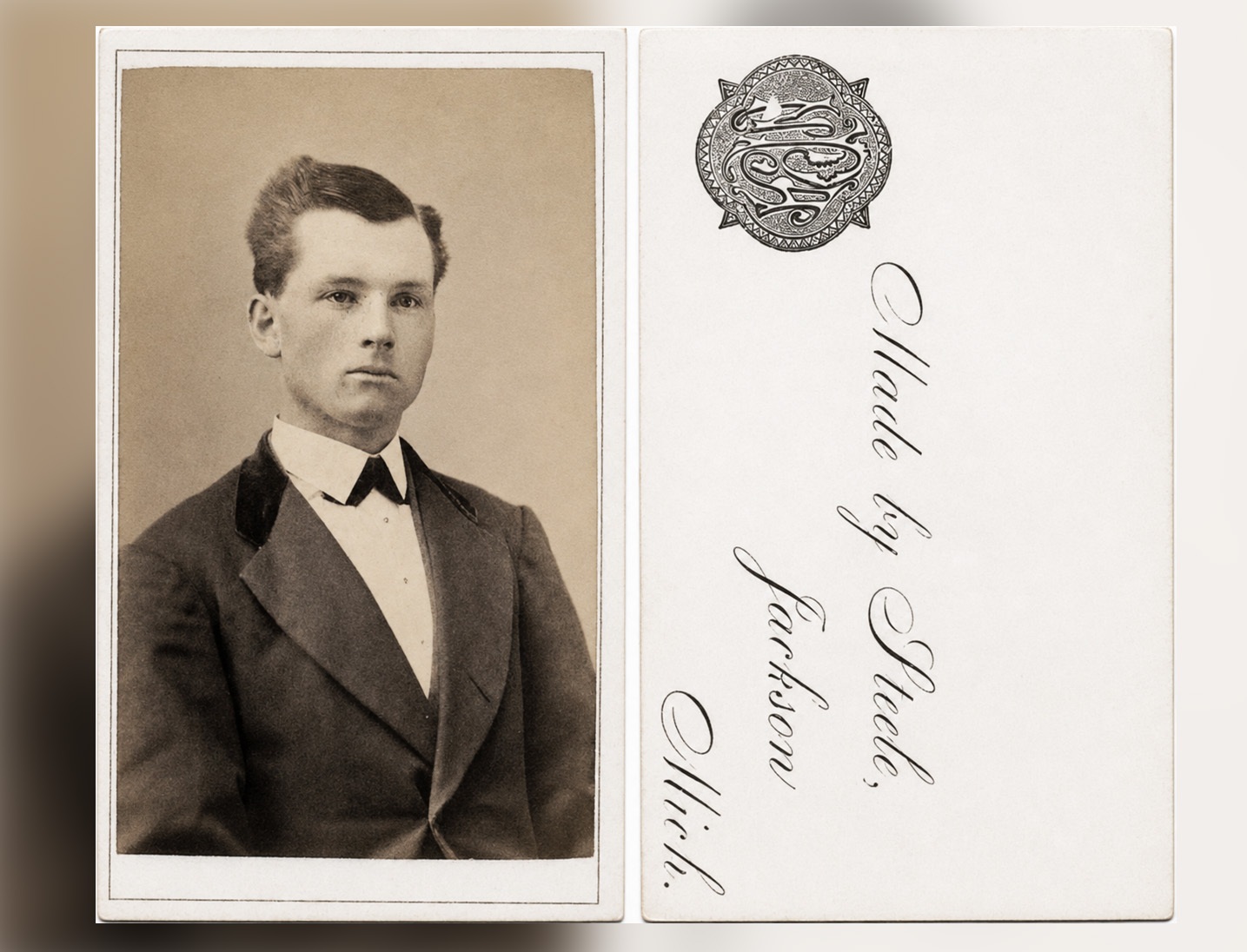
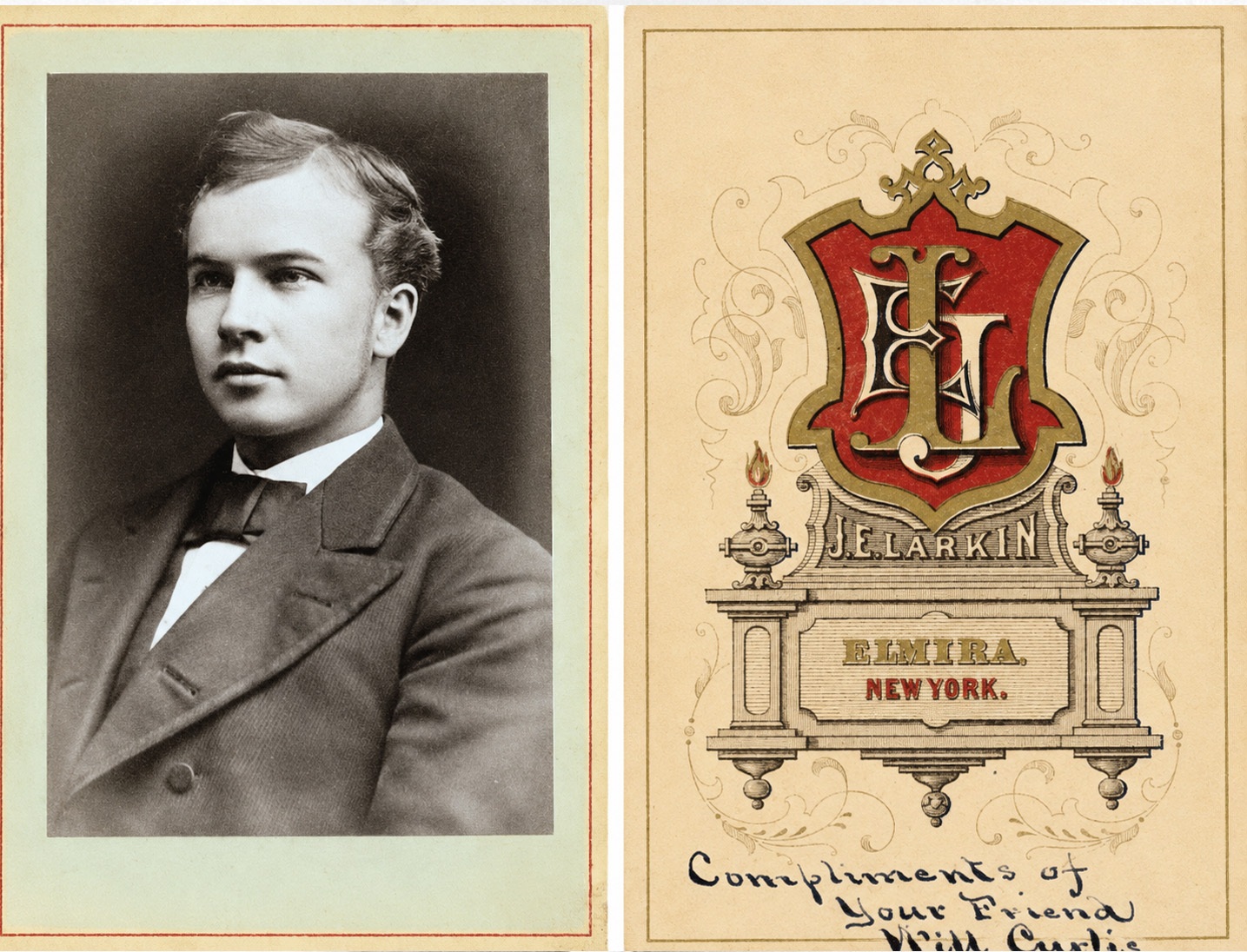
I recently purchased a collection of 75 photos on eBay. They were identified as cartes de visite cards, or CDVs, and to be honest, I had no idea what I was buying. They just looked interesting. Below is a gallery of a few cards from the assortment. Most are photos of men, although there are a few of couples, too.

This CDV in the collection I purchased was taken by William Bell, a photographer in Jedburgh, Scotland. Rutherfurd’s 1866 directory lists Bell at 30 High Street as a “druggist and photographer,” a combination that makes sense in the early days of photography, when the process depended heavily on chemicals and careful preparation.
A carte de visite, French for visiting card, was a small photograph printed on thin paper and mounted on heavier card stock. The process was patented by French photographer André Adolphe Eugène Disdéri (1819-1889) in 1854 and allowed photographers to produce several images on a single glass-plate negative. Sharing portraits this way became so popular that cardomania, as the craze was called, spread across Europe and into the United States.
In the mid-19th century, visitors often left calling cards when they called on friends or acquaintances. With the development of a more affordable photographic process, they could leave behind a portrait instead.
Parlors in wealthy and middle-class homes often included baskets or albums filled with CDVs of friends and family. I guess it was the first friends list.
About the same size as a baseball card, CDVs can often be dated by their mounts, borders, corners and the photographer’s imprint. Early examples were generally plainer. Later examples often had printed borders, heavier card stock and more elaborate advertising on the back.
In 1863, physician and writer Oliver Wendell Holmes Sr. (1809-1894) captured the craze when he wrote:
“Card-portraits, as everybody knows, have become the social currency, the sentimental Green-backs of civilization.” 1
Many of the backs were printed or stamped with advertisements for the photographer. Some photographers hired illustrators to help create brands for their studios, and many kept negatives on file for customers who wanted reprints. “Additional copies can be had at any time” appears on the back of many CDVs. Some studios even advertised 6 for $1, making the photographs affordable for many more people.
According to “Victorian Cartes-de-visite” by Robin and Carol Wichard, both Queen Victoria (1819-1901) and Empress Elisabeth of Austria (1837-1898) were passionate collectors. Queen Victoria eventually filled 36 albums with photographs, and Empress Elisabeth used her position to seek portraits from around the world, including women from the harem of the sultan of Turkey. 2
This form of photography for the masses gave the profession a financial boost and helped introduce the concept of celebrity photography.

Alexandra, Princess of Wales, with her daughter Princess Louise, photographed by W. & D. Downey, September 1868. Albumen carte-de-visite. National Portrait Gallery, London, NPG x22090.
An article in The Photographic News on Feb. 27, 1885, said one of the most popular CDVs had sold more than 300,000 copies: a photo of Alexandra, Princess of Wales (1844-1925), carrying her daughter, Princess Louise (1867-1931), on her back. 3 That detail is difficult not to read through a modern lens, knowing that 112 years later Diana, Princess of Wales (1961-1997), died after a car crash in Paris while being pursued by paparazzi.
Americans also became obsessed with CDVs that depicted people with unusual physical features, including conjoined twins and bearded women, along with performers who traveled with circuses and Wild West shows. Leave it to us to create the equivalent of a 19th-century reality show.
From Aug. 1, 1864, to July 31, 1866, CDV photographs were taxed to help pay for the Civil War. If a CDV has a revenue stamp on the back, it is a good sign the photograph was sold during that period, although the original negative may have been taken earlier. CDVs were especially popular among soldiers who wanted something to leave behind as they headed off to battle or a way to hold on to memories of friends and family back home.
Some of the cards in the batch I purchased on eBay include the subject’s autograph, which makes them even more compelling to me. These people, many of whom have otherwise been forgotten, left behind a physical reminder that they were here.
By the early 1870s, the CDV craze had begun to fade as cabinet cards gained popularity. Cabinet cards were a larger format, and they remained popular until the early 1900s, when snapshot photography became easier and less expensive after Eastman Kodak introduced the Brownie camera in 1900.
In 1861, Disdéri was considered the richest photographer in the world. But he did not hang on to the money he made. As demand for CDVs faded, so did his fame and fortune. After moving to Nice and trying to rebuild his career, he returned to Paris, where he died destitute in a public hospital in 1889.
For more of my genealogy research, visit rscottwilliams.info.
Gallery of Carte de Vista Cards
- Oliver Wendell Holmes, “Doings of the Sunbeam,” The Atlantic Monthly 12, no. 69 (July 1863): 8. ↩︎
- Robin Wichard and Carol Wichard, Victorian Cartes-de-Visite, Shire History in Camera 13 (Princes Risborough, Buckinghamshire: Shire Publications, 1999), 33. ↩︎
- “Notes,” The Photographic News 29, no. 1382 (February 27, 1885): 136. ↩︎


Leave a Reply