
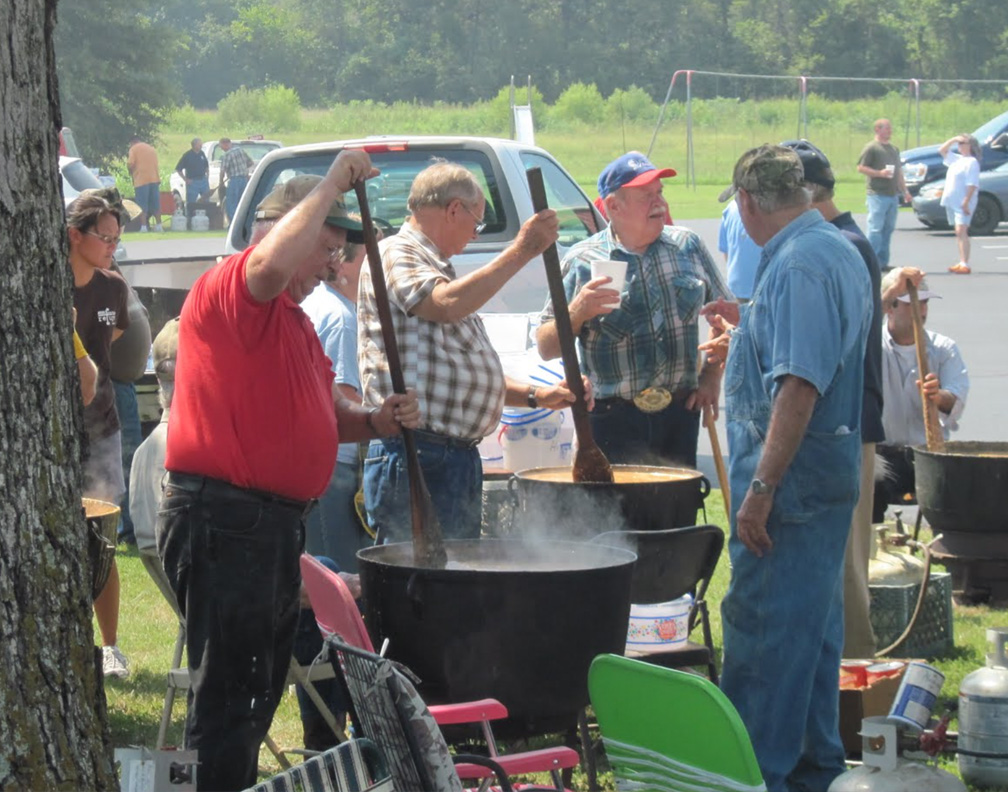
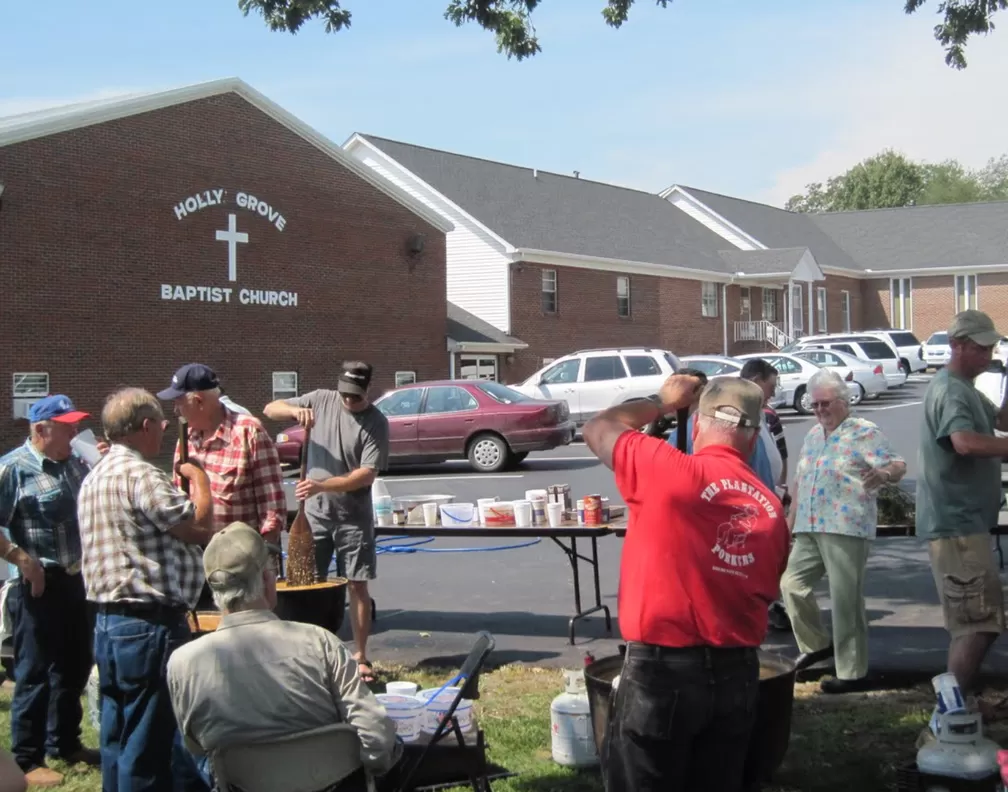
This weekend, Michelle and I attended a “stew” at Holly Grove Baptist Church in Haywood County, Tennessee.
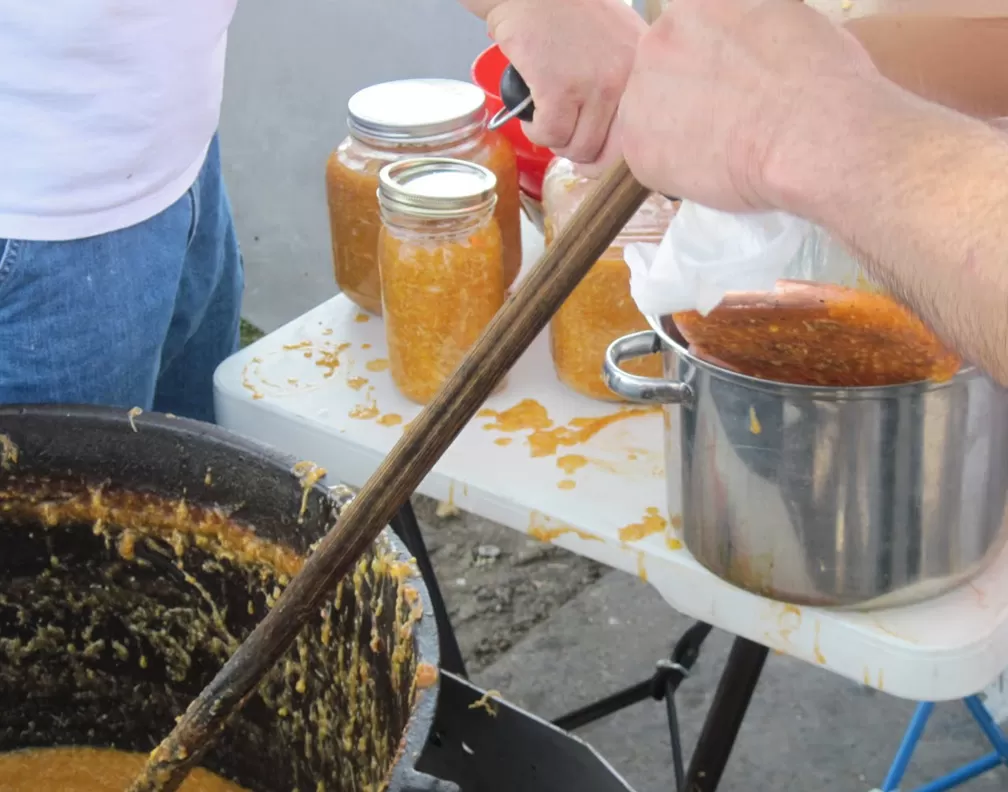
When I was a kid, both sets of my grandparents seemed to keep an endless supply of stew in jars. They brought it out anytime the family gathered to eat. This particular kind of stew tastes unlike anything I have encountered anywhere else in the world.
Holly Grove Baptist Church holds a prominent place in my family history.
Around 1875, my third great-grandmother Nancy Marianna Johnson Castellaw (1844-1921) donated the land for a school on the site. In 1886, Dorsey H. Watridge (1840-1890), the brother of my third great-grandfather, donated the land next door for the church. In 1900, Jeremiah Fletcher Castellaw (1847-1915), the brother of my second great-grandfather, donated the land for the church cemetery.
My father attended Holly Grove as a boy, and his parents belonged to the church for many years. Many of my ancestors rest in the cemetery there.
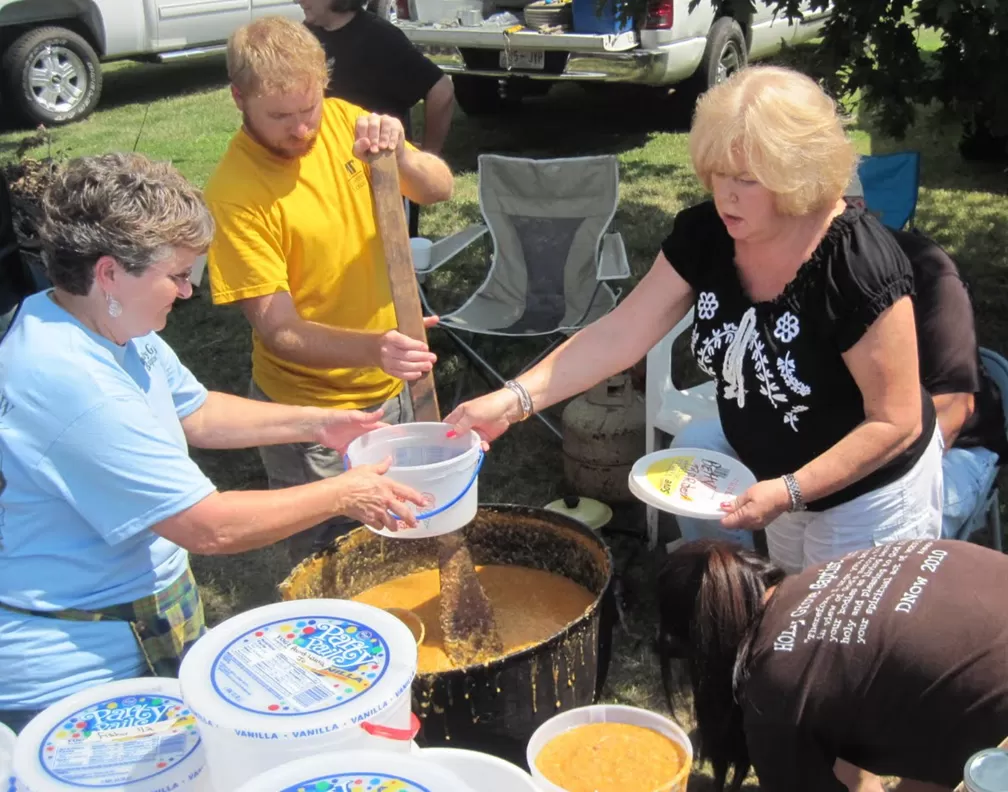
Each year, the church hosts a stew as a fundraiser.
“Haywood County is one of the oldest towns in West Tennessee. It has grown because of productivity of the cotton lands of Hatchie River. A distinctive activity is the making of Old Virginia Brunswick Stew. For many years, Brunswick stew suppers, with squirrel as a meat base, have been held in Haywood County, usually around the small lakes or clubhouses of the river bottoms.”
In 1939, the Federal Writers’ Project’s “Tennessee: A Guide to the State” called the making of Old Virginia Brunswick Stew a “distinctive activity” of Haywood County and noted that local stew suppers had taken place for years around small lakes and clubhouses in the Hatchie River bottoms. The old version used squirrel as the meat base.1
Today’s church stews usually rely on chicken and beef, but the idea remains the same: a big pot, a long day of cooking and enough food to pull a community together.
Brownsville even had a commercial stew business. National Register documentation for Brownsville says Edward Sturdivant brought his wife’s Virginia family recipe for Old Brunswick Stew to Haywood County in 1849, built a stew factory on Wilson Avenue and sold the product across the country. 2 By the 1920s, Sturdivant Packing Co. advertised Old Virginia Brunswick Stew from Brownsville in newspapers outside Tennessee. 3
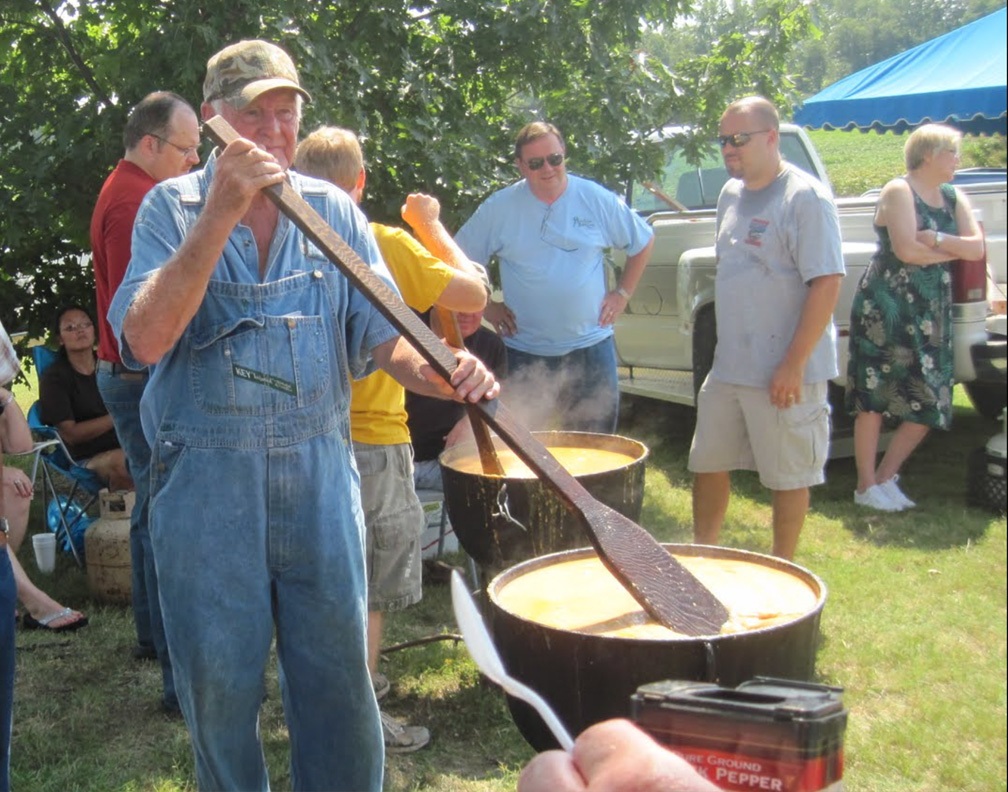
So when Holly Grove Baptist Church stirs a 20-gallon pot today, it continues more than a fundraiser. It celebrates one of Haywood County’s most distinctive food traditions.
If you want to make your own batch of Haywood County stew, try this recipe from Milton Booth (1940-2021) and Becky Stewart Booth, who also appear in the video above. They have another family connection to me: My second-great-grandfather rests in one of Milton’s fields.
If you tackle this reciepie, ytou may want to invite a few friends over. It calls for 18 chickens and two roasts.
| Haywood County Brunswick Stew 18 chickens 2 beef roasts 3 gallons tomato juice 3 gallons ground corn 4 cups sugar Salt and pepper to taste Use a 20-gallon pot. Cover the chickens and roasts with water. Cook until the chickens finish cooking. Remove the bones. Add sugar and tomato juice. Cook for about one hour. Add corn. Stir continuously. Season to taste with salt and pepper. |
- Federal Writers’ Project of the Work Projects Administration for the State of Tennessee, Tennessee: A Guide to the State (New York: Hastings House, 1939), 462. ↩︎
- National Park Service, Historic Resources of Brownsville, Tennessee (1823-1964), National Register of Historic Places Multiple Property Documentation Form, 2014, section E, 6; section F, 15. ↩︎
- Sturdivant Packing Co., advertisement for Old Virginia Brunswick Stew, Griffin Daily News (Griffin, Georgia), July 24, 1925, 4. ↩︎


Leave a Reply