
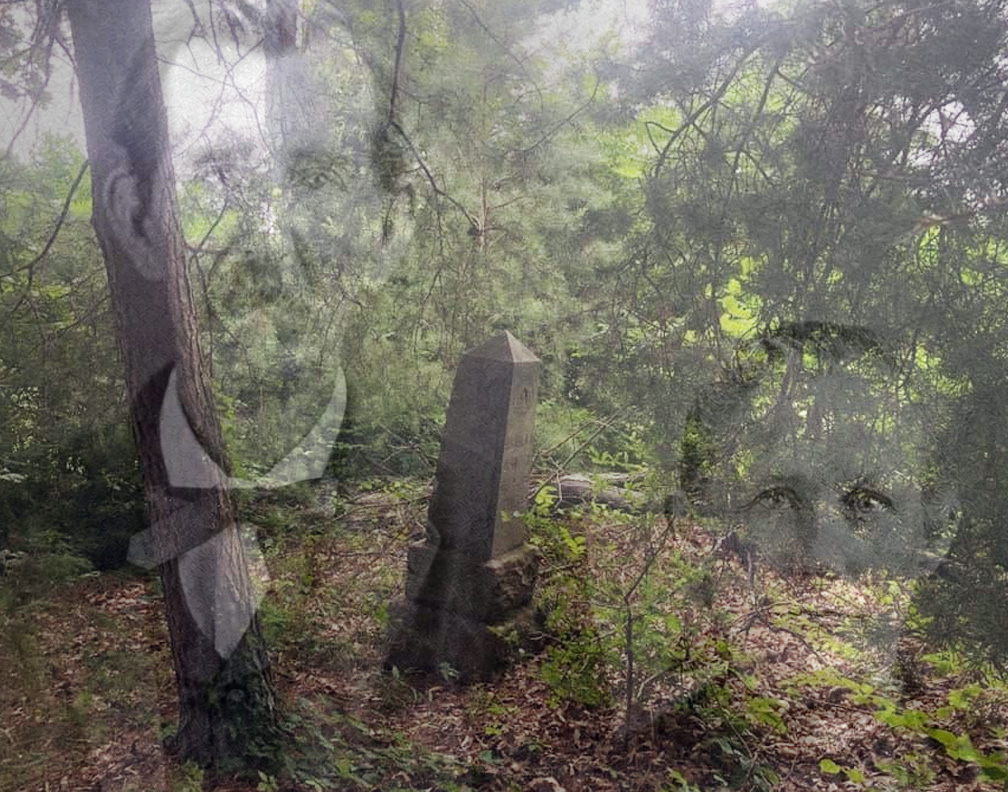
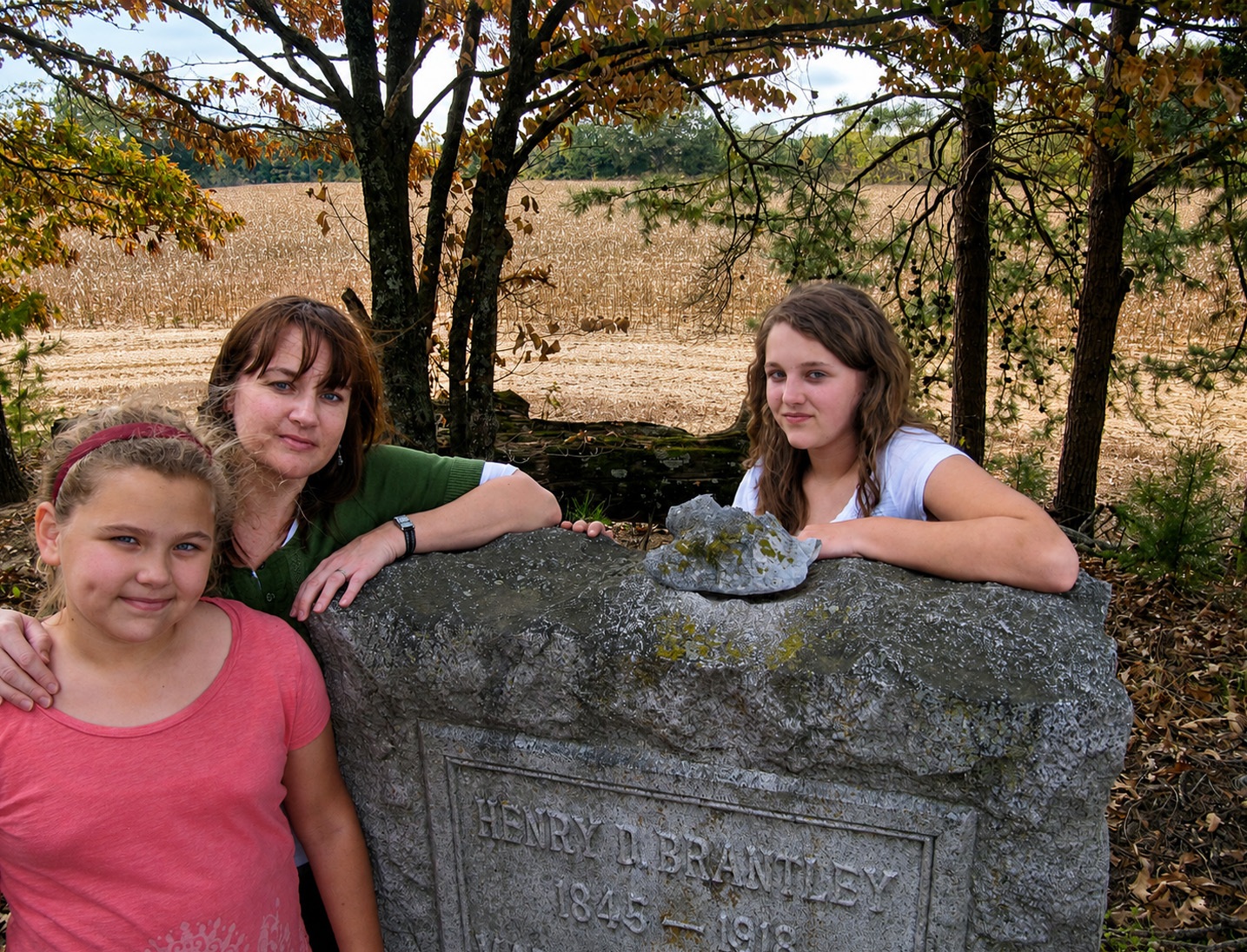
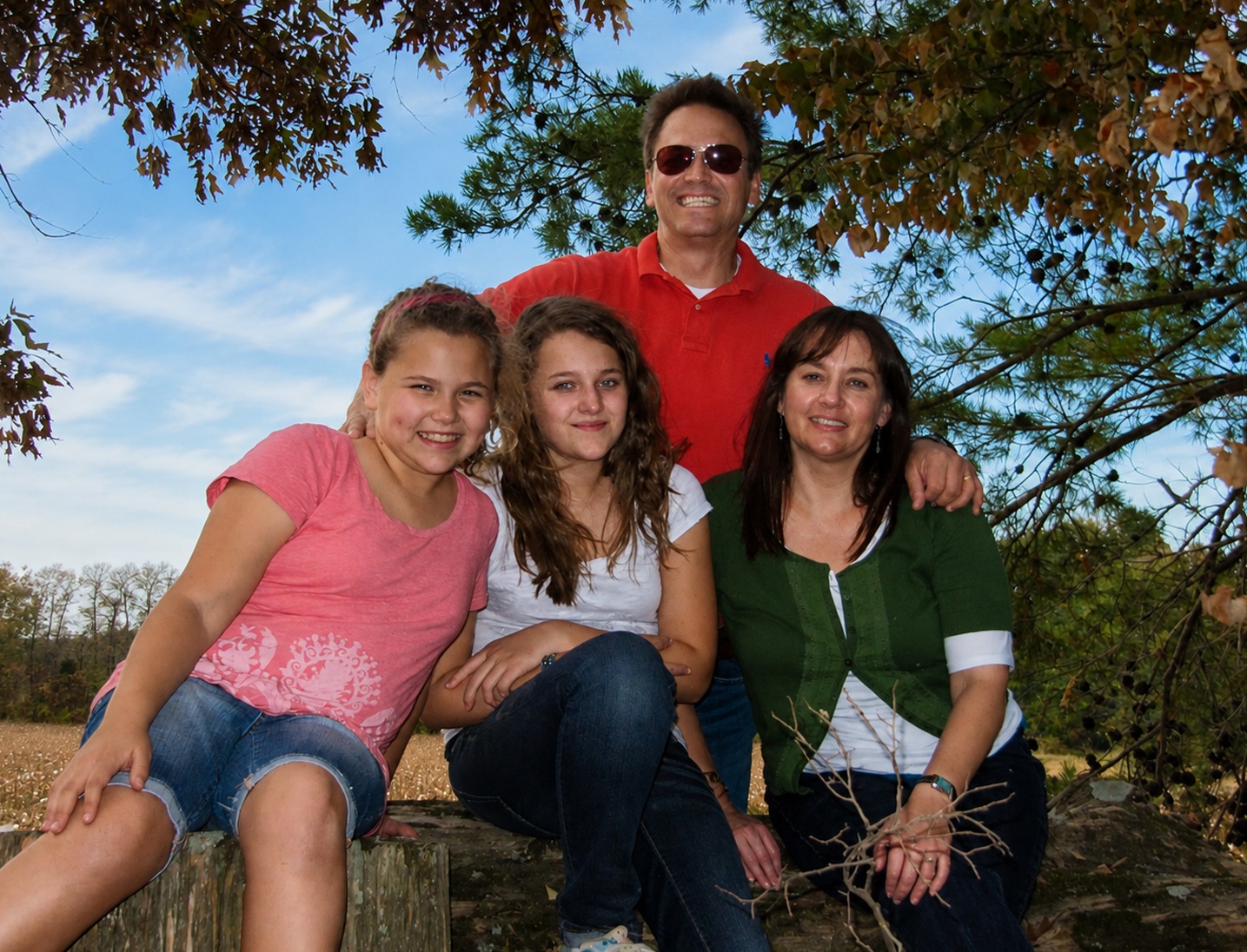
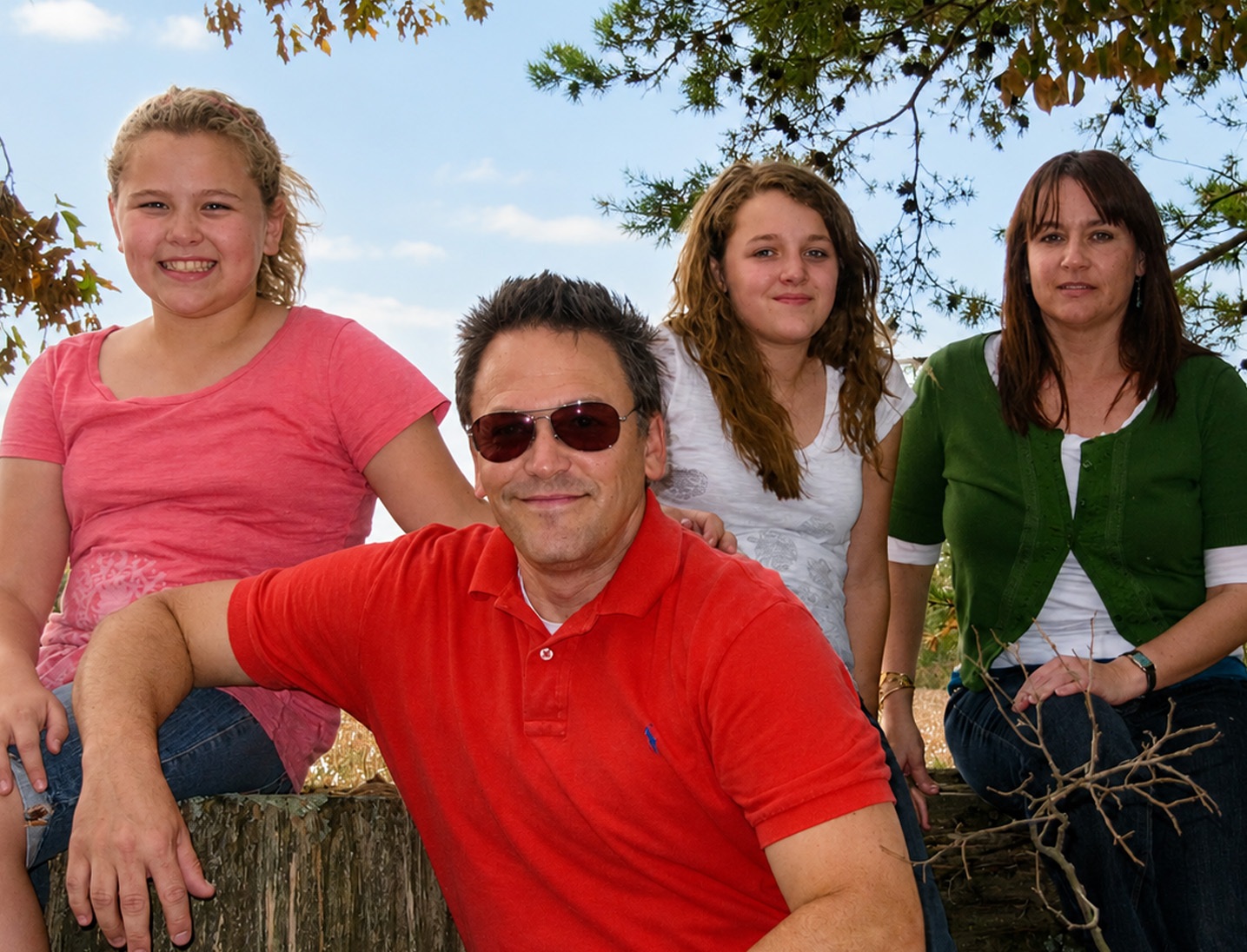
While back in Tennessee a few weeks ago, I had a chance to visit several of my favorite places in Haywood County. One of my stops was the Brantley Family Cemetery that sits way out in a cotton field. The last time I was there a few years ago, I had my wife and daughters with me, so we grabbed a few photos. Something very unique about this cemetery is a very old conch shell that sits on top of the headstone of my third great-grandparents Henry Day Brantley (1845-1918) and Margaret Rebecca Steele (1851-1932).

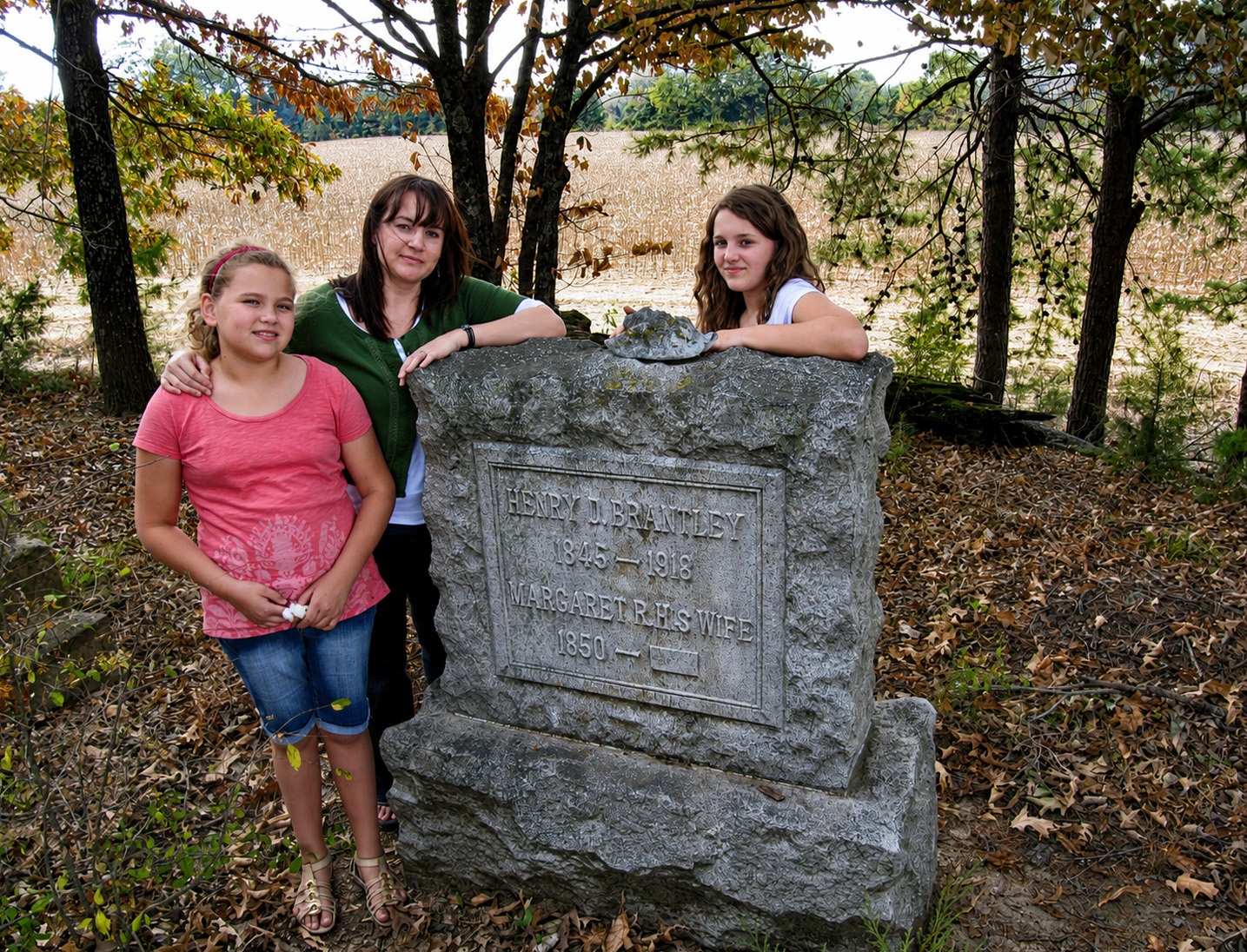
Sadly, on this visit, I discovered that lightning had struck one of the large trees in the cemetery. Falling limbs damaged several headstones and knocked others out of place. It seems the conch shell is no longer there.
The visit made me want to share more about the ancestors buried in the cemetery and the families whose home once stood only a few hundred yards away.
The Brantley Family
The Brantleys traveled west as part of a much larger migration involving the White, Outlaw, Steele, Butterton, Cobb, Castellaw, Joyner and other families from Bertie County, North Carolina. Once in Haywood County, they continued to worship together, farm neighboring land, marry into one another’s families and bury their dead in nearby church and family cemeteries.
At the center of this story are my third-great-grandparents, Henry Day Brantley (1845-1918) and Margaret Rebecca Steele Brantley (about 1850-1930).
From Bertie County to West Tennessee
Henry’s father, Augustus Brantley (1811-1876), was born in Bertie County. Augustus was the son of Edward Brantley (about 1760-1837) and Edward’s earlier wife, whose identity has not yet been established. Edward later married Clarissa Cale.
Edward Brantley’s 1837 will suggests the family was comfortable but not especially wealthy. Edward was a farmer who owned at least two tracts of land, livestock, household furnishings, farm tools and an enslaved man named Stephen. That placed him above landless laborers and tenant farmers, but the size and structure of his estate suggest he was more likely a small landowner and slaveholder than one of Bertie County’s larger planters. The will also directly identifies Augustus as his son and principal heir.
Edward left Augustus the family homeplace, described in the will as the Currituck tract, along with Stephen, the man he enslaved, and two-thirds of the money raised from the sale of most of Edward’s remaining personal property. Edward also appears in Bertie County court records as one of the men appointed in 1826 to divide land belonging to Thomas Sorrell. That connection is especially interesting because Edward’s daughter, Margaret Brantley Sorrell, had married into the Sorrell family.
Edward married Clarissa Cale about five years before his death. His reference to Mary Cale as his stepdaughter confirms that Clarissa was almost certainly not the mother of Augustus or Margaret. Edward provided Clarissa with food, household necessities, the property she had brought into the marriage and one-third of the proceeds from the estate sale. Margaret received use of the Windsor tract during her lifetime, after which it was to be divided among her children. That was a common legal arrangement intended to keep land within the family and prevent a son-in-law from gaining permanent control of it should the wife die before her husband.
The will’s witnesses and executors appear to include Michael J. Weldon, Cullen Askew, Josiah Holley, Edward Hardy and William N. Pierce, connecting Edward to a broader network of Bertie County families. The will also raises an important question: Did Augustus take Stephen with him when he migrated from Bertie County to Haywood County, Tennessee?
Augustus married Martha White (1812-1852), a daughter of Solomon H. White (1770-1854) and Martha Ann Outlaw White (1774-1828). Through Martha, their son Henry inherited connections to two more deeply rooted northeastern North Carolina families: the Whites and the Outlaws.
The reported birthplaces of Augustus and Martha’s children help narrow the date of the family’s migration to West Tennessee. Their son Daniel Brantley (1833-1864) was born in North Carolina, while Robert Brantley (1837-death year unknown) was born in Tennessee. The family moved west between 1834 and 1837. By 1840, Augustus was living in Haywood County.
A Civil War questionnaire, later filled out by Augustus and Martha’s son, Solomon, offers an interesting look at the family and their life in Haywood County. Solomon wrote that his family lived in a frame house that included four rooms with a front and back porch. He remembered that, at the start of the Civil War, they farmed 320 acres and his father owned five slaves. His father ran the farm and his mother was “was boss over the negro women who done the cooking, spinning and weaving.” When asked about the kind of work he did, Solomon wrote, “General farm work. I was an expert with a hoe. We cut wheat with a cradle. Tramped it out with horses and cleaned same with a fan by hand.”1 You can read more about the Brantley family and the Civil War here.
Martha died in 1852, when Henry was about 7. Augustus later married Zilpha King (1823-1893), who had been born in Pitt County, North Carolina, and taken to Tennessee as a child. Her obituary in the records of Zion Baptist Church said she was baptized by the Rev. George E. Thomas and transferred her membership to Zion after marrying Augustus.

Henry Day Brantley as a young man
Henry Day Brantley
My third great-grandfather Henry Day Brantley (1845-1918) was born in Haywood County in April 1845 to Augustus and Martha. The 1850 census placed 5-year-old Henry in his parents’ household in Haywood County’s 5th Civil District, where the Brantleys lived among a cluster of families who had migrated together from North Carolina. Among their neighbors were James Booth and Nancy Mulligan Booth, whose descendants would later intermarry with the Brantley and Marbury families. The neighborhood relationships established during the county’s earliest years continued for generations.
My Connection
Henry and Margaret, were the parents of Henry Preston Brantley (1872-1956). Preston was the father of William “Willie” Day Brantley (1897-1969), who married Allie Ern Marbury (1898-1995). Willie and Allie were the parents of my maternal grandmother, Virginia Brantley Lovelace (1917-2007). The Brantley name remains important in my family; my own daughter is Alexandra Brantley Williams.
According to Henry’s obituary in the records of Zion Baptist Church, he joined the congregation at age 14 and was baptized by the Rev. George E. Thomas.
On March 27, 1866, Henry married Margaret Rebecca Steele (1850-1932). He was about 20, while Margaret was only 14 or 15. Margaret was the daughter of Andrew Patterson Steele (1827-1861) and Sarah Elizabeth Butterton Steele (1833-1906). Andrew died June 16, 1861, when Margaret was about 10 or 11.
Henry and Margaret established their home near what became Cobb Crossing and Brantley Road between Zion Baptist Church and Holly Grove Baptist Church. Henry built a log cabin there and my Uncle Bill Lovelace shared that Henry carved his initials into a beam beside the entrance. A larger white house was later built around the cabin, and portions of the original structure survived into the 21st century before disappearing. The couple eventually had 10 children and, according to Henry’s church obituary, 24 grandchildren by the time of his death on Nov. 5, 1918.

Henry Day and Margaret Rebecca Steele Brantley, likely with Maggie, Reginald and Wayland. The photo was likely taken around 1900.
Building a Farm and a Family
The 1870 census found Henry, 25, and Margaret, about 19, living with their first two children, Julia and Martha. An agricultural schedule associated with the family’s farming operation reportedly accounted for about 600 acres.⁶
By 1880, the household included six children:
- Julia Anna Brantley (1868-1884)
- Martha Elizabeth Brantley Cobb (1870-1948)
- Henry Preston “Preston” Brantley (1872-1956)
- Walter Earl Brantley (1876-1933)
- Edward “Eddie” Brantley (1878-1880)
- Archie Erbert Brantley (1880-1953)
Henry and Margaret eventually had 10 children. Their younger children were:
- Vivian Everett “Viv” Brantley (1882-1964)
- Reginald A. Brantley (1885-1919)
- Margaret Eula “Maggie” Brantley Joyner (1889-1964)
- Wayland E. Brantley (1891-1968)
Their family grew, but it did so amid loss.
Eddie and Julia
Two-year-old Eddie died soon after the 1880 census was taken. His parents buried him in the Brantley Family Cemetery, several hundred yards behind their cabin.
Four years later, Henry and Margaret lost their oldest child.
Julia Anna Brantley was born Jan. 24, 1868. She joined Zion Baptist Church and was baptized into its fellowship Aug. 24, 1882. She died Dec. 19, 1884, at age 16.
Her obituary in the Zion church records reads:
Sister Julia A. Brantley, daughter of Henry D. Brantley and M. B. Brantley, was born the 24th of January 1868 and was baptized in the fellowship of Zion Church the 24th of August 1882 and lived a consistent member until death, which was the 19th of December 1884.
The committee members who prepared the memorial were J. C. W. Cobb, Dorsey H. Watridge (1840-1890) and W. D. Joyner.⁷
The tribute tells us nothing about Julia’s cause of death, but it reveals the close relationship among the Brantley, Cobb, Watridge and Joyner families. Those same surnames appear repeatedly in church minutes, marriage records, neighborhood accounts and family cemeteries.
Henry and Margaret had buried two children before either parent reached 40.

All that remained of Henry Brantley’s cabin a few years ago
The Brantley Cabin
Henry built a log cabin near what is now Cobb Crossing Road. In later years, Clyde E. “Rabbit” Lovelace (1912-1987), Lutie Mae Lovelace (1924-1997) and their nine children—two from Lutie’s first marriage to Thomas Steele—lived in a large white house built around the original cabin.
My mother remembered that the family had so many children playing outside that grass never had a chance to grow in the yard.
After Rabbit and Ludie Mae died, most of the later house was torn down. The chimney and portions of Henry’s original cabin survived for a time. The old log structure had been partially restored when I photographed it in 2012.
When I returned during this recent visit, the cabin was gone. I hope someone saved the section of the beam bearing Henry’s initials. The disappearance of the cabin made the cemetery seem even more important. It is now one of the few physical places where a remnent of Henry and Margaret’s story remains.
The Brantleys and the Castellaws
By 1900, Henry and Margaret’s household included Archie, Viv, Reginald, Maggie and Wayland. Archie’s young wife, Mary Frances Castellaw Brantley (1878-1962), also lived in the household.⁸
Interesting sidenote: Three sons of Henry and Margaret married three daughters of Joseph Dawson Castellaw (1863-1913) and Emily Thomas Castellaw (1841-1907).
- Archie Brantley married Mary Frances Castellaw (1878-1962).
- Walter Brantley married Emily Castellaw Brantley (1880-1926).
- Vivian Brantley married Joseph Lydia “Lyda” Castellaw Brantley (1882-1923).
Because three brothers married three sisters, all the children of those marriages were double first cousins and shared both sets of grandparents.
The marriages demonstrate how tightly connected the rural community had become. The Brantleys and Castellaws lived near one another, attended the same churches and shared extended family ties reaching back to North Carolina.
Henry and Margaret’s other children formed additional connections:
- Martha Elizabeth Brantley married James Thomas Cobb (1870-1958), a son of John David Cobb (1846-1922) and a grandson of James Cowan Cobb (1815-1895) of Bertie County.
- Henry Preston Brantley married Mary Etta Cobb (1871-1935), a daughter of William Thomas Cobb (1833-1898) and Elizabeth Temperance Outlaw Cobb (1833-1925). Preston and Mary Etta were my second-great-grandparents.
- Maggie Brantley married Thomas Raymond Joyner (1886-1970).
- Wayland Brantley married Ella Mae Jacocks (1890-1977).
Simeon Amherst “Sim” Cobb (1840-1927) kept a diary that offers occasional glimpses into the everyday lives of my ancestors. On March 15, 1890, Sim recorded attending church on a Saturday and then stopping at H.D. Brantley’s home for dinner.¹⁰

Henry and Margaret Rebecca Steele Brantley

Henry and Margaret celebrated their fiftith wedding anniversay on March 27, 1916.2
Henry’s Final Years
By 1910, Wayland, 19, was the only child still living with Henry and Margaret. The others had died, married or established farms and households of their own. Family tradition says Henry suffered from a prolonged illness during his final years. Some descendants have shared their family members beleived that he had Parkinson’s disease. Henry died Nov. 5, 1918.
His obituary in the Zion Baptist Church records summarized a life centered on family and faith:
Brother Henry D. Brantley was born in the year 1845. He was the son of Augustus and Martha Brantley. He joined Zion Church at the age of 14 years and was baptized by Rev. George E. Thomas. He was married to Margaret Steele in 1866, to whom 10 children were born. Two have passed over the river. There are 24 grandchildren. He departed this life in November 1918.¹¹
The two children who had “passed over the river” were Eddie and Julia. Their graves were already in the family cemetery when Henry was laid to rest there.
Reginald and the Influenza Pandemic
Henry and Margaret’s son Reginald died Feb. 16, 1919, a little more than three months after his father at age 33. He had joined Holly Grove Baptist Church at age 16 and transferred his membership to Zion 3 years later. He married Crotie Ethel Williams Brantley (1894-1928), and they had two daughters, Elven Brantley (1908-1926) and Alma Brantley (1912-2000).
Reginald died of pneumonia following influenza. His death came during the devastating influenza pandemic of 1918-19, when secondary pneumonia killed many patients who had survived the initial infection. His obituary remembered him as a good citizen and a devoted husband. It extended sympathy to his “bereaved companion, widowed mother and two little fatherless girls.”¹² Within a matter of months, Margaret had buried her husband and a grown son.

Margaret Rebecca Steele Brantley in her later years
Margaret’s Final Years
After Henry’s death, Margaret moved into the home of son Archie and his wife Mary Castellaw Brantley. She lived with them for about 12 years, until her death July 22, 1932 at age 81.
She was buried beside Henry in the family cemetery.
At some point, someone placed a large conch shell on their monument.
I have always liked imagining that the shell came west with the family from North Carolina. Bertie County is inland, but its rivers connect to Albemarle Sound and the coastal world of northeastern North Carolina. It is possible that an earlier generation carried the shell to Tennessee as a memory of home. Margaret and Henery were born in Tennessee and are not known to have visited Bertie County, but I like to imagine it was a family keepsake and a reminder of friends and relatives hundreds of miles away.
- Tennessee State Library and Archives, “Tennessee Civil War Veterans’ Questionnaires,” Tennessee Secretary of State, accessed July 26, 2026, https://sos.tn.gov/tsla/guides/tennessee-civil-war-veterans-questionnaires. ↩︎
- Brownsville States Graphic, March 31, 1916, 8. ↩︎


Leave a Reply