
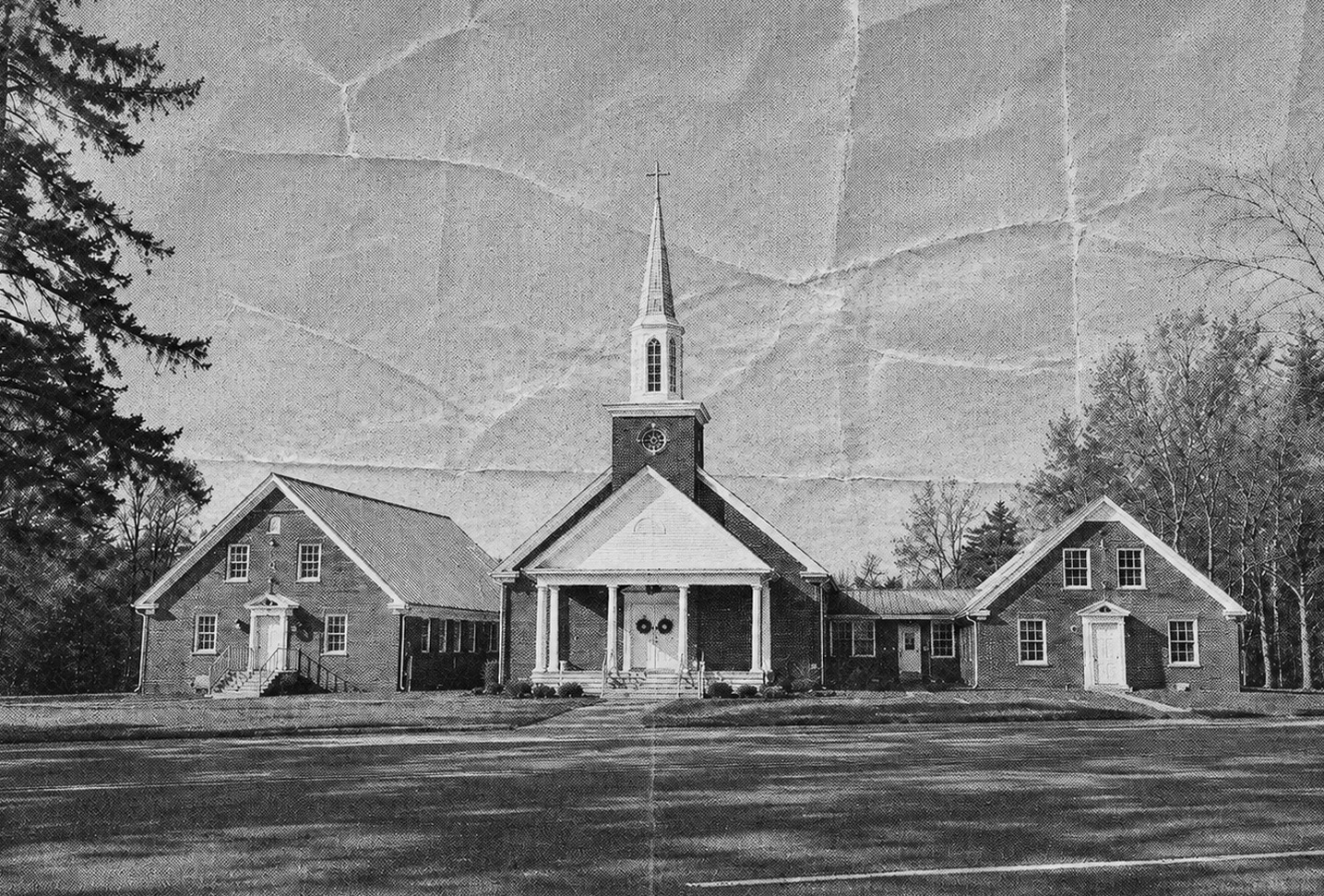
When ancestry research has me tied in knots, I often return to a few documents that include some of the basics for my Haywood County ancestry. Three of those are Bernie W. Bobb’s “History of Zion Baptist Church,” “Tribute to the Veterans of Zion Baptist Church” and “The History of Holly Grove Baptist Church.” I am sharing them here in case they help with your research.
Bernie W. Cobb’s History of Haywood Baptist Church
Bernie Wright Cobb Sr. was born March 7, 1908, in Brownsville, Tennessee, to Thomas Adelbert Cobb (1877-1920) and Elizabeth F. Gordon Cobb (1879-1938).
Cobb, who spent many years of service as a Haywood County judge, grew up near the intersection of Zion and Poplar Corner roads very near my maternal ancestors. He married Mildred Binford (1910-2001) in 1931. They had three sons: Tommy A. Cobb (1942-1942), Bernie Wright Cobb Jr. (1944-2014) and Lynn Cobb. Lynn followed in his father footsteps and is a Division 1 judge of the Shelby County General Sessions Civil Court in Memphis.
Bernie Cobb Sr. died in 1995 at age 87 and was buried in Zion Baptist Church Cemetery.
Cobb had a passion for history and genealogy research. He was a son of Thomas Adelbert Cobb (1877-1920) and Frances “Lizzie” Gordon (1879-1938) and a grandson of my third great-grandparents William Thomas Cobb (1833-1898) and Elizabeth Temperance Outlaw (1836-1925).
Preface of by Bernie W. Cobb
The authority and attempt to which I dedicate my efforts was predicated upon the sanction and directive of Zion Baptist Church, that I write it’s 150 year history. The wisdom of their choice, or the lack of it, will be astounding to you as it was to me. You may, as I did, accuse them of derelict of duty, in such a choice, but please do not remind me, as some did, that I’m the only one left maintaining attendance there for half its period of existence. This is my alibi for their condescension in choosing one of my limitations to prepare and write this history.

The Jackson Sun, Dec 19, 1961, 16.
Preliminary research in contemplating this awesome venture only presented the seemingly insurmountable task involved. Serious meditation seem to transport each day’s discourse into golden eras of the past, as I would read again and again, then type and retype, revise and type again the manuscript. A choice of omitting much subject matter of exciting interest to me, became a regrettable imperative, that the context might be as brief as possible. Extreme difficulty was encountered in the deleting process of many great deeds and actions of the first Christians.
If we believe there is a God who rules in the kingdom of men, we must look for his providential hand in human history as our foreparents did. But as a prominent and inevitable object in this line of thought lies inquiry of the past, evaluation of the present, what providential design we might expect of the future and what grand purpose God has to work out through this goodly heritage of ours.
“In the solid and sober realm of search for factual substance relative to Zion History, many delightful surprises awakened my sense of gratitude for the indomitable spirit, aims and objectives of our early pioneer families.”
In the solid and sober realm of search for factual substance relative to Zion History, many delightful surprises awakened my sense of gratitude for the indomitable spirit, aims and objectives of our early pioneer families. Great effort has been made to evade history of government, political economy, statistics and geography in dealing with unparalleled progress and noble achievements of our forefathers who established the first “Meeting House” as they called it.
To those who claim literary talent and skill in writing of history, I wish to make apology for the lack of appeal these volumes may contain. Little, if any, classics you will herein discover. This book has been written for general reading and to share with all who are persuaded by sincere reason and interest, the many delightful and rewarding experiences occasioned by the privilege of this task.
May you be rewarded, for whatever your cost of reading it, as I have been preparing it for you.
Bernie W. Cobb

The Commercial Appeal, September 21, 1995, 92.

A Tribute to the Veterans of Zion Baptist Church
Compiled by Joyce Cobb Maness, Reese Moses Scallions and Lisa Conway, this booklet includes details about the lives of all the veterans buried in the Zion Baptist Church Cemetery.

The History of Holly Grove Baptist Church
An in-depth look at the history of Holly Grove Baptist Church in Haywood County, Tenn. on the occasion of the church’s 125th anniversary.
Introduction
Some time shortly after 1875, near where the Holly Grove Church now stands, was a heavily wooded area covered with virgin timber such as pine, oak, gum, hickory and holly trees.
The community had no free public school. Mrs. Nancy Castellaw gave one acre of her land for this purpose. The men went into the woods, cut the timber, hewed the logs and built a one-room log school building in a cluster of holly trees. When the new school began, the teacher and the children named the new school “Holly Grove.”
During those years and many years after, the only means of transportation was by walking, horse back or wagon. There were very few buggies in the community in those days. The Baptists who lived in the community at that time were members of the Zion Baptist Church. There was only a wagon road from Holly Grove to the Zion Church, and the distance between caused the Baptists living at Holly Grove to consider establishing a church in their community.
After meeting with the church at Zion and relaying their decision to the pastor and the deacons, a business meeting was held and the church acted on their request. Thirty-eight members who lived in Holly Grove would be leaving Zion to form the new church.

For more of my genealogy research, visit rscottwilliams.info.


Leave a Reply