
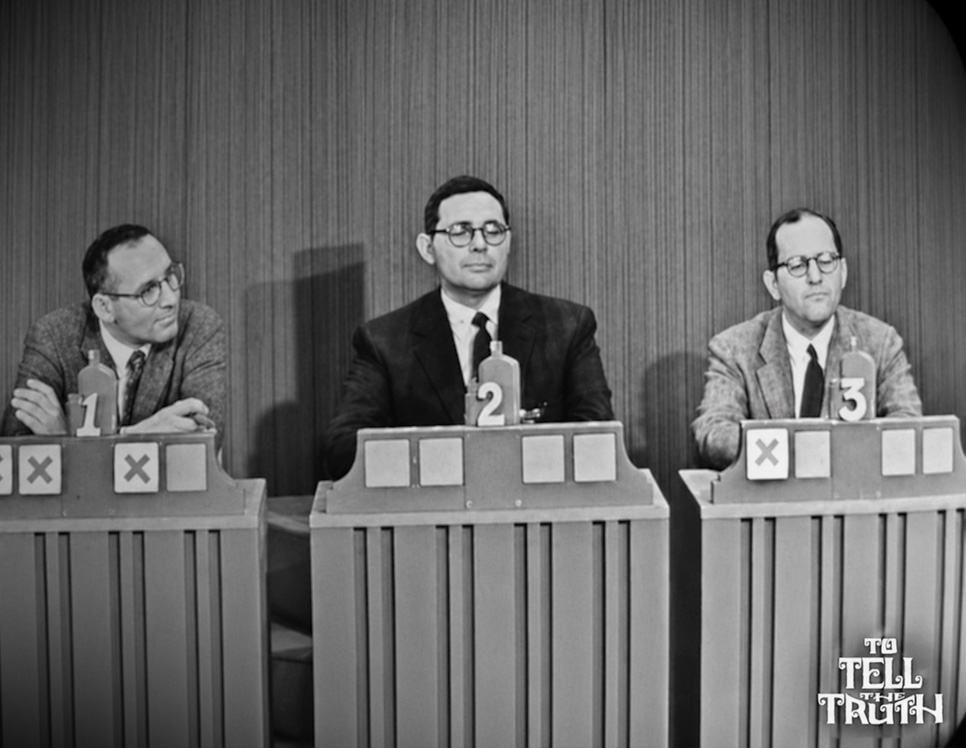
Researching the Castellaw family has always been entertaining, but one ancestor in that branch has remained elusive. And to tell you the truth, I am about to ready to let this one go.
My fourth great-grandfather, John Dawson Castellaw (1780-1859), left Bertie County, North Carolina, for Haywood County, Tennessee, in the early 1830s. Family tradition credits him with helping lead groups of relatives and neighbors west to settle in Haywood County.
He and his wife, Zilpha Spruill (1778-1842), were the parents of two siblings who appear in separate branches of my family tree. Their daughter Harriett Warren Castellaw Cobb (1804-1869) is my maternal third great-grandmother, while their son Thomas Jefferson Castellaw (1808-1878) is my paternal third great-grandfather.
John Dawson Castellaw’s father, my fifth great-grandfather, was John Castellaw (c. 1723-after 1813), who appears frequently in Bertie County tax, deed and court records.
For many years, John Castellaw had a relationship with Martha Butler (c. 1734-after 1820), whom contemporary records classify using the term “Free Mulatto Female.” A 1771 deed identified William Castellaw as the “son of Martha Butler,” supporting the conclusion that John and Martha had children together. Available research does not establish whether Martha’s ancestry was Black, Native American or mixed.1
Margaret Dawson Castellaw was later identified as John Castellaw’s wife. The date of their marriage has not been established. Some online family trees place the marriage around 1755, while others suggest a date closer to 1775.
The most intriguing piece of family lore is the claim that John Castellaw married “a Dawson from Eden House on the Chowan River.” After several years of research, I have concluded whomever made that claim, was mistaken.
A Dawson from Eden House
As with most genealogical research, the farther back we go, the murkier the evidence becomes. Fewer records survive, relationships become harder to establish and information copied from one family tree to another can eventually appear to be proven fact. Today’s websites have made it even easier to spread misinformation.
Through my research trying to track down my supposed “Dawson from Eden House,” I discovered the facts are made even more elusive because there was not one John Dawson around this time and place; there were three.
According to Joseph A. Groves’ 1901 genealogy, “The Alstons and Allstons of North and South Carolina,” three men named John Dawson lived in the Albemarle region of North Carolina during the first half of the 18th century.2
The Albemarle settlements were divided into precincts during the late 17th century. Chowan Precinct was established by 1668, and Bertie Precinct was created in 1722 from the portion of Chowan west of the Chowan River. When Albemarle County ceased to exist as an administrative unit in 1739, Bertie became one of North Carolina’s counties.3
I have well documented my Bertie County to Haywood County connection. Many families who later settled in Haywood County had owned land in Bertie and neighboring counties. Haywood County was created in 1823 and formally organized in 1824, only a few years after the Chickasaw Nation ceded its West Tennessee lands to the United States in 1818. The newly opened territory and its fertile soil attracted settlers from North Carolina and Virginia.
John Dawson No. 1
John Dawson No. 1 (c. 1690-c. 1761) was a native of Isle of Wight County, Virginia. His grandfather, William Dawson (c. 1599-after 1635), arrived in Virginia aboard the Discovery in 1621.
John Dawson moved with his parents to Bertie County around 1732. He represented Bertie County in the colonial Assembly in 1735 and later represented Northampton County. He also served as a justice of the peace, sheriff, militia colonel, associate justice of the North Carolina General Court and member of the governor’s Council under governors Gabriel Johnston (c. 1698-1752) and Arthur Dobbs (1689-1765).4
Dawson first married Elizabeth Thomas Boddie Dawson (c. 1692-c. 1752), the widow of John Boddie (c. 1685-1720). John and Elizabeth had two children:
- Henry Dawson (c. 1723-1770), who served in the North Carolina Assembly from 1766 until his death.
- Mary Dawson Kinchen (birth year unknown-before 1758).
John Dawson later married Charity Alston Dawson (c. 1717-1764). They had three children:
- Charity Alston Dawson Williams (c. 1755-1822).
- Elizabeth Dawson (c. 1758-before March 1764).
- John Dawson Jr. (c. 1759-1797), who served in the North Carolina Assembly from 1780 to 1782 and again from 1787 until shortly before his death.
The family lived on a plantation along Bridgers Creek in what became Northampton County. Dawson’s daughter Charity Alston Dawson Williams married Samuel Williams (1753-1805) on June 13, 1770. Because I am also researching Williams ancestors who lived in Bertie County, I plan to explore that branch later.liams (1753-1805) on June 13, 1770. Because I am also researching Williams ancestors who lived in Bertie County, I’ll be researching that branch later.
Groves’ genealogy identifies nine children of Samuel and Charity Williams:⁵
- William Williams (1773-1774).
- Elizabeth Whitmell Williams Alston (1775-1835), who married Capt. William Alston (1777-1810).
- John Dawson Williams (1778-c. 1822), who married Elizabeth Taylor Williams, whose dates have not been established.
- Lewis Alston Williams (1782-1837), who married Priscilla Kearney Williams (1781-1836).
- Charity Alston Williams Hall (1785-1811), who married the Rev. Horatio Edmund Hall (1783-1852).
- Samuel Williams (1787-1850), who married Mary Whitmell Thompson Williams, whose dates have not been established.
- Sarah Dawson Williams Alston (1791-1856), who married Samuel Williams Alston (1782-1830).
- Joseph John Williams (1793-1866), who married Mary Harriett Collins Williams, whose dates have not been established.
- Mary Clark Williams Barnes (1796-1818), who married Jeptha Atherton Barnes (1790-1818).
Samuel Williams was the eldest son of Col. William Williams (c. 1725-1778/79) and Elizabeth Whitmell Pollock Blount Williams (1718-1794), the widow of Capt. Thomas Blount (c. 1708-1745), whom I wrote about previously.
Groves reported that William Williams was appointed colonel of the Martin County militia and adjutant of North Carolina’s First Regiment in 1775. He also represented Martin County at the Fourth Provincial Congress in Halifax in April 1776 and participated in the state constitutional convention later that year.⁷
John Dawson No. 2
Little is known about the second John Dawson (birth year unknown-1749). He lived in Edgecombe County, North Carolina. His will was proved in May 1749.
The will identified his wife, Mary Dawson (dates unknown), and five children:
- Martha Dawson (dates unknown).
- Patience Dawson (dates unknown).
- John Dawson (dates unknown).
- Demsy Dawson (dates unknown).
- Solomon Dawson (dates unknown).

Illustration of John Dawson enhance with AI. Original is from The North Carolina Portrait Index, 1700–1860 includes, on page 66, a portrait identified as “John Dawson” and attributed to an eighteenth-century British artist.
John Dawson No. 3
The last, but certainly not least, of the three men named John Dawson was Col. John Dawson (c. 1730-1770), whose family had the clearest connection to Eden House. That connection may explain why someone in the past laid claim to a family relationship with “John Dawson of Eden House.”
John Dawson No. 3 was born in Williamsburg, Virginia, the son of the Rev. William Dawson (1704-1752) and Mary Stith Dawson (c. 1711-before 1752). His father, an Anglican minister, served as the second president of the College of William and Mary. His mother was a granddaughter of William Randolph Sr. (1650-1711) of Turkey Island, one of colonial Virginia’s most prominent planters.⁵
After the deaths of his parents, John lived with his uncle, the Rev. Thomas Dawson (1715-1760), who succeeded his brother as president of William and Mary. Surviving accounts portray the younger John as a sociable and extravagant young man who accumulated substantial debts.
He later studied practical surveying under Peter Jefferson (1708-1757), father of Thomas Jefferson (1743-1826), and became surveyor of Albemarle County, Virginia.
In 1758, Dawson eloped with Penelope Johnston Dawson (c. 1740-1797), daughter of Gov. Gabriel Johnston (c. 1698-1752) and Penelope Golland Maule Lovick Phenney Johnston (c. 1695-1741). After their marriage, John and Penelope lived at Eden House in Bertie County. John practiced law, managed plantations and became a colonel in the colonial militia. He died at Eden House in March 1770.⁹
John and Penelope had four children:
- Mary Dawson Allen (c. 1760-before 1781).
- Penelope Dawson Lowther (1763-1820).
- William Johnston Dawson (1765-1796), who later represented North Carolina in the United States House of Representatives.
- Lucy Dawson, whose birth and death years have not been established and who apparently died young.
The family’s connection to Eden House came through Penelope Johnston Dawson’s mother.
The elder Penelope Golland first entered the Eden House story through her mother, Penelope Eden (c. 1677-1716), who married Gov. Charles Eden (1673-1722). Charles Eden had no known biological children. His wife, however, had children from a previous marriage, including a daughter also named Penelope.
That younger Penelope — who later became the mother of Penelope Johnston Dawson — married four prominent men:
- William Maule (1690-1726).
- John Lovick (birth year unknown-1733).
- George Phenney (birth year unknown-1737).
- Gov. Gabriel Johnston (c. 1698-1752).

Photo: Eden House historical marker located along the Westshore Chowan River, 1952. Charles Brantley ‘Aycock’ Brown (1904-1984), State Archives of North Carolina Source / Discover more about Eden House in this blog post.
John Lovick inherited Eden House from Charles Eden. Through her marriage to Lovick, Penelope acquired the property and remained closely associated with it through her subsequent marriages.
Marshall DeLancey Haywood (1871-1933), in his history of Gov. William Tryon’s administration, addressed an error that had appeared repeatedly in North Carolina histories. Penelope Golland Maule Lovick Phenney Johnston was not Charles Eden’s biological daughter. She was his stepdaughter through his marriage to her mother.5
Penelope’s complicated life — four marriages involving several of colonial North Carolina’s most influential men — makes her a fascinating historical figure, even though I have found no evidence that she belongs in my family tree.
Most importantly for my research, Col. John Dawson and Penelope Johnston Dawson had no documented daughter named Margaret.
The real John Dawson?
Here we have three documented men named John Dawson who lived in and around what became Bertie County, North Carolina. Unfortunately, none has a known daughter named Margaret who can be identified as the wife of John Castellaw.
For now, the claim that John Castellaw married “a Dawson from Eden House” remains an intriguing family tradition rather than an established genealogical fact. And while it is frustrating to spend so much time researching a family and not find the needle in the haystack you were looking for, the truth is, the search is actually most of the fun.
Notes:
- Paul Heinegg, “Brooks-Byrd,” in Free African Americans of North Carolina, Virginia and South Carolina, accessed July 23, 2026. Heinegg cites Bertie County tax records listing Martha Butler as a “Free Mulatto Female” in John Castellaw’s household and a 1771 deed naming William Castellaw as her son. ↩︎
- Joseph A. Groves, The Alstons and Allstons of North and South Carolina (Atlanta: Franklin Printing and Publishing Co., 1901), 517-33. ↩︎
- “Bertie County History,” Bertie County, North Carolina; “Bertie County,” NCpedia; and “Chowan County,” NCpedia, ↩︎
- Jaquelin Drane Nash, “Dawson, John,” in Dictionary of North Carolina Biography, edited by William S. Powell (Chapel Hill: University of North Carolina Press, 1979-96), published online by NCpedia. ↩︎
- Jaquelin Drane Nash, “Eden, Charles” and “Johnston, Gabriel,” in Dictionary of North Carolina Biography, published online by NCpedia; Robert E. Lee, “Phenney, George,” in Dictionary of North Carolina Biography, published online by NCpedia; Marshall DeLancey Haywood, Governor William Tryon and His Administration in the Province of North Carolina, 1765-1771 (Raleigh, North Carolina: E.M. Uzzell, 1903). ↩︎


Leave a Reply