
The surname Williams is a patronymic name meaning “son of William.” It originated in medieval England and Wales, derived from the Germanic elements wil (will, desire) and helm (helmet, protection), meaning “resolute protector.” Because Williams is the third-most-common surname in the United States, it is an especially difficult line to trace back for genealogists; both the 1990 and 2000 censuses record more than 1.5 million people named Williams, surpassed only by the Smiths and the Johnsons.
Rev. George S. Williams
My 4th great-grandfather
George S. Williams (about 1797–1852) is the earliest generation in my direct Williams line I can document with confidence. I know more about the last 25 years of his life than his beginnings. He was a Baptist minister, owned a substantial farm in West Tennessee and left court records that identify his wife, children, grandson and even the enslaved people who lived and worked on his property.
What I still do not know is where his story began.
I know George was born in North Carolina around 1797 or 1798 likely in the general area of Bertie County. The first time I can firmly put him there for certain is in the late 1820s. His parents remain unknown although I have a few candidates.
By Dec. 13, 1828, George was a member of Holly Grove Baptist Church in Bertie County, where the minutes called him simply “Brother George Williams.” A month later he was being called Elder George Williams. By March 1833, Holly Grove had unanimously chosen him as pastor.
He “accepted the call” later that month, on the condition that Holly Grove change its regular meeting from the second Sunday of the month to the first to accomdate some of his other preaching commitments. The church agreed.

| About Holly Grove Baptist Church Holly Grove Baptist Church in Bertie County, North Carolina, was already an old congregation by the time George Williams appeared there. The church stands about seven miles south of Powellsville on the east side of U.S. Highway 13 and was organized in 1804 with 99 members as Outlaw’s Chapel, with Jeremiah Bunch as its first pastor. It belonged to the Kehukee Baptist Association, part of the strong Baptist tradition that had developed across northeastern North Carolina. Surviving church minutes begin in 1822 and still refer to the congregation as “the Church at Holly Grove formerly the Church at Outlaw’s Chapel.” By about 1825, Holly Grove had become the congregation’s official name, apparently inspired by the many holly trees growing around the meetinghouse; in 1828 the members even set aside a day to “clean up the Grove.” The church became an important center of religious life for the rural families living between Powellsville and the surrounding Bertie County countryside. It was into this congregation that Rev. George S. Williams appears in December 1828 as “Brother George Williams,” beginning the first firmly documented chapter of his life. |
In 1834, the congregation recorded paying George $24 for the previous year’s service. He agreed to continue “as long as convenient,” and by 1835 he and Henry White were sharing ministerial duties. In March 1836, the church asked both men to continue.
George’s wife, Nancy
George’s wife, my 4th great-grandmother, was Nancy F. Williford, and discovering more about her family may eventually provide a clue that finally identifies George’s parents.
In 1866, years after George’s death, Nancy made a will in Tennessee. In it she referred to Adaline Tyler as “my beloved sister” and named Gabriella Tyler and Granada Tyler as nieces. That one phrase opened an entirely new door and led to the confirmation of John Williford as her father and my 5th great-grandfather.
| John Williford, father of Nancy Williford Williams John Williford (c. 1750s–1833) was a longtime resident, landowner and planter in Bertie County, North Carolina, where the Williford family had been established for generations. He was the son of Richard Williford Jr. (before 1737–1808) and Mary Williford. During the American Revolution, Richard served as a juror for Bertie County in 1781. The Daughters of the American Revolution recognize Richard for service as Patriot Ancestor A214877. Beginning at least by the 1780s, John received land from his father and steadily expanded his holdings through purchases and grants. By the end of his life, he owned substantial acreage, livestock, mills, household goods, a brandy still and a large number of enslaved people. He married Mary “Polly” Freeman in Bertie County in 1804, apparently after an earlier marriage or relationship, since several of his children were likely born before that date. John wrote his will on May 22, 1833, and died before it was proved in Bertie County Court that August. The will names his children and provides the crucial evidence connecting his daughter Nancy F. Williford to her husband, Rev. George S. Williams, referring to her as “my Daughter Nancy wife of George Williams.” It also records the names of a number of enslaved people whose lives were divided among John’s heirs, including Harriett, whom he bequeathed to Nancy. For the Williams family line, John’s will is especially important because it firmly places Nancy within the Williford family of Bertie County and helps connect the North Carolina generation to the Williams family that later settled in West Tennessee. More about Richard |
Latest Blog Post

More Blog Posts
-
Lewis Grave Yard with Some Mention of Early Settlers Along Fifth Creek, Iredell Co., N.C.
-
Will of Thomas Lovelace, 1772-1829
-
Holly Grove Baptist Church: A Castellaw Legacy
-
What I Discovered About my Family Tree from my DNA
-
George Williams of Bertie County and the Battle of Stono Ferry
-
Following my Williams Line Back to Bertie County, North Carolina
-
Maggie Williams Sullivan: A Haywood County Tragedy
-
Townmania: Marcus Winchester and the Making of Memphis
-
Johnny Lee Williams: From Omaha Beach to the Bakersfield Sound to France’s Legion of Honor
-
Johnny Lee Williams: French honor service of local WWII veteran
-
Northern Ireland Trip Report: Belfast, Portrush and a Wedding at Dunluce Castle, Part I
-
Northern Ireland Trip Report: Belfast, Portrush and a Wedding at Dunluce Castle, Part II
-
John Williford of Bertie County, North Carolina
-
Scotland Trip Report: Part II
-
Scotland Trip Report: Part I
-
Tech. Sgt. Aaron S. Castellaw: ‘Spirit, Courage and Devotion to Duty’
-
A Chickamauga Battlefield Map With a Haywood County Connection
-
The Accidental Fame and Lack of Fortune of West Tennessee’s David Crockett
-
Nathan Washington Parlow and his 170-Year-Old Clock
-
April 4, 1920: 100 Years Ago Today in Haywood County, Tenn.
-
Sharing Old Family Photos Found in an Envelope
-
Barbara Trefren Mayer (1948-2018)
-
Remembering Dempsey Williams, a West Tennessee Bird Dog Sportsman
-
“Fury in the Earth”: Harry Harrison Kroll and the New Madrid Earthquakes
-
The Battle of the Bozos
-
‘I’d Like to Kiss You, but I Just Washed My Hair’: Tennessee Writer Harry Harrison Kroll
-
Cotton-Picking Robots
-
Unity Shirley: An Early Haywood County Settler
-
William Smallwood: My Second Cousin, Seven Times Removed
-
Nancy Ross Joyner and Her Family’s Journey to West Tennessee
Visit my blog for more
From North Carolina to Tennessee
During the 1820s and 1830s, families from eastern North Carolina were migrating to the newly opened lands of West Tennessee. Many of the names surrounding George in Bertie County would soon reappear hundreds of miles to the west. The Williams family was part of that movement.
In November 1836, members of Zion Baptist Church in Haywood County, Tennessee, met in their new church building to select a pastor. They chose Brother George Williams and instructed Brother Outlaw to write him with the news.
George disappears from Holly Grove’s records in North Carolina in 1836 and almost immediately appears as the minister the new West Tennessee Baptist congregation wanted in its pulpit.
On Jan. 2, John P. DeBerry sold George 245 acres in Madison County. On March 5, James Vaulx sold him another 126 acres. The two adjoining tracts gave George a farm of 371 acres just across the county line from the church he served in Haywood County. George would own those same 371 acres for the rest of his life.
George continued preaching at Zion. He was elected pastor again in 1838 at a salary of $60. By 1846 the pastor’s salary had increased to $75.
According to Bernie W. Cobb’s “A History of Zion Baptist Church,” in April 1849, Zion’s minutes recorded that George Williams sent the congregation a three-page epistle in which he looked back on the days when they had worshipped and preached “under the oak trees.” He urged the church to pray for its young people, asking that God would “convert, prosper and keep them in Heavenly places.” The brief entry is one of the most personal glimpses we have of George, showing both his memory of Zion’s humble beginnings and his concern for the generation coming behind him.
The Williams land
By the 1840s, George S. Williams was already beginning to establish the next generation on his land. His son George Solomon “Sol” Williams (c. 1820–1864) married in 1844. A court record created after George’s death says that about eight years earlier George had placed Solomon in possession of the northern part of one of his tracts with the understanding that the land would eventually belong to him. Solomon had been living there, farming it and making improvements ever since.
By the 1850 census, George and Nancy were living beside their son, Solomon and his young family, while other members of the family occupied neighboring farms. Living on the other side of George was Hugh A. Montgomery (1810-1868) and his children. Hugh was the husband of George and Nancy’s late daughter, Maria.
George Williams’ death
A petition filed in Madison County states that Rev. George Williams died intestate (without a will) on Oct. 3, 1852 at age 55. It then describes Nancy as his widow, Solomon as his “only living child” and James Alexander Montgomery (c. 1845–after 1861) as his grandson through his deceased daughter Maria Williams Montgomery (unknown–before 1852).
James Alexander Montgomery was still a young boy when his grandfather died. Because his mother, Maria, had already died, James inherited her share of the Williams estate. The court awarded him 131¾ acres of his grandfather’s Madison County farm, along with a share of the estate’s personal property, all to be managed by his father, Hugh.
Records show the land being rented and maintained for James and, by 1859, more than $1,100 was being held on his behalf. In the 1860 census, James was 15 and living with his father’s family in District 11 of Madison County; the accompanying slave schedule listed six enslaved people under James’ name, presumably property being managed for him while he was still a minor. The following year, at about 16 or 17, James enlisted as a private in Capt. Joseph B. Freeman’s Company of the 6th Tennessee Infantry, entering Confederate service in August 1861. I have found no record establishing that he died during the Civil War, but his life after his enlistment remains uncertain.
Four enslaved people were also part of George’s estate. They were Milly, a young woman; her children Ned, about 3, and Winny, about 19 months; and Henrietta, about 15. Milly died before the estate sale. Henrietta, Ned and Winny were sold in March 1853. Henrietta was sold for $650, while the two small children were sold together for $490. You can read more about these enslaved people in the above blog post.
Nancy’s life after George
After George’s death, Nancy quickly remarried. Her new husband was named Edward Williams. If there is a family connection to her first husband, I cannnot find it. From estate records, we know Nancy and Edward later sold her life interest in the 100-acre dower property to her son, Solomon Williams, and her brother-in-law, Hugh Montgomery, who was acting for James. The court once again identified Solomon and James as the two heirs entitled to the land after Nancy’s interest ended.
Who were George’s parents?
I recently spent considerable time investigating another George Williams family with ties to both Bertie and Chatham counties. The family connection looked almost perfect. They had a son George born Nov. 3, 1798, exactly the right age to have been my ancestor. The estate records eventually proved there was no connection. That George had died before the 1837 division of his father’s estate, while my George was alive in Tennessee buying his 371-acre farm.
So I am back where I started as far as George’s parents are concerned. Perhaps that mystery will one day be solved.
George Solomon “Sol” Williams
My 3rd Great-grandfather
George Solomon “Sol” Williams (March 1820–1864), my third great-grandfather, was born in North Carolina in March 1820. He was the son of the Rev. George S. Williams and Nancy F. Williford Williams, who brought their family west from North Carolina to West Tennessee during the 1830s.
Solomon’s father was a Baptist minister who had served Holly Grove Baptist Church in Bertie County, North Carolina, before moving west. In November 1836, Rev. George Williams was selected as the first pastor of the newly organized Zion Baptist Church in Haywood County, Tennessee. That church would become an important part of the lives of many of the families in both my maternal and paternal family lines.
On Feb. 6, 1844, Solomon married Catherion Arthur Nowell Williams (Feb. 6, 1828–Aug. 3, 1895) in Haywood County. Solomon was about 24 and Catherion had just turned 16. Catherion was the daughter of Dempsey Nowell and Elizabeth Rawls Nowell, another family that had migrated from eastern North Carolina to Haywood County. Catherion’s Nowell family had deep roots in eastern North Carolina. Her grandfather, Dempsey Nowell Jr., was the son of Dempsey Nowell Sr. (c. 1727–1777) and grandson of Martin Nowell Sr. (c. 1700–before 1779), who was living in Bertie County by 1736. Earlier research suggests the family traces back to James Nowell of Dorchester County, Maryland. Through her mother, Elizabeth Rawls, Catherion also descended from the Rawls family of Hertford County. Together, these lines place her ancestry firmly among the early families of northeastern North Carolina.

Older section of Zion Baptist Church, Brownsville, Tenn.
Catherion’s father, Dempsey, left the Bertie-Hertford County area for West Tennessee around 1832 or 1833. In 1839, he was ordained a deacon at Zion Baptist Church. Surviving records indicate that Dempsey had an education and could read and write. The inventory of his estate included many books. At his death in 1852, he owned more than 600 acres of land.
Catherion had joined Zion Baptist Church before her marriage. According to the church’s later obituary for her, she “professed faith in Christ” when she was 13 and was baptized into the fellowship of Zion by Elder Hugh Coffen. Because Solomon’s father was serving the same congregation, the Williams and Nowell families would have known one another well. It is likely that Zion was where Solomon and Catherion first became acquainted.
Building a Family
The 1850 census found Solomon and Catherion living in District 11 of Madison County, Tennessee. Solomon was a 30-year-old farmer. Catherion was 23. Their household then included their young daughter Mary Elizabeth and a son, George, my second great-grandfather. By 1860, the family had grown considerably. Elizabeth and George were joined by brothers John, Edward and William. Other children followed.
The children of Solomon and Catherion that can presently be identified, in known birth order, are: Mary Elizabeth Williams Thomas (c. 1845–1924), George D. Williams (1847–1919), John Nowell Williams (1851–1928), Edward W. Williams (1853–1893), William E. Williams (c. 1858–1909), Catherine E. “Katie” Williams Booth Clark (1860–1917), Rebecca Marie Williams Booth (1863–1890) and Laverna Williams (dates unknown), who apparently died very young.
Catherion’s obituary stated that she was the mother of 11 children, meaning three additional children remain unidentified. All three had died by 1895, when only five of her children were still living.
Solomon’s will
One of the most important surviving records of this generation is Solomon Williams’s will, recorded in Haywood County Will Book E. Solomon wrote the will on April 22, 1863, likely after being sent home from fighting in the Civil War because he was so ill. He began his will in the customary language of the period, declaring himself to be of “proper mind and feeling” and setting down instructions for the distribution of his property. Solomon left his estate to his children and also specifically included “my unborn child which is now anticipated.” Catherion therefore pregnant with Rebecca Marie Williams, who was born in 1863. Little did they know, Rebecca would be their last child.
Solomon directed that his estate remain largely intact for the benefit of his family. His property included land, horses, household property, livestock and other possessions. His will also reflects the slaveholding economy in which the family lived before emancipation. Like many substantial farmers in antebellum West Tennessee, Solomon held enslaved people as part of his estate.

He provided particularly carefully for Catherion. Rather than immediately dividing the property among the children, Solomon intended for his wife to have the use and management of the estate during her widowhood as long as she needed it. Only after she remarried or died was the remaining property to be divided among the heirs.
One provision is especially personal. Solomon owned a silver watch that had belonged to his father. He left the watch to his son George D. Williams, explaining that he did so not because of its monetary value but because it was a remembrance of his father. He expressed the hope that George would not dispose of it outside the family but would preserve it among his brothers and sisters as a family keepsake.
< An unidentified man holding a pocket watch, photographed in 1855. Although the man is not Solomon Williams, the daguerreotype illustrates the kind of personal silver watch Solomon may have inherited from his father and later passed to his son George D. Williams as a family keepsake. Photo credit: PDNB Gallery.
That brief passage gives us something rare in 19th-century probate records: not merely a transfer of property but a glimpse of family memory. The watch had passed from Solomon’s father to Solomon and was now being entrusted to the next generation. I would love to know what happened to that watch.
The Civil War

When the Civil War reached West Tennessee, Solomon was in his early 40s, considerably older than many of the young men entering military service. He had a wife, a growing family and a substantial farm in Haywood County. Nevertheless, strong evidence indicates that Solomon joined his neighbors in Confederate service as a private in Company L of the 7th Tennessee Cavalry, a locally raised company known as the “Western Rangers.”
Company L was organized in Brownsville in April 1862 and was the second cavalry company organized in Haywood County. About 65 enlisted men initially joined under Capt. James Allen Taylor, with Alexander Duckworth serving as first lieutenant. The men spent several weeks at Brownsville preparing for service before being formally mustered into the Confederate army about May 12. They were then ordered toward Fort Pillow, where Confederate forces were attempting to defend the Mississippi River corridor north of Memphis. It is worth noting that Solomon’s 7th Tennessee Cavalry was not present at the fort during the infamous Fort Pillow Massacre.
> Photo: Lt. Hiram L. Hendley of the 9th Tennessee Cavalry Battalion, photographed during the Civil War with a shotgun and Bowie knife. Although the image is not of Solomon Williams, it provides a glimpse of how a Tennessee Confederate cavalryman of the period may have appeared. Photo credit: Library of Congress.
After Fort Pillow was evacuated in June, the company moved south and became part of the permanent organization of the 7th Tennessee Cavalry in Mississippi. From that point forward, the Haywood County company was officially designated Company L, the Western Rangers.

Lloyd’s Official Map of the State of Tennessee, published in 1862, showing the lower potion of West Tennessee during the Civil War. Brownsville, Memphis, Fort Pillow and the routes south into Mississippi formed the landscape in which Solomon Williams and the Western Rangers operated. Photo credit: Library of Congress
The regiment quickly found itself in active service across West Tennessee and northern Mississippi. In June 1862, it operated along the Memphis and Charleston Railroad and took part in an expedition near La Fayette Station that captured Federal soldiers and destroyed a locomotive and train. On Aug. 31, the regiment fought at Medon, Tennessee, and the following day took part in the bloody fight at Britton’s Lane, where the cavalrymen dismounted and attacked a strongly defended Federal position. In October, the regiment participated in the Battle of Corinth, Mississippi. The following year it continued operating in northern Mississippi, including action at Grenada, while members of Company L were also engaged at Collierville, Tennessee, in October 1863.
Solomon’s discharge
Exactly how many of these engagements Solomon personally experienced cannot yet be determined. In 1883, nearly 20 years after the war, the Brownsville Democrat published a detailed history and roster of Company L. The newspaper identified the men individually and often recorded whether they had been wounded, killed, captured, transferred or discharged. Among the privates was “WILLIAMS, Solomon,” followed by the unusually specific notation that he had been “discharged for sickness and died at home during the war.”
The 7th Tennessee Cavalry continued fighting long after Solomon left it. Under commanders including William L. Duckworth (and eventually as part of the cavalry forces associated with Nathan Bedford Forrest) the regiment later fought at Okolona, helped capture the Federal garrison at Union City in March 1864 and took part in the fierce fighting at Brice’s Cross Roads and Harrisburg/Tupelo that summer. It later participated in the battles of Franklin and Nashville before the remnants of the regiment surrendered in Alabama in May 1865.

Burying the dead on the battlefield of Antietam, September 1862. Union soldiers stand among the bodies of Confederate soldiers killed in one of the bloodiest battles of the Civil War. Photographed by Alexander Gardner on the Miller farm near Sharpsburg, Maryland. Photo credit: Library of Congress
Solomon’s sad death was just one of the more than 600,000 Americans who died because of the Civil War — more American military deaths than in any other war in our nation’s history.
Solomon’s Death and the 1868 Court Proceedings
On July 7, 1868, the county court again took up the estate of Solomon Williams. Catherion appeared personally before the court and relinquished her right to serve as executor under the will of her deceased husband. Solomon’s son George D. Williams had “attained his majority.” George had been named as an executor in his father’s will, but he had apparently been too young to assume that responsibility when the estate was first being administered. Now that George was legally an adult, the court permitted him to take his father’s place as intended in the will. George qualified as executor and was required to give an $8,000 bond, after which the court authorized him to administer the estate.
Catherion After Solomon
Whatever the precise circumstances of Solomon’s death, Catherion was left with a large family and a farm to manage during one of the most difficult periods in Tennessee history. By the 1870 census, she was 42 and was listed as the head of a farming household in Haywood County. Living with her were several of her younger children, including John, Edward, William, Catherine and Rebecca. Her son George D., now married to Martha Jane Watridge (1851-1888), was living nearby with his own young family.
The family’s economic circumstances also reflected the enormous changes produced by the Civil War and emancipation. Property that had represented considerable wealth before the war had fallen sharply in value afterward, and the labor system on which antebellum farms had depended had disappeared. Catherion nevertheless remained on the family land. In 1880, at age 52, she was still the head of her household in District 5. Living with her were her children John, 28; William, 22; Catherine, 20; and Rebecca, 17. Also in the household was Richard Traylor, 50, a Black man identified by the census taker as a servant.
Catherion remained closely connected to Zion Baptist Church throughout her life. The church that had brought together the Williams and Nowell families in the 1830s remained her church home for more than half a century.
Court records show that questions concerning the family’s land continued almost until her death. In March 1894, commissioners divided property among the Williams heirs while preserving Catherion’s lifetime interest in portions of the estate. One tract, for example, was allotted with Catherion retaining the use of it during her natural life and the remainder ultimately passing to her son John N. Williams.
Catherion died on Aug. 3, 1895, at age 67 more than 30 years after the death of her husband. Her obituary in the Zion Baptist Church records remembered a woman whose life had been closely tied to the congregation from childhood.
| Obituary of Catherion Arthur Williams Sister C.A. Williams is gone. She was born in North Carolina Bertie County Feb 6, 1828. Her parents moved to Tennessee Haywood County when she was quite young. She professed faith in Christ and was baptized into the fellowship of Zion Church by Elder Hugh Coffen at the age of 13 years which she lived a consistent member til her death. She was married February 6, 1844, and was the mother of eleven children of whom 5 are living and members of the Baptist church. She departed this life the 3rd day of August 1895 being 67 years 5 months old. Our loss is her gain and we say to her relations and friends to strive to meet her in Heaven where the wicked cease from broubing and the weary are at rest. September 14, 1895. Written by J. C. W. Cobb and W. T. Morris, “Zion Baptist Church Book of Obituaries” |
Where Were Solomon and Catherion Buried?
The burial places of Solomon and Catherion remain uncertain, but family tradition provides an intriguing possibility. For years, members of the Williams family remembered a small family cemetery located in a clump of trees in a cotton field near the old family property. My father remembered hunting with his father, Lloyd “Bo” Williams, who would point toward the site and tell him that his own grandfather, George D. Williams, was buried there.
My father’s childhood friend Milton Booth also remembered the cemetery. He recalled several headstones enclosed within an iron fence. Years later, he took me through the cotton field to the site. The stones were gone, but remnants of the iron fence could still be seen. George D. Williams’s 1919 death certificate states that he was buried in the “Family Burial Ground,” providing evidence to support the family stories.
You can read about my search for the Williams Family Cemetery in this blog post:
When i think of Solomon, I think of something more personal than the dates and places he lived. I think of a soldier sick enough to plan for the lives of his wife and children in case he didn’t survive. I think of his unborn child still expected into the family (did he get to meet his daughter?) and a silver watch passed from one generation of Williams men to the next as a remembrance of the family that came before them.
The children of Solomon and Catherion Nowell Williams
| Name | Birth-Death Year | Spouse | Children |
|---|---|---|---|
| Mary Elizabeth Williams Thomas | about 1845-1924 | John Ambrose Thomas (1844-1922) | Lavena, George S., Albert E., Frances “Fanny” Marian, Victoria, Grover C. |
| George D. Williams My 2nd great-grandfather | 1847-1919 | Martha Jane Watridge (1852-1888); Mollie Collier (dates unknown); Virginia Estelle “Essie” Cobb (1861-1919) | E.L., James Solomon “Sol,” George T., Elberta, William Lafayette “Will”; later daughter Lorene with Essie Cobb |
| John Nowell Williams | 1851-1928 | Mary Katherine “Mollie” Cobb (1857-1938) | Zelma Aurene Williams |
| Edward W. Williams | 1853-1893 | Martha Amanda Crowder (1853-1921) | Mary K., Edward, Henry Foster, Nellie Margaret, Marion, Lemuel E., Loraine |
| William E. Williams | about 1858-1909* | Eliza A. Chandler (dates not yet verified) | Blake, Nellie Kate, Lizzie W., Mable L., Daniel B. |
| Catherine E. “Katie” Williams Booth Clark | 1860-1917 | William L. Booth; later apparently John Thomas Clark | Children not yet completely verified; Willie Kate Booth is a strong lead |
| Rebecca Manie Williams Booth | 1863-1890 | Albert Cicero “Roe” Booth (1859-1924) | Blanche Booth |
| Laverna Williams | dates unknown | None known | None known; apparently died very young |
Mary Elizabeth Williams Thomas (c. 1845–1924)
Mary Elizabeth Williams, the oldest surviving child of Solomon and Catherion, grew up on the family farms in Madison and Haywood counties and married John Ambrose Thomas (1844–1922) in 1865. John came from another prominent Baptist family: he was the son of Rev. George E. Thomas and Laodicea Rayner Thomas and brother of Dr. George Rayner Thomas, the physician who served the Zion, Wellwood and Holly Grove communities. Mary and John raised six known children: Lavena, George S., Albert E., Frances “Fanny” Marian, Victoria and Grover C.
Mary and John played an especially important role in the creation of Holly Grove Baptist Church. On Sept. 27, 1885, John stood before Zion Baptist Church and presented the list of members asking for letters of dismissal so they could organize a new church closer to their homes. Mary herself was among the charter members. A few weeks later, 38 former Zion members met in the Holly Grove schoolhouse and organized the congregation. Mary therefore helped carry into another generation the Baptist tradition that had been such an important part of both the Williams and Nowell families. She died May 17, 1924 and was buried at Holly Grove Baptist Church Cemetery.
George D. Williams (1847–1919)
George D. Williams, my second great-grandfather, was born Nov. 6, 1847, and was probably still a teenager when his father died. Solomon had specifically chosen George to receive the silver watch that had belonged to Solomon’s own father, asking that it remain in the family as a keepsake. Solomon also intended George to serve as an executor of his estate. In July 1868, after the court declared that George had “attained his majority,” he was finally permitted to assume responsibility for his father’s estate and posted an $8,000 bond as executor. More about him will be featured below as the family history continues.
John Nowell Williams (1851–1928)
John Nowell Williams was born June 25, 1851, in Haywood County, Tennessee, the son of Solomon “Sol” Williams and Catherion Arthur Nowell Williams. He was a younger brother of my 2nd great-grandfather George D. Williams.
John grew up in District 5 of Haywood County on or near the Williams family property. His father died during the Civil War while John was still a young boy, leaving Catherion to raise the younger children. John remained in his mother’s home well into adulthood. In the 1880 census, he was recorded as John N. Williams, age 28, living with Catherion and several of his siblings. He worked as a farmer, an occupation he would continue throughout his life.
On Dec. 14, 1881, John married Mary Catherine “Mollie” Cobb, daughter of Leonard Decatur Cobb (1825–1906) and Mary Amanda Rooks Cobb (1830–1907).The Cobb family Bible records the marriage and identifies the groom as John N. Williams. John and Mollie had one child, a daughter, Zelma Aurene Williams (1895–1991), born Jan. 20, 1895. Zelma later married Roy Earl Simpson (1894–1978) on Feb. 14, 1916, near Jones, Tennessee.
John also had a continuing interest in the Williams family land. In the 1894 division of Catherion Williams’ property, Haywood County court records assigned her a life interest in one portion of the estate, with the remainder to pass to “Jno. N. Williams” after her death. Catherion died the following year, in 1895. The record provides additional evidence that John remained closely connected to the property his parents had established in District 5. John and Mollie continued to live among their extended Williams relatives. Around the turn of the century, their household was near that of John’s older brother George D. Williams. Later records likewise show John remaining in the same general part of Haywood County, where several generations of the family continued to farm.
John died in Haywood County on Aug. 30, 1928, at the age of 77. He had suffered from interstitial nephritis for about two years and that acute influenza contributed to his death. The informant was John’s son-in-law Roy Earl Simpson, husband of Zelma. He was buried at Zion Baptist Church Cemetery.

Obituaries of John Nowell Williams, Mollie E. Lawrence and Molly Williams found in the William Family Bible. Note the headline in John’s obit uses the middle initial “A.” It was his nephew, John A. Williams, son of George Williams, that may have confused the writer.
Edward W. Williams (1853–1893)
Edward W. Williams was born in January 1853 and married Martha Amanda Crowder on Dec. 23, 1873, a marriage confirmed in the surviving Haywood County marriage records.
Edward and Amanda established their own branch of the family in Haywood County, although surviving sources disagree slightly over the exact number and names of their children. The Holly Grove church history identifies seven children: Mary K., Edward, Henry Foster, Nellie Margaret, Marion, Lemuel E. and Loraine. Earlier family compilations give a somewhat different list, so I would regard the list as something still worth checking against the censuses. Amanda herself became one of the charter members of Holly Grove Baptist Church in 1885.
Edward died relatively young in 1893, at about 40, leaving Amanda to raise the family. One of their daughters, Maggie Williams Sullivan, later became the center of one of the most dramatic episodes preserved in the family’s history. Maggie obtained a divorce from Ellis Sullivan in 1905 after alleging cruel treatment, remarried him in 1909 and, on July 4, 1917, shot and killed him after he returned from the cotton field. She was eventually convicted, served time in the Tennessee penitentiary and Western State Hospital and was later released after her brothers presented new evidence to the court. Maggie died in 1921 at only 40 and, like her uncle George, was buried in the old Williams family cemetery.
Amanda Crowder Williams survived Edward by nearly three decades, dying June 5, 1921. Through their children, Edward and Amanda left a large number of descendants in the same Haywood County community.
William E. Williams (c. 1858–1909?)
William E. “Will” Williams was one of the younger sons and was only about 6 when his father died. He remained with Catherion into adulthood and was still living in her household in 1880.
William’s most significant documented community role came before he married. In September 1885, he was among the Zion Baptist members who asked to leave and organize Holly Grove Baptist Church. He therefore became one of its original charter members, alongside his sister Mary Elizabeth, his sisters Katie and Rebecca and his sister-in-law Amanda Crowder Williams. The new congregation was very much a Williams family undertaking as well as a community one.
On Jan. 9, 1889, William married Eliza A. Chandler. The Holly Grove anniversary history identifies five children: Blake, Nellie Kate, Lizzie W., Mable L. and Daniel B. Williams. William appears to have spent his life in the same rural Haywood County community in which he had been raised. His exact death remains less securely documented than those of several of his siblings.
Catherine E. “Katie” Williams Booth Clark (1860–1917)
Catherine E. “Katie” Williams was born Aug. 15, 1860. She remained in her mother’s household into adulthood and, in 1885, joined several of her siblings in becoming a charter member of Holly Grove Baptist Church. Only weeks after the new church was organized, Katie married William L. Booth (c. 1857–1888) on Oct. 28, 1885. The same day, her younger sister Rebecca married William’s brother, Albert Cicero Booth. The two marriages were recorded on consecutive pages of the Haywood County marriage book.
Katie and William had at least one daughter, Willie Kate Booth (1888–1910). Their marriage was brief. William died in the summer of 1888, apparently in July, and on Aug. 13 the Haywood County Court appointed J. B. Booth administrator of his estate, specifically recording that William had “died, leaving no will.” Katie was therefore left a young widow with a small child.
She remained widowed for more than five years before marrying John Thomas Clark (1851–1927) on Nov. 18, 1893. The marriage record identifies her as “C. E. Boothe.” Katie and John went on to have several children, including Fannie Bett, Mary Fry, Nellie Mae, John Ed and Carey C. Katie remained in Haywood County for the rest of her life. She died there on March 29, 1917, at age 56 and was buried in the Zion Baptist Church Cemetery.
Rebecca Manie “Reba” Williams Booth (1863–1890)
Rebecca Manie “Reba” Williams, born about 1863, was the child Catherion was expecting when Solomon wrote his will in April 1863. Like Katie, Rebecca remained at home with Catherion into young adulthood and became a charter member of Holly Grove Baptist Church in October 1885. The church’s anniversary history specifically identifies “Reba M. Williams” as Solomon and Catherine’s daughter.
Only a few weeks later, on Oct. 28, 1885, Rebecca married Albert Cicero “Roe” Booth while her sister Katie married Cicero’s brother William. Their marriage licenses appear on consecutive pages of the county marriage book, making the double Williams-Booth wedding a distinctive family event of this generation.
Rebecca and Cicero had one known daughter, Blanche Booth. Rebecca died Oct. 1, 1890 at only 27, when her daughter Blanche was a small child. She was buried in the Zion Baptist Church Cemetery. The Holly Grove church history confirms that Rebecca was Cicero’s first wife and Blanche their daughter. Cicero remained a widower for several years before marrying Sarah Frances “Sallie” Watridge on Oct. 31, 1895. He and Sallie went on to have a much larger family, so young Blanche grew up helping raise her half siblings in her Williams-Booth-Watridge family.
Catherion Williams’ 1895 obituary states that she had “given birth to 11 children, only five of whom were then living.” Eight children can presently be identified by name, including Laverna, a daughter about which nothing is known. That means three of Solomon and Catherion’s children still remain completely unidentified. It’s possible they died at birth or shortly afterwards.
George D. Williams
My 2nd Great-grandfather
George D. Williams (1846–1919) was born Nov. 27, 1846, in Madison County, Tennessee, the son of George Solomon “Sol” Williams (1820–1864) and Catherion Arthur Nowell Williams (1828–1895). George first appears in the 1850 census as a small boy living with his parents and older sister Elizabeth in Madison County. Nearby were his paternal grandparents, Rev. George Williams (c. 1797–1852) and Nancy F. Williford Williams, placing three generations of the Williams family together during George’s earliest years.

Early illustration of Zion Baptist Church in Haywood County, Tennessee.
His grandfather had come west from Bertie County, North Carolina, after being called to serve Zion Baptist Church in Haywood County. The younger George would remain connected to that same church for the rest of his life.
By 1860, Sol and Catherion had moved their growing family into Civil District 5 of Haywood County. George was 13 and attending school. Sol was farming on a substantial scale. The census valued his real estate at $12,500 and his personal estate at $12,185. Because this was 1860, part of the personal-property figure reflected the value assigned to enslaved people held by the household. The same census shows how closely the Williamses already lived to the family of the girl George would eventually marry.
Only a few households away were William Watridge and Mildred “Millie” Watridge, who had come to Haywood County from North Carolina and were among the early members of the community surrounding Zion Baptist Church. Elsewhere in the same district were their son James F. Watridge (1823–1871) and his family, including his 8-year-old daughter Martha Jane Watridge (1852–1888). George was 13. Martha was 8. They were growing up in the same rural community years before they became husband and wife.
War comes to the Williams family
George was only a teenager when the Civil War reached West Tennessee. When his father left to fight in the war, Solomon and Catherion had at least six children at home, ranging in age from a toddler to about 17. Catherion would have been about 34 years old. As the oldest boy in the family, George, around age 15, likely would have taken on many of the responsibilities his father had handled. His brothers, John and Edward, were only about 11 and 9, respectively. Mary, about 17, was the oldest sibling at home.
In 1862, at about 15, he “professed religion” at Zion Baptist Church and was baptized by Rev. G.E. Thomas. His short obituary singled out that event:
George D. Williams Obituary
“G. D. Williams died 2 April 1919, born 6 Nov 1847. Professed religion 1862 at Zion Church. Baptized by Rev. G. E. Thomas.”
Zion Baptist Church Obituary Book, 88.
George’s profession of faith came during a period of extraordinary upheaval. Across the South, the Civil War prompted a noticeable increase in religious interest as soldiers and civilians confronted death, separation and an uncertain future. Historians have documented the beginnings of widespread wartime religious revivals by 1862, although the largest Confederate army revivals came somewhat later.

The Burial of Latané, painted by William D. Washington in 1864, depicts the burial of Confederate Capt. William Latané, who was killed in Virginia in 1862. The scene reflects the grief, religious faith and disruption experienced by Southern families during the Civil War.
Whether the war directly influenced George’s decision cannot be known, but the timing is certainly interesting. At about 15, with his father away at war and several younger siblings still at home, George, my second great-grandfather, embraced religion at the church where his grandfather had served as the first pastor.
This is the same church that many of George’s descendants would continue to attend. Nearly 75 years after George made his profession of faith, my maternal grandparents would make their own professions of faith there and be baptized. It would also be the church where my mother was baptized and where my parents were married.

George was about 17 when his father died in 1864. Solomon had returned home from Confederate service after being discharged because of illness, and in 1863 he wrote a will providing carefully for Catherion and their children. Among the possessions he distributed was a silver watch that had belonged to his own father, Rev. George Williams. Solomon left the watch to George D. Williams, making clear that its significance was more than monetary.
The inheritance connected three generations of the family: Rev. George Williams, Solomon Williams and the teenage George D. Williams. With Solomon’s death, George was now the oldest surviving son in a household headed by his widowed mother, Catherion, with several younger siblings still at home. Before he had even reached adulthood, the Civil War years had dramatically changed both his family and his place within it.
> Coin silver pocket watch retailed by J. E. Merriman & Co., Memphis, Tennessee, ca. 1855. The watch George left his son has not been identified, but this surviving Tennessee example dates from the same period and illustrates the type of silver pocket watch a West Tennessee family might have owned in the mid-19th century. The watch has a white enamel dial with Roman numerals, a fusee movement and a coin silver case attributed to Duhme & Co. of Cincinnati. It recently sold at auction for $2,583. Source: Case Antiques Inc., Auctions & Appraisals, Lot 90, “Coin Silver Pocket Watch, Signed Merriman Memphis TN.”
Post-Civil War Economy in the South
Before the war, Solomon Williams headed a prosperous farming household. In 1860, the census valued his real estate at $12,500 and his personal estate at $12,185, for a combined reported wealth of $24,685. In terms of consumer purchasing power, that is roughly $1.02 million in 2026 dollars. The personal-property figure included livestock, household possessions and other assets, but under the census rules of the time it also included the value assigned to enslaved people. The war, Solomon’s death and emancipation therefore transformed not only the family itself but also the economic system on which much of its wealth had rested.

1877 map of Civil District 5, Haywood County. The red circles mark members of the closely connected Watridge-Williams family living within the same community. At upper right is Dorsey H. Watridge (1840–1890), an uncle of Martha Jane Watridge Williams; nearby is her brother, William Henry Watridge (1846–1900). Farther south is another uncle, Daniel Washington Watridge (1835–aft. 1880), my 2nd great-grandfather. The “Mrs. Williams” property at lower right is believed to have belonged to Catherion Arthur Nowell Williams (1828–1895), widow of Solomon Williams and mother of George D. Williams. The “W. Williams” property at far left has not yet been identified with certainty. Together, the map provides a remarkable picture of how closely the Watridge and Williams families lived to one another in the years after the Civil War. From “Map of Haywood County, Tennessee, from actual surveys and official records” published by Beers & Co. in 1877.
By 1870, the contrast was striking. George, then in his early 20s, was enumerated with his new wife and a baby immediately next to his widowed mother, Catherion. His real estate was valued at only $200. Catherion reported $1,000 in real estate and $1,000 in personal property. Still living in her household were John Nowell, about 19; Edward W., about 16; William E., about 11; Catherine “Katie,” about 10; and Rebecca Marie, about 6. The figures cannot be compared dollar for dollar since Solomon’s estate had been divided, he had died and formerly enslaved people were no longer legally counted as property. However, the census records provide a vivid measure of how different the family’s circumstances were after the Civil War. Never again would this family line achieve that level of wealth.
George assumes responsibility
Solomon had anticipated the day when his oldest son would be old enough to assume a greater role in the family’s affairs. That happened on July 7, 1868. Catherion appeared before the Haywood County Court and relinquished her right to continue serving as executor of her husband’s estate. The court noted that George D. Williams had now “attained his majority.” At 21, George qualified as executor under his father’s will. The court required him to post an $8,000 bond before authorizing him to administer the estate. The bond does not mean George personally possessed $8,000, but its size demonstrates that he was assuming responsibility for a significant estate. As made evident by the 1870 census, George’s extended family continued as they were before George “became an adult.” Only months after taking responsibility for his father’s estate, George began establishing a family of his own.
George and Martha Jane
In December 1868, George D. Williams married Martha Jane Watridge (1851-1888). The Haywood County marriage index records G. D. Williams and Martha J. “Wateridge” on Dec. 13, 1868, while Martha’s later Zion Baptist Church obituary records the actual marriage ceremony taking place on Dec. 17.
Martha Jane Watridge was born Aug. 27, 1852, in Haywood County, Tennessee, the daughter of James F. Watridge (1823–1871) and Martha Perry (c. 1826–after 1875). She grew up on her father’s farm in District 5, in a closely connected group of friends and family including Watridges, Cobbs, Castellaws and others whose roots in West Tennessee reached back to the county’s earliest decades. Martha was 16 when she married George, beginning a marriage that would last 20 years.
Martha Jane’s connection to early Haywood County ran especially deep through her father’s family. Her grandparents, William Watridge (c. 1798–after 1860) and Mildred “Millie” Thompson Watridge (c. 1800–after 1860), had come west from Bertie County, North Carolina, by the 1830s, only a little more than a decade after Haywood County was created in 1823. Her father, James, had made that migration as a boy and spent the rest of his life farming in Haywood County. By the time Martha Jane was born, the Watridges had become part of an established network of families connected through neighboring farms, marriages, churches and community life. Her marriage to George Williams further united two families whose histories in West Tennessee stretched back to its beginnings.
By 1870, George and Martha Jane had established their own household in Haywood County. George, 23, was listed as a farmer, while 17-year-old Martha was “keeping house.” Their first child, E. L. Williams (1869–before 1880), was still an infant. E. L. apparently died during the 1870s, as the child was no longer present when the family was enumerated again in 1880.
By 1880, George, 33, was still farming in Civil District 5. Martha was 28, and three sons were living at home: James Solomon “Sol” Williams (1874–1938), born Nov. 7, 1874 and named for his grandfather; John Williams (c. 1877–after 1888); and George T. Williams (c. 1879–before 1888). Two more children followed: Elberta Williams (1885–after 1900), born in January 1885, and William Lafayette “Will” Williams (1888–1962), my great-grandfather, born Feb. 13, 1888.
Then, on Dec. 22, 1888, Martha died at only 36. Will was barely 10 months old. Her obituary at Zion Baptist Church preserved both her ancestry and her connection to George:
Martha Jane Watridge Williams Obituary
Martha J. Williams died 22 Dec 1888 wife of G.D. Williams and daughter of James Watridge and granddaughter of Bro. Deacon W. Watridge. Married George D. Williams 17 Dec 1868. She was born 27 Aug 1852. Leaves husband and 4 Children, one an infant babe.
Zion Baptist Church Book of Obituaries, 5.
That final sentence appears to solve a small family mystery. George and Martha had at least six children, but the obituary states that only four were living when Martha died. E. L. had already disappeared from the household before the 1880 census and therefore almost certainly died during childhood. Of the five remaining children, James Solomon lived until 1938, Elberta was still living with her father in 1900 and Will lived until 1962. Later compiled genealogical records also indicate that John survived into adulthood. George T., however, appears in the 1880 census as a small child and has not been found in any later record.

The evidence therefore strongly suggests that George T. Williams died sometime between the 1880 census and his mother’s death on Dec. 22, 1888, probably before reaching his 10th birthday. If Martha’s obituary was accurate, the four children she left behind were James Solomon, John, Elberta and the infant Will. In just two decades of marriage, George and Martha had buried at least two of their six children, and Martha herself would not live to see her youngest child’s first birthday.
Such losses were tragically common in nineteenth-century West Tennessee. George and Martha were raising their children in a region of river bottoms, swamps, sloughs and frequently flooded ground where mosquitoes flourished and diseases such as malaria remained a recurring threat. Other illnesses that are easily treated or prevented today — dysentery, typhoid fever, cholera, pneumonia, measles, whooping cough and other infections — could also be deadly, particularly to infants and young children. Yellow fever periodically swept into West Tennessee with devastating results. In 1878, while George and Martha were raising their young family, an epidemic reached Brownsville and killed more than 200 people there.
< Photo: Yellow fever in West Tennessee, 1878. A Howard Association physician visits victims during the devastating yellow fever epidemic in nearby Memphis. The same epidemic spread through West Tennessee and reached Brownsville, where more than 200 people died. George and Martha Williams were raising their young family in Haywood County as the epidemic swept through the region. Illustration from 1878; Tennessee State Library and Archives
The statistics help put the deaths in the Williams household into perspective. Historical demographic estimates place life expectancy at birth for white Americans at only about 40 years in 1880, but that figure does not mean that most adults died at 40. It was driven in large part by the enormous number of children who never reached adulthood. Around 1880, an estimated 215 of every 1,000 white children, more than one in five, died before their first birthday. George and Martha’s loss of at least two children before 1888 was therefore sadly characteristic of the world in which they lived. We do not know what caused the deaths of E. L., George T. or Martha herself, and it would be wrong to attribute them to any particular disease without further evidence, but disease and premature death were an inescapable part of family life in Haywood County during their generation.
It takes a village
Martha’s death left George with young children and an infant son. I do not know the family dynamics, but by 1900, 12-year-old Will Williams was living with his maternal aunt and uncle, George W. Castellaw and Mary Emily Watridge Castellaw, Martha’s sister. The Castellaws had no children of their own. My family line connects to both young George’s aunt and uncle. While Mary Emily was my great-grandmother’s sister, George W. Castellaw was a son of Thomas Jefferson Castellaw (1808-1878) (1809-1879) and Mary Elizabeth Cole, my 3rd great-grandparents.
This is a common extended-family arrangement you find frequently in rural communities of the period. Survival depended upon a large network of family members coming together to take care of each other. After Martha’s death, her childless sister and brother-in-law appear to have helped raise her youngest son while his father, George, continued to live nearby. Will remained surrounded by the same Williams, Watridge and Castellaw families into which he had been born.
George begins again
In 1900, 54-year-old George married 39-year-old Virginia Estelle “Essie” Cobb (1861–1919). Essie was a daughter of John Charles Warren Cobb (1830-1914) and Penelope Trottma. White (1831-1880), both part of the Bertie County to Haywood County migration group. The Haywood County marriage index contains a March 4, 1900, marriage between “C. D. Williams” and “V. E. Cobb.” The initial appears to be a transcription error. The federal census taken only months later records George D. Williams with wife Virginia E. and says they had been married less than a year. A daughter, Mary Lorene Williams, was born on Christmas Eve 1901.
| Mary Lorene Williams Mary’s childhood ended with a particularly difficult year. Her father, George, died on April 2, 1919, when Lorene was 17. Then, on Dec. 18, 1919, her mother, Essie, died from complications following influenza. The surviving account notes abscesses in her lungs associated with the illness. Essie died just six days before Lorene’s 18th birthday. Less than eight months later, on Aug. 15, 1920, Lorene married Henry Earl Brantley (1901–1975), son of Walter Earl Brantley (1876–1933) and Emily Castellaw Brantley (1880–1926). Her new husband was an older brother of Henry Preston Brantley, my 2nd great-grandfather. By 1930, Henry and Lorene were living in Civil District 5, where Henry worked as a mail carrier and his widowed father, Walter, lived with them. It does not appear the couple ever had children. Mary died on Dec. 23 of acute appendicitis at just 34-years-old. She was buried on her 35th birthday in the Holly Grove Baptist Church Cemetery on Christmas Eve 1936. After Lorene’s death in 1936, Henry remained in West Tennessee for several years; the 1940 census found him in Bells, Crockett County, still working as a rural letter carrier for the federal government. He moved to Mason County, Texas about 1948 where he married Susan Belle Kinman King (1901–1988) and settled near Streeter, Texas where he worked as a mail carrier. Henry died April 5, 1975, at Mason Memorial Hospital from advanced lung cancer and was buried two days later at Coffey Cemetery in Mason County. |
When George married Essie Cobb in 1900, the census shows where decades of farming and family property management had brought him. At 53, he was still a farmer, could read and write and owned his farm free of mortgage. Ten years later, the 1910 census again described him as a farmer operating a general farm on his own account. He still owned the farm and it remained free of mortgage.

All that remains of the Williams Family Cemetery in the middle of a cotton field in Haywood County
George’s death
George remained in District 5 for the rest of his life. His death certificate records that he died April 2, 1919, at the age of 72. It identifies him as a farmer born in Madison County, Tennessee, and names his parents as Sol Williams and Catherine Nowell. The cause of death was recorded as uremic poisoning resulting from a diseased and enlarged prostate gland. The certificate also contains two details that seem particularly appropriate after tracing the families around George throughout his life. His undertakers were listed as “Castellaw & Watridge.” His burial place was recorded simply as: “Family Burial Ground.”
Essie survived George by only a few months. She died Dec. 18, 1919 and was buried in the Cobb Family Cemetery.
Children of George D. and Martha Jane Watridge Williams
| Name | Birth-Death Year | Spouse | Children |
|---|---|---|---|
| E. L. Williams | 1869-before 1880 | None | None |
| James Solomon “Sol” Williams | 1874-1938 | Nettie L. Taylor | George Porter, Murlle, Annie Myrtle, Bertice Juanita, Ardila “Dee” |
| John William Williams | 1877–1958 | Florence B. Russell | Percy Emanuel, Maurice B, Fanchion Blandell, James Russell “Snooks,” Bernard Vence “B. V.,” Amba Irene, Vertie and Renitt F. |
| George T. Williams | (about 1879–probably before 1888) | None | None |
| Elberta Williams | (1885–1975) | Washington Whitfield Simpson | Lloyd Laverne (died as a child), Teresa Aurella, Eldridge Whitfield “Sambo,” Winnie Survila, Burnice Laudell, Ruth Hazel and Mary Maurine |
| William Lafayette “Will” Williams My great-grandfather | 1888-1962 | Janie Elizabeth Williamson (1888-1914); Eva Iris Overton (1896-1970) | Jesse Lloyd “Bo” Williams, |
Children of George D. and Essie Cobb Williams
| Name | Birth-Death Year | Spouse | Children |
|---|---|---|---|
| Mary Lorene Williams | 1901-1936 | Henry Earl Brantley (1901-1975) | None |
More about the Children of George and Martha Jane Williams
E. L. Williams (1869–before 1880) was the first known child of George D. and Martha Jane Watridge Williams, born Nov. 1, 1869, less than a year after their marriage. E. L. appears as an infant in the 1870 census but was no longer in the household when the family was enumerated in 1880, indicating that the child died during the 1870s. No burial place has been identified. Martha’s 1888 obituary, which states that only four of her children were then living, provides additional evidence that E. L. died young.

James Solomon “Sol” Williams (1874–1938) was born Nov. 7, 1874, in Haywood County and was evidently named for his grandfather, George Solomon “Sol” Williams. On July 20, 1902, he married Nettie L. Taylor (1887-1966) in Haywood County. By 1910, James and Nettie were living in Civil District 5 next door to his younger brother Will and Will’s first wife, Janie. Their children included George Porter, Murlle, Annie Myrtle, Bertice Juanita and Ardila “Dee” Williams. Dee later married Willis Covington and became the mother of Dottie Covington Lovelace. the wife of my mother’s oldest brother, Bobby Lovelace. James remained closely tied to the rural Haywood County community in which he had been raised and died in 1938. He is buried at Holly Grove Baptist Church Cemetery.
< Image: Obit of James’ wife, Nettie, The Commercial Appeal, Octover 1, 1966, 29.
John William Williams (1877–1958) was born July 29, 1877. He grew up in Haywood County and was 11 when his mother died in 1888. As a young man, John moved to neighboring Gibson County, where he established his own farm near Trenton.

About 1903, John married Florence B. Russell (1887–1978). The 1910 census found them in District 25 of Gibson County, where John, age 32, owned a mortgaged farm and worked as a general farmer. He was listed as an employer and could read and write. By 1920, he was farming on his own account, and John and Florence were raising a growing family on the property.
John and Florence had eight children: Percy Emanuel Williams (c. 1904–after 1958), Maurice B. Williams (c. 1910–before 1958), Fanchion Blandell Williams (1913–1952), James Russell “Snooks” Williams (1916–1999), Bernard Vence “B. V.” Williams (c. 1918–after 1958), Amba Irene Williams Wesson (1922–2001), Vertie Williams Henson (1924–2020) and Renitt F. Williams Dunn (c. 1928–after 1958). I can’t help but comment on the names of these children. Maurice, Fanchion, Amba, Vertie and Renitt were likely one of a kind in Trenton, Tennessee.
The family remained in the Trenton area for decades. In 1930, John still owned and operated his farm. The 1940 census placed the family on the Trenton-Alamo Road and valued their home at $1,000. John reported completing the fifth grade and working all 52 weeks of the previous year on his own account. At age 73 in 1950, he and Florence were living on Highway 54 in Gibson County. Their children had left the household, but John was still listed as a farmer working for himself.
> Image: The Jackson Sun, December 10, 1958, 18.
John was also active in Center Baptist Church near Trenton and served as a deacon there. He died at his home near Trenton on Dec. 9, 1958, at age 81, following a long illness. His obituary named his surviving sons Percy Emanuel Williams (c. 1904–after 1958) and Bernard Vence “B.V.” Williams (c. 1918–after 1958), both of Memphis, and James Russell “Snooks” Williams (1916–1999) of Trenton, along with daughters Amba Irene Williams Wesson (1922–2001), Vertie Williams Henson (1924–2020) and Renitt F. Williams Dunn (c. 1928–after 1958). It also named his brother William Lafayette “Will” Williams (1888–1962) of Brownsville who was my great-grandfather and his sister Emily Alberta Williams Simpson (1885–1975) of Bells.
John’s funeral was held at Center Baptist Church, with the Rev. K. L. Moore and the Rev. Emmett McCoy officiating. He was buried in Center Baptist Church Cemetery near Trenton, where Florence B. Russell Williams (1887–1978) was later buried beside him.
George T. Williams (about 1879–probably before 1888) was the youngest child in the Williams household when the 1880 census was taken. He was only about a year old. Unlike his brothers James and Will and his sister Elberta, George has not yet been identified in any later record. Martha’s obituary states that she left only four children when she died in December 1888, so George T. is likely the second Williams child who died young. The exact date, cause of death and burial place remain unknown.

Photo credit: Emily Gould
Emily Alberta “Bertie” Williams Simpson (1885–1975) was born Jan. 19, 1885, in Tennessee, the daughter of George D. and Martha Jane Watridge Williams. She was only 3 years old when her mother died in 1888. In the 1900 census, 15-year-old Alberta was still living with her father in Haywood County. In 1902 she married Washington Whitfield Simpson (1883–1926). They became the parents of seven children: Lloyd Laverne (died as a child), Teresa Aurella, Eldridge Whitfield “Sambo,” Winnie Survila, Burnice Laudell, Ruth Hazel and Mary Maurine Simpson. Washington died in 1926, leaving Bertie a widow for nearly half a century. Bertie remained connected to the Haywood County community throughout her long life. She was a member of Bells First Baptist Church and died Dec. 6, 1975, at Crestview Nursing Home after a long illness, at age 90. Her survivors included two sons, four daughters, 10 grandchildren and 12 great-grandchildren. Her funeral was held the following day at Brownsville Funeral Home, and she was buried at Holly Grove Cemetery, returning her to the rural community where generations of her Williams, Watridge and related families are buried. My grandfather Jessie L. “Bo” Williams was her nephew and served as one of the pallbearers at her funeral.
William Lafayette “Will” Williams (1888–1962), my great-grandfather, was born Feb. 13, 1888, in Haywood County and was only 10 months old when his mother died that December. By 1900, Will was living with his maternal aunt and uncle, Mary Emily Watridge Castellaw and George W. Castellaw, who had no children of their own. His father lived nearby, so Will remained surrounded by both sides of his family. More about his life can be found below.
William Lafayette “Will” Williams
My great-grandfather, 1888–1962
William Lafayette “Will” Williams (1888–1962) was born Feb. 13, 1888, in Haywood County, Tennessee, the youngest child of George D. Williams (1846–1919) and Martha Jane Watridge Williams (1852–1888). His mother died Dec. 22, 1888, when Will was only 10 months old. Her obituary at Zion Baptist Church described her as leaving a husband, four children and an “infant babe.” That infant was Will.
By 1900, 12-year-old Will was living in District 5 with his maternal aunt Mary Emily Watridge Castellaw and her husband, George W. Castellaw. The census identified him as their nephew and already listed his occupation as “farm laborer.” Will’s father, George, lived immediately next door with his third wife, Virginia Estelle “Essie” Cobb Williams, and their daughter Elberta. Beside them lived George’s brother John Nowell Williams and his wife Mollie Cobb Williams. Will was raised in the middle of a closely connected cluster of Williams, Watridge, Castellaw and Cobb relatives.

That pattern of family living close to family continued throughout his life. On Feb. 6, 1910, Will married Janie Elizabeth Williamson (1887–1914). His family Bible preserves a marriage certificate recording that “Willie Lafayette Williams and Janie Elizabeth Williamson” were married at the officiant’s residence. The name “Willie,” which appears in the Bible and in the earlier census, is apparently what he was called as a young man.
Janie was the daughter of Joseph “Joe” Williamson (1858–1909) and Mary Elizabeth Joyner Williamson (1862–1898). Loss had also marked Janie’s childhood. Her mother died Jan. 16, 1898, at only 36, leaving Joe with five young daughters. Janie, born in October 1887, was only 10 at the time.
The Williamsons were deeply connected to the Providence community along the Madison-Haywood county line. Janie’s paternal grandfather, Beverly M. Williamson (1813–1877), owned land there. On April 19, 1869, Beverly conveyed seven acres for $1 to eight trustees for a house of worship for Providence Methodist Episcopal Church, South. The deed was recorded in Madison County Deed Book 27.
Top row: Will William’s first wife, Janie Williamson, Jessie E. Williams, Mae E. Williamson, Nannie M. Williamson. Front row: Jo Stella Williamson and Will Williams.
The cemetery beside Providence was apparently older than the 1869 deed. Cemetery researchers describe Providence as an “antebellum burial ground dating to the 1820s or 1830s,” with large numbers of graves that are no longer marked. Providence would become one of the central places in the Williamson-Williams family story. Janie’s parents, grandparents and other relatives were buried there, and generations later Janie herself, her daughter Ruth, son Bo and many other extended family members would all be laid to rest there.
| Rev. Robert Linn Dougan Janie also descended from the Dougan family. Her grandmother Eleanora Harriet Dougan Williamson (1818–1860) was a daughter of Rev. Robert Linn Dougan (1765–1837), a Methodist preacher who later settled in Franklin County, Tennessee. Robert was only 16 during the closing years of the Revolution, but his own sworn testimony provides evidence that he participated in Patriot service in North Carolina. In an 1833 deposition, Robert recalled being “on duty” watching Loyalists during David Fanning’s bloody March 1782 raid through Randolph County. A modern history published by the City of Winchester likewise identifies him as a North Carolina soldier in 1782. Although no DAR Ancestor Number has yet been located for Robert, three of his brothers are recognized DAR patriots, including James Dougan (1754–1837), DAR Ancestor A034415, whose extensive Revolutionary service is documented in federal pension file S3306. Robert himself testified under oath in support of James’s pension application. |
By the 1910 census, Will and Janie had established their household in Haywood County’s District 5. Janie’s 14-year-old sister Jo Williamson lived with them, while Will’s brother James Solomon Williams and his family lived next door. Once again, the census shows how closely interconnected these families remained.

Ten months after their marriage, on Nov. 27, 1910, Will and Janie welcomed their first child, my paternal grandfather, Jesse Lloyd “Bo” Williams (1910–2008).
Will’s family Bible records the birth of their second child, a daughter, Ruth Williams (1914–1914), on Aug. 2, 1914. Seventeen days later, on Aug. 19, Janie died. Will lost his 26-year-old wife only 17 days after the birth of their daughter. Ruth herself survived only a short time and was also dead before the year ended. Janie died only 17 days after Ruth’s birth, strongly suggesting that her death could have been connected to pregnancy or childbirth, although no records establish the cause of death. Infectious disease was also a constant danger in rural West Tennessee. State health records from the following year show that Haywood County suffered substantial mortality from typhoid fever and malaria. Typhoid was especially deadly during the summer months; in 1915, Tennessee recorded more typhoid deaths in August than in any other month. My grandfather Bo Williams was not quite four years old when his mother died, but more than 80 years later, he shared that he still had memories of her.
> Photo: Jesse Lloyd “Bo” Williams as a young boy
Family stories preserve a difficult period following Janie’s death. According to my late Aunt Jo Joyner Williams, she was told Will struggled to care for his young son while grieving the loss of his wife and infant daughter. Members of Janie’s family reportedly warned Will that if he could not properly care for Bo, they would take the boy and raise him themselves. That story aligns with the many times in this family in which grandparents, aunts, uncles and siblings stepped in when death disrupted a household. Bo himself shared what happened next. He said his father saw a young schoolteacher riding by in a wagon and announced to friends that he intended to marry her. The young woman was Eva Iris Overton (1896–1970).
Six months after Janie’s death, Will married Eva. Will’s family Bible records the ceremony and includes the venue: the couple was married Feb. 28, 1915, “at my residence,” in the presence of Aulsey Byrum and Pearl Overton, and the entry was signed “Esq. T. J. Castellaw.” The officiant was Thomas Jefferson “Tom” Castellaw (c. 1870–1940), son of Jeremiah Fletcher and Mary Aurelia Blaydes Castellaw. Tom lived across from Holly Grove Baptist Church and served as a local magistrate. A contemporary newspaper notice confirms that Will and Eva were married at his home and adds that the newlyweds planned to “make their home in Holly Grove.”
Eva was only 18. She was the daughter of Robert Hardy Overton (1872–1931) and Ladonia Jones Overton (1874–1899) and, like Will and Janie, came from families long rooted along the Haywood-Madison county line.

Will and Eva Williams with Will’s son, Bo (left), and their children Ladonia and Blue Eyes

Bo did not initially welcome the idea of another woman taking his mother’s place. He remembered telling his father he would never call Eva “Mother.” Even in old age, he took some satisfaction in remembering that he kept his word. He called her “Miss Eva.” Will and Eva went on to have eight children together: Martha Ladonia, Mary Elizabeth “Blue Eyes,” William Lafayette Jr., Douglas Maxwell, Dempsey Hardy, Betty Iris and twins Billy Dean and Bobby Gene. These children were Bo’s half-brothers and half-sisters. Family members remembered Eva as small, cheerful and good-natured, and by every account she treated Bo as one of her own children. When Eva died in 1970, her obituary listed Lloyd Williams as one of her five surviving sons, with no distinction between him and the sons to whom she had given birth. She also left three daughters, 20 grandchildren and 11 great-grandchildren.

Will spent his working life farming. The 1900 census had already called him a farm laborer at 12, and more than six decades later his death certificate still gave his occupation simply as “farmer.” His life therefore spanned one of the greatest transformations in the history of West Tennessee agriculture.
>Photo: One of Will Williams’ sons and possibly my father with team of mules and wagon
When Will began working, farming still depended overwhelmingly on human labor and draft animals. Even into the 1920s, relatively few Tennessee farmers could afford tractors and other new machinery, and most continued using mules, animal-drawn implements and hand tools. The Depression brought another difficult period for farmers. Only after World War II did tractors and increasingly mechanized harvesting rapidly transform Tennessee farms. Haywood County, whose economy had long revolved around cotton and other agricultural products, experienced that transition especially dramatically.
< Photo: Will Williams with some of his sons and grandsons
Will therefore lived long enough to see a world of mule-powered farming give way to tractors, mechanical cotton pickers, paved highways and automobiles.
Family members remember Will farming and raising his family near the Providence community, close to what is now the Providence Road interchange on Interstate 40. That modern description contains an interesting historical twist. Interstate 40 did not define the landscape during most of Will’s life. The section extending from east of Brownsville through the Providence area to Jackson opened to traffic on Dec. 1, 1961. Will died exactly four months later.


By the end of his life, Will and Eva apparently had moved closer to Brownsville. His death certificate lists their residence as South Washington Extension, Brownsville. In March 1962 he entered Jackson General Hospital, where he remained for nine days. William Lafayette Williams died there on Sunday, April 1, 1962, at age 74. His death certificate lists cirrhosis of the liver as the immediate cause of death. He was buried April 2 at Haywood County Memorial Gardens.
Eva survived him by eight years. She died unexpectedly of a heart attack at her Brownsville home on Sept. 5, 1970, at age 74 and was buried beside Will at Haywood County Memorial Gardens. While Will died before I was born, I have a very faint memory of Eva. I clearly remember when she died because I was seven years old and at my grandparent’s house when my grandmother Elizabeth Castellaw Williams got the call that Eva was dead.
> Photo: Will Williams with twins Dempsey and Douglass
Will Williams lost his mother before he could remember her and was partly raised by his mother’s family while remaining within sight of his father’s home. He lost his first wife and infant daughter within months of each other and was left with a little boy not yet four. He remarried, built a large blended family and spent his life farming the same Haywood-Madison county countryside in which the Williams, Watridge, Williamson, Joyner, Castellaw and Overton families had lived for generations.

Will and Eva Williams
The children of Will Williams
Bo and Ruth were the children of Will and his first wife, Janie Elizabeth Williamson Williams. The remaining eight children were born to Will and his second wife, Eva Iris Overton Williams.
| Name | Birth-Death Year | Spouse | Children |
|---|---|---|---|
| Jesse Lloyd “Bo” Williams | 1910–2008 | Henrietta Elizabeth Castellaw (1915–1998) | Jesse Earl Williams; Robert Lafayette “Bob” Williams |
| Janie Ruth “Ruth” Williams | 1914–1914 | None | None |
| Martha Ladonia Williams | 1916–1979 | Elmer Franklin “Billy” Chandler (1917–1990) | Martha “Jean” Chandler; Helen Jane Chandler |
| Mary Elizabeth “Blue Eyes” Williams | 1918–1999 | Frank Barden (1912–1991); Sidney Edward Hudgings (1922–1977) | None |
| William Lafayette “W. L.” Williams Jr. | 1921–1966 | Edna Mabel Barden (1923–2012) | Frances, Elizabeth “Liz,” Lanette, Brenda and Susan |
| Douglass Maxwell Williams | 1925–2015 | Martha Ann Clarke | Max, David and Lisa |
| Dempsey Hardy Williams | 1929–2014 | Dorothy Rose Grose (1931–1998); Betty Joan “Jo” Culbreath (1939–2012) | Rosemary |
| Betty Iris Williams | 1932–present | Herbert Ray “Ray” Robinson (c. 1931–2006) | Beverly Diane, Thomas Ray “Tommy,” Terry Lynn and Kimberly Gail |
| Billy Dean Williams | 1935–1995 | Betty Joyce Finney | Timothy Dean, Steven Gene and Daniel Lee |
| Bobby Gene Williams | 1935–2022 | Mary Louise Shealy (1938–2025) | None |
The children of Will and Janie Williams

Jesse Lloyd “Bo” Williams (1910–2008), my paternal grandfather, was the first child born to Will and Jamie. He and his family are featured below.
< Photo: Bo Williams
Janie Ruth “Ruth” Williams (1914–1914) was the second child of William Lafayette “Will” Williams and Janie Elizabeth Williamson Williams. Will’s family Bible records Ruth’s birth on Aug. 2, 1914. Only 17 days later, on Aug. 19, her mother died at age 26, leaving Will with 3-year-old Bo and the newborn Ruth. The cause of Janie’s death has not yet been established, although the timing makes a complication of pregnancy or childbirth one possibility. Ruth did not survive the year. Older family research places her death in October 1914 and her burial with her mother at Providence Methodist Church Cemetery in Madison County. Significantly, however, the family Bible records only “Ruth Williams Died ______, 1914,” leaving the month and day blank.
The children of Will and Eva Williams:
Martha Ladonia Williams Chandler (1916–1979) was born June 1, 1916, in Haywood County, the first child of Will and Eva Overton Williams and about 15 months after their marriage. She was known by her middle name, Ladonia, a name that came directly from her mother’s family: Eva’s mother was Ladonia Jones Overton. Ladonia married Elmer Franklin “Billy” Chandler (1917–1990) on May 31, 1936. They made their home in the Brownsville area and had two daughters, Martha “Jean” Chandler and Helen Jane Chandler Lemon. Ladonia died Nov. 12, 1979, at age 63. Billy survived her by 11 years. Their daughter Jean later married and became Martha Jean Chandler LaFrain; when Jean died in Bartlett in 2011, her obituary named her sister Helen Lemmons and sons Dylan and Chandler LaFrain.

> Photo: Sons of Will Williams: Back row from left: Douglass
and Bobby; Front row from left: Dempsey, Billy, W. L. and Bo

<Photo: Husbands and wives of the children of Will Williams. My grandmother, Elizabeth Castellaw Williams is seated in the middle. Billy Chandler is standing behind her.
Mary Elizabeth “Blue Eyes” Williams Hudgings (1918–1999) was born Sept. 4, 1918, in Haywood County. Her memorable nickname was “Blue Eyes.” She first married Frank Barden (1912–1991) on March 29, 1941. That marriage ended in divorce in 1946. She later married Sidney Edward Hudgings (1922–1977) and moved to Memphis. Sidney was killed in a tragic industrial accident on June 12, 1977, while working at a grain-storage complex in Clymers, Indiana. Sidney, 54 at the time, was a millwright with Industry General Corp. and was serving as a foreman at the site, a 21-silo facility operated as the Indiana Grain Division of the Farm Bureau Cooperative Association. Workers were using a crane to lower a sick man from the top of a concrete silo when the crane’s 60-foot boom unexpectedly swung around, causing the machine to tip onto men working below. Sidney was struck and died instantly. Three other workers — Paul Homburg, 37, David C. Schoeff, 36, and Van L. Sage, 19 — were also killed. Sidney and Blue Eyes lived at 4316 Hilldale in Memphis at the time. Mary lived another 22 years and died in Memphis on June 25, 1999, at age 80. While Sidney and Mary had no children together, Sidney did have a son, Richard Edward Hudgings Sr. (1943–2022).

William Lafayette “W. L.” Williams Jr. (1921–1966) was born Oct. 28, 1921, the eldest son of Will and Eva. He carried not only his father’s name but a name that had become distinctive within this branch of the Williams family. W. L. married Edna Mabel Barden (1923–2012) on March 13, 1942, during the opening months of America’s involvement in World War II. They became the parents of five daughters: Frances Williams Kuykendall, Elizabeth “Liz” Williams Towater, Lanette Williams Pratt, Brenda Williams Weaver and Susan Williams Floyd. The family remains strongly represented across West Tennessee. A 2026 obituary for daughter Frances noted the surviving sisters were living in Brownsville, Knoxville and Hixson, Tennessee. W. L.’s died in Haywood County in June 1966 at only 44 and was buried at Oakwood Cemetery in Brownsville. Mabel never remarried, as far as I can determine, and survived him by more than 45 years, dying Jan. 22, 2012, at age 88.
> Photo: W. L. Williams, Billy Chandler
(Ladonia Williams’ husband) and Bo Williams
Douglass Maxwell Williams (1925–2015) was born May 6, 1925, in Haywood County. Future Williams family researchers should note one transcription of Will’s Bible mistakenly gives his birth year as 1920, Douglass’s obituary and later records consistently establish 1925, which fits his age at death. Douglass married Martha Ann Clarke on Aug. 30, 1951. Unlike siblings who moved to Memphis or Florida, Douglass remained closely tied to Brownsville throughout his adult life. He and Martha Ann were married for 64 years and raised three children: Max Williams, David Williams and Lisa Williams Powell. By 2015, Max was living in Brownsville, David in Bells and Lisa in Jackson — keeping all three branches of the family within West Tennessee. Douglass and Martha Ann also had at least five grandchildren and, by his death, two great-grandchildren. Douglass died Nov. 7, 2015, at his home in Brownsville at age 90 and was buried in Brownsville Memorial Gardens. His obituary requested memorial gifts to the Women’s Ministry of Brownsville Baptist Church, indicating the continuing importance of the church to his household. At the time of his death, only two of Will and Eva’s children were still living: his brother Bobby and sister Betty.
Dempsey Hardy Williams (1929–2014) was born Sept. 15, 1929, in Haywood County. Dempsey became one of the most regionally recognized members of this generation of the Williams family through world of bird-dog field trials. His involvement began in earnest during the late 1960s and early 1970s. For more than 40 years he bred, owned and handled pointers carrying his distinctive “Admiral” kennel prefix. His celebrated pointer Admiral Rex became a 21-time winner and sired roughly 25 winners, including dogs that became major competitors. One of Rex’s descendants, Bluff City Mike, won the prestigious National Championship at Ames Plantation in 1986. Another of Dempsey’s great dogs, Admiral Smartie Gal, earned 23 placements and competed in the National Championship at Ames in both 1978 and 1980.
Dempsey’s influence went well beyond owning successful dogs. He judged major stakes, provided his property near Dancyville for important trials and became the third president of the National Bird Hunters Association in 1985, serving for three years. During his presidency the NBHA National became an Open Championship and the organization established its Open Invitational. The association inducted Dempsey into its Hall of Fame in 2002. His dog Champion Admiral War Bond was later inducted into the NBHA Hall of Fame as well. Following Dempsey’s death, the Bird Dog Foundation in Grand Junction installed a memorial plaque honoring him. Dempsey was first married to Dorothy Rose Grose (1931–1998) and later married Betty Joan “Jo” Culbreath Williams (1939–2012). Dempsey and Jo were married for 31 years. Their daughter Rosemary Williams Moss married Skip Moss, and their son Will Moss sometimes accompanied his grandfather to field trials. Jo herself became part of the field-trial community, helping Dempsey host competitors and events at their Dancyville grounds. Only weeks before his death, Dempsey realized he was having increasing difficulty caring for his dogs. A friend who came to collect some of them urged him to see a doctor. After a short hospitalization, Dempsey was diagnosed with cancer. He had recently completed a new home in Toone, Tennessee, and was able to return there before dying on Sept. 18, 2014, three days after his 85th birthday. He was buried at Dancyville United Methodist Church Cemetery beside Jo.

Betty Iris Williams Robinson (1932–?) was born May 26, 1932. Her birth is recorded in the Williams family Bible as “Betty Iris Williams Born May 26, 1932.” She was the youngest daughter of Will and Eva and grew up with a large family on their farm in rural Haywood County, near what is now the Providence exit of Interstate 40. Betty married Herbert Ray “Ray” Robinson (c.1931–2006) in 1954, when Betty was aroud 22 years old.
Ray served in the United States Air Force during the Korean War era, placing him among the millions of young Americans whose early adult lives were shaped by military service during the Cold War. After his military service, Ray pursued a civilian career and eventually retired as an auditor. Betty and Ray became the parents of four children: Beverly Diane Robinson, Thomas Ray “Tommy” Robinson, Terry Lynn Robinson Beal and Kimberly Gail Robinson. Their family ultimately spread across the Memphis metropolitan area and beyond. At Ray’s death in 2006, Beverly, then Beverly Wilson, was living in Carlsbad, California; Tommy and his wife, Temple, were living in Marion, Arkansas; Terry and her husband, Glenn Beal, were in Cordova, Tennessee; and Kimberly remained in Bartlett. Ray’s obituary also named five grandchildren: Justin Beal, Jake Robinson, Katie Wilson, Tucker Beal and Cody Robinson.
< Betty Williams Robinson
The couple were members of Kirby Woods Baptist Church in Memphis. Ray died in Memphis on Sept. 11, 2006, at age 75 and he was buried at Memphis Memory Gardens. Betty remained in the Memphis metropolitan area after Ray’s death. Following the death of her younger brother, Bobby, on Jan. 2, 2022, Betty, 89 at the time, was the last surviving child of Will and Eva Williams. As of 2026, she is 94 and lives in Bartlett with one of her daughters.
Billy Dean Williams (1935–1995) was born June 13, 1935, in Haywood County, one of the twin sons of Will and Eva. His twin was Bobby Gene Williams (1935–2022). Family photographs frequently show the two together, although even surviving family captions sometimes admit uncertainty over which twin is which. Billy married Betty Joyce Finney on July 23, 1960. They had three sons: Timothy Dean Williams, Steven Gene Williams and Daniel Lee Williams. By 1970, Billy and his family had moved well beyond West Tennessee: Eva’s obituary identified him as living in Miami, Florida, while his twin Bobby was then in Orlando. Billy later returned to Haywood County. Billy and Betty suffered the death of their son Steven at age 24 from an automobile accident in Atlanta on July 28, 1991, four years before Billy’s own death. Steven was working as a mechanic in the Atlanta area when he was seriously injured in an automobile accident. He died from his injuries on Sunday morning, July 28, 1991, at age 24. At the time, his parents were living in Dunwoody, Georgia. His body was returned to Haywood County where graveside services were held Thursday, Aug. 1, 1991, at Brownsville Memorial Gardens. Billy died Nov. 18, 1995, at age 60 and was buried in Brownsville Memorial Gardens near his son.

< Photo: Williams Siblings: Douglass, Ladonia, Betty and Dempsey
Billy’s twin, Bobby Gene Williams (1935–2022), married Mary Louise Shealy (1938–2025) on May 14, 1960. By 1970 the couple were living in Orlando, Florida, but they eventually returned to Brownsville. Bobby worked in security for AT&T and served in the Tennessee National Guard. He was active for years at Mt. Moriah Baptist Church, where he served as Sunday school superintendent and sang in the choir. He and Mary later became members of New Vision Baptist Church in Brownsville where, for a time, my father was the pastor. Bobby enjoyed baseball and attained the rank of 32nd Degree Mason. Bobby died Jan. 2, 2022, at Sugar Creek Senior Living Center in Brownsville at age 86 and was buried in Brownsville Memorial Gardens. Mary also worked for AT&T, retiring after many years as an administrative assistant. She was active at New Vision Baptist Church and remained in Brownsville after Bobby’s death. She died March 12, 2025, at Baptist Memorial Hospital-East in Memphis at age 86 and was buried beside Bobby.

Some of the children of Will Williams. Back row from left: Bo Williams, Douglas Williams, and twins Bobby and Billy (not sure which is which). Front row from left: “Blue Eyes” Hudgings, Betty Williams Robinson and Dempsey Williams.
Jesse Lloyd “Bo” Williams
My grandfather

My grandfather, Jesse Lloyd “Bo” Williams (1910–2008), was born Nov. 27, 1910, in Haywood County, Tennessee, the oldest son of William Lafayette “Will” Williams (1888–1962) and Janie Elizabeth Williamson Williams (1887–1914). He was born into a family that had already been farming in Haywood County for generations. He remained in one small area of Haywood County for nearly a century.
Bo’s childhood was shaped almost immediately by tragedy. His mother, Janie, died in 1914, when Bo was not yet four years old, following the birth of a daughter, Ruth, who also died young. Janie and Ruth were buried at Providence Methodist Church Cemetery, where generations of her Williamson family were laid to rest and where Bo would one day be buried nearby.

Within a short time, Will married Eva Iris Overton, a young schoolteacher from the same community and they began adding to the family. Family stories say Bo announced that he would never call his new stepmother “Mother,” and he kept that promise for the rest of his life, calling her “Miss Eva.” Despite the stubborn declaration of a little boy who had lost his mother, Eva treated Bo as one of her own. She and Will eventually had a large family together, and Bo grew up as the oldest of the Williams children.

On Aug. 19, 1933, at the age of 22, Bo married Henrietta Elizabeth Castellaw, the 18-year-old daughter of Robert Edward “Bob” Castellaw and Zula Zera Watridge Castellaw. Both Bo and Elizabeth descended from families that had settled in Haywood County during the nineteenth century, and their marriage joined two families whose histories had crossed repeatedly for generations.
<Photo: Bo and Elizabeth early in their marriage

They began married life during the depths of the Great Depression in a small wooden house down what later became known as Lloyd Williams Road, just off Poplar Corner Road. The house stood among the fields Bo farmed and not far from land associated with earlier generations of the Williams family.
>Photo: The remains of the house on Lloyd Williams Road where my grandparents raised my father and his brother. It is no longer there.
Bo knew the location of the old Williams family burial ground nearby and remembered where his grandfather George D. Williams (1846–1919) had been buried. By the time later generations became interested in the cemetery, any stones that had been placed there had disappeared, although remnants of an iron fence could still be found in a clump of trees on the edge of the field.
When Bo was born in 1910, life in rural Haywood County still moved largely at the speed of a horse or mule. Most roads were unpaved, cotton was cultivated with human and animal power and many farm families lived without electricity, indoor plumbing or telephones. Over the course of his nearly 100 years, he witnessed the arrival of automobiles and paved highways, rural electricity, radio and television, mechanized farming, commercial air travel, the civil rights movement, computers, cellphones and the internet. American life shifted from farms and small communities toward cities and suburbs, while the isolated rural world of his childhood became increasingly connected to the nation and the world. Yet through nearly all of that change, Bo remained rooted in the same small corner of West Tennessee where generations of his family had lived before him.

Bo Williams farming with a team of mules
He worked the land around his home as well as additional acreage belonging to his father-in-law, Bob Castellaw, that was just south of Holly Grove Baptist Church. That land would eventually cause a schism between my grandparents and my her brothers. My grandparents believed Bob Castellaw intended for them to keep that plot of land after his death and continue farming it. Apparantley, that directive was not left in his will and it was divided and sold along the rest of the estate. While I can’t know the particulars all these years later, it is a good reminder to have a will.
Like most farmers of his generation, Bo began working before tractors and mechanized equipment had transformed agriculture. The family worked with mules, and one of the stories passed down about Bo involved the digging of the pond on the family property. Rather than bringing in modern earthmoving equipment, the pond was dug with mules pulling a large scoop, removing the soil load by load. It is difficult today to appreciate the amount of physical labor involved in farming that way. Preparing the ground, planting, cultivating and harvesting cotton, corn, hay and other crops, required long days of repetitive work, much of it accomplished through a combination of human labor and animal power.

The Jackson Sun, June 28, 1970, 13.

Bo did not rely entirely on farming to support his family. He also became skilled in construction and eventually worked as a construction foreman. My father remembered that one of the first things Bo ever built was a set of steps for their house. Construction became an important part of his working life, but it also left permanent reminders. As a young man, Bo lost an eye when a chip or splinter of wood flew into it. Through the years, he also lost parts of several fingers in accidents involving power saws.
Bo later worked as a supervisor on a road crew helping build U.S. Highway 70. My father and i were recently driving down that highway near Bells, Tennessee. He pointed out how much higher the highway was than the low-lying land on both sides. My grandfather was part of the crew that made that happen. One of the more interesting projects of his construction career came around 1970, when he worked on the crew that built the new Procter & Gamble plant in Jackson, Tennessee. The plant opened in 1971 and became a major U.S. production facility for Pringles potato crisps. For years afterward, my grandparents had some of the now-familiar long cylindrical Pringles cans scattered around their house, repurposed to hold everything from bread ties in the kitchen to nails in the garage.
Bo and Elizabeth eventually purchased the nearby house on Poplar Corner Road that would become their permanent home. It had previously been associated with members of the Steele and Watridge families. Bo and Elizabeth remodeled it extensively, eventually bricking the exterior and enclosing porches to create additional living space. Bo and Elizabeth had two sons. Their oldest, Jesse Earl Williams (1934–1997), later married Joline Mann Joyner (1934-2015). Their younger son, Robert Lafayette “Bob” Williams (1940-present), my father, married Shirley Ann Lovelace (1939-present). Jesse and Jo had three children: Donna, Pat and David. Bob and Shirley had two children: Scott (me) and Heather.

Because Bo’s father, Will, also had a younger son named Bobby, my father became known in the family as “Little Bobby.” The nickname eventually became ironic: He grew to be 6 feet 7 inches tall and played basketball at the University of Tennessee at Martin.
<Photo: My father, “Little Bobby” Williams
Bob and Jesse grew up in a household closely connected to farming and surrounded by relatives from both sides of the family. Yet they grew up at precisely the moment when the rural world that had shaped the Williams family for generations was rapidly changing. They were part of the great postwar rural-to-urban migration that transformed Tennessee and much of the South during the 1950s and 1960s. Tractors, mechanical cotton pickers and other new machinery dramatically reduced the number of people required to work a farm, while automobiles, improved highways, colleges and expanding urban job markets made it increasingly possible for the sons and daughters of farm families, like my father and Uncle Jesse, to pursue lives away from the land. In Tennessee, most of the state’s rapid urbanization occurred between 1940 and 1970, and Memphis became the natural destination for thousands of people from the cotton-growing counties of West Tennessee.
The change was dramatic nationwide with a decline of about 22% in only a decade. The transformation was particularly significant in the South, where mechanization displaced much of the labor once required for cotton production.
Jesse eventually entered the computer business during the early years when computers were becoming commonplace in American businesses, a career almost unimaginable in the agricultural world in which his parents had grown up. My father followed a different path. He attended the University of Tennessee at Martin, where he played basketball, and later graduated from the University of Memphis. He worked for many years as a purchasing agent for S&W construction company working on large projects like the Hernando de Soto Bridge and Baptist Hospital. He later received his master’s degree from Southwestern Baptist Theological Seminary and spent the final decades of his life in the ministry. Their generation formed a bridge between two very different West Tennessees: the rural, agricultural society of my grandparents and the increasingly urban, educated and professional world that emerged after World War II.
After retirement, horses became one of Bo’s favorite pastimes. They were also an important part of the lives of his sons, who bred and showed Quarter Horses and Tennessee Walking Horses. A surviving family video, recorded on an ordinary Saturday afternoon, captures Bo with one of his horses while he chats casually with one of his brothers-in-law who had stopped by.
As a child, I was fortuante to spend a great deal of time with both sets of grandparents who lived just five miles from each other. When I think of Granny and Daddy Bo, as we called them, I remember games of Rook and dominoes, their stereo cabinet filled with Southern gospel and Country albums, and the floor heater between the kitchen and den that, in retrospect, was incredibly dangerous. Even adults had to practially jump over it to get from one room to the other without burning their feet. They always had a large garden, and much of what they grew ended up canned in Mason jars in a closet next to the refrigerator. They often used some of the vegetables they grew to make Haywood County stew, jars of which you could find lined up right next to the tomatoes and okra. Granny also grew flowers throughout the yard, and I especially remember the different varieties of irises and lilies.
My grandparents did not make it very far in school, but that did not keep my grandmother from being an avid reader of Reader’s Digest, romance novels, and gossip magazines. They subscribed to The Commercial Appeal, and my grandfather read every page every day, providing his own analysis of what was wrong with the world as ge read. I was obviously there more on weekends than weekdays because I remember their television set tuned to Saturday morning Memphis wrestling, “Soul Train,” “Lawrence Welk” and “Hee Haw.”
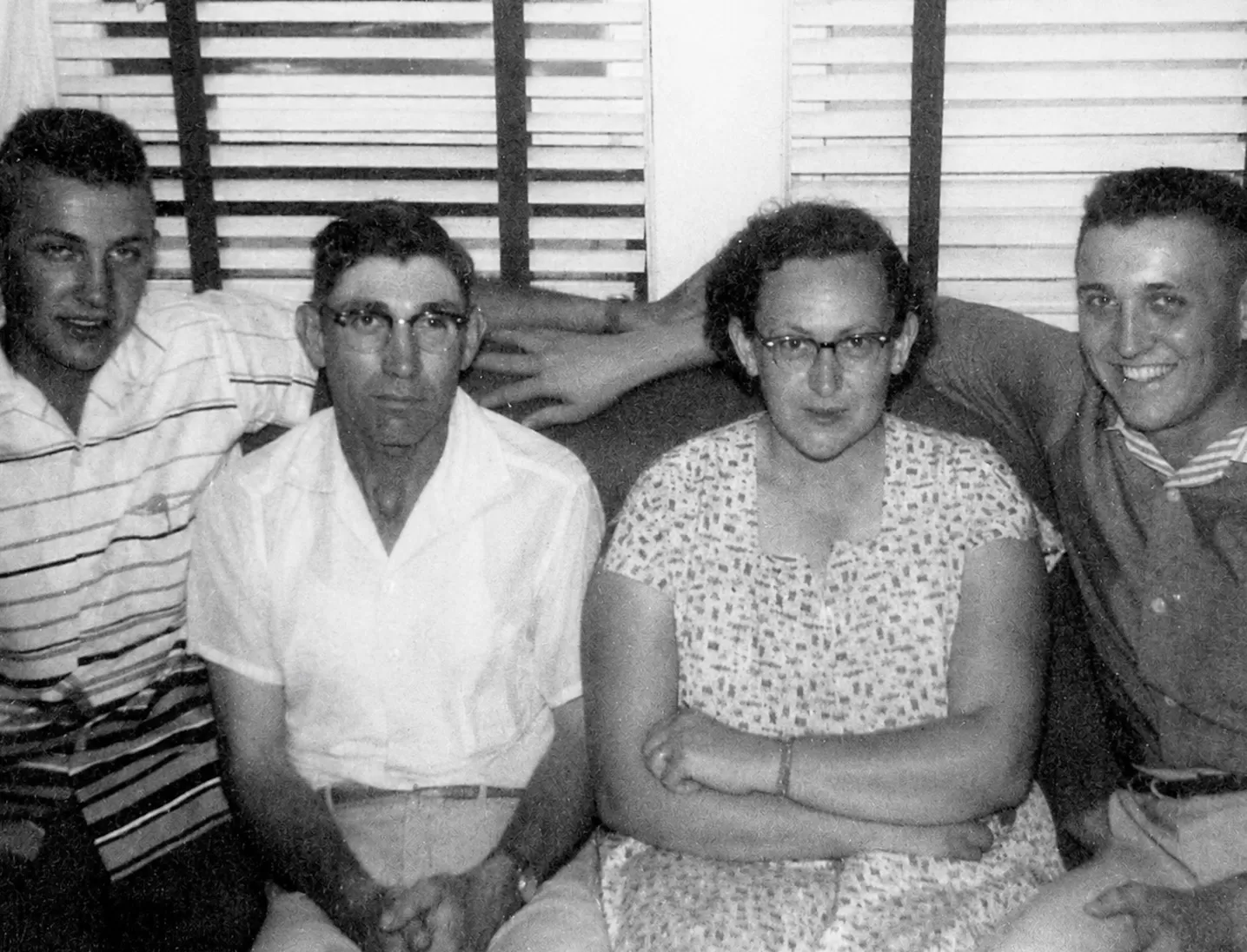
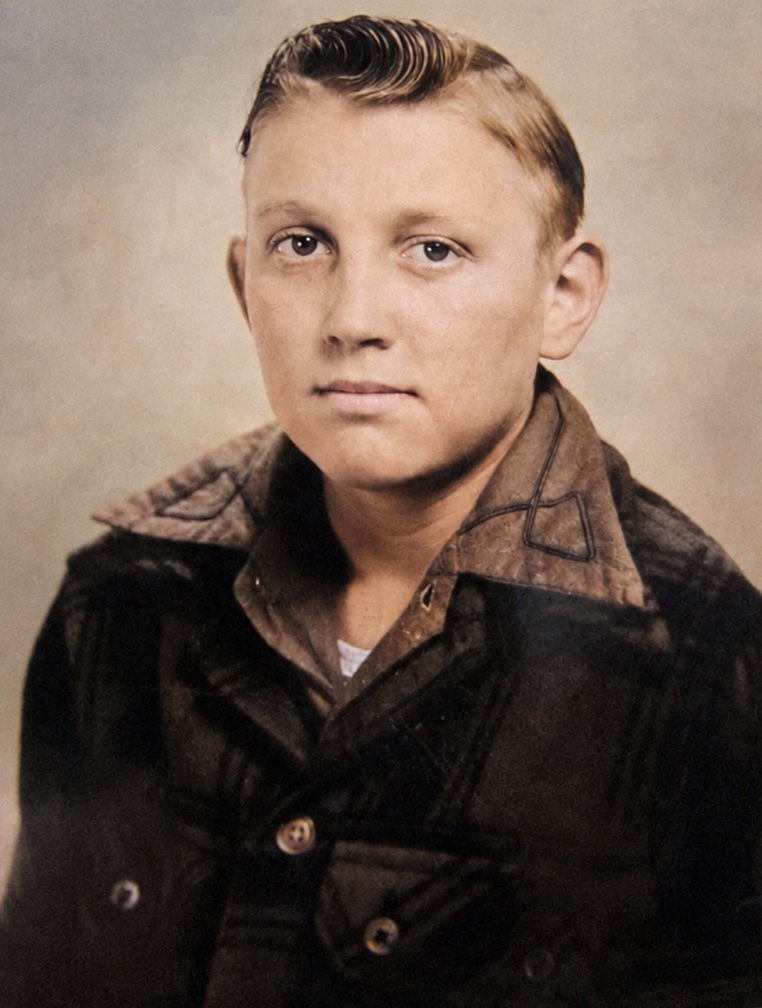
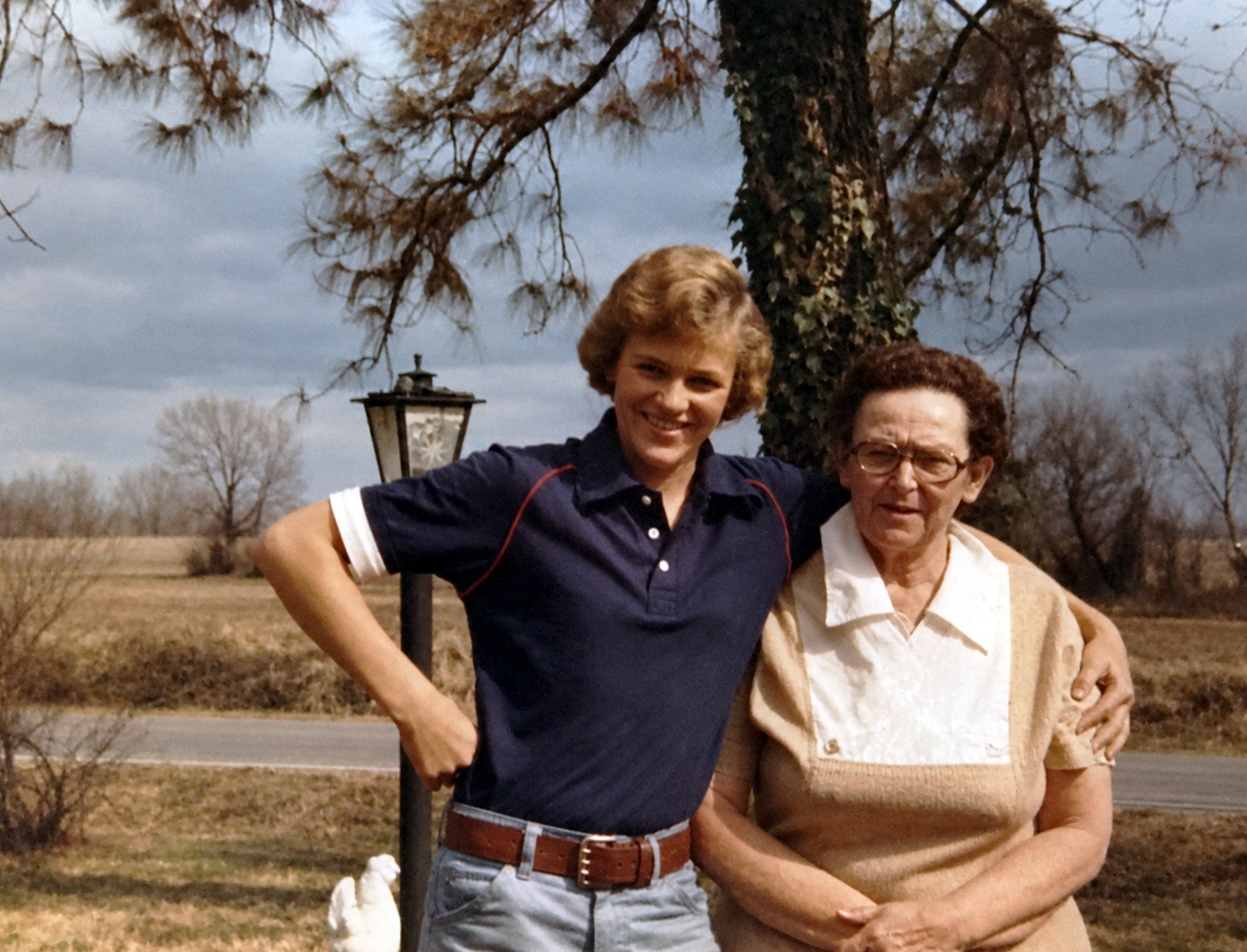
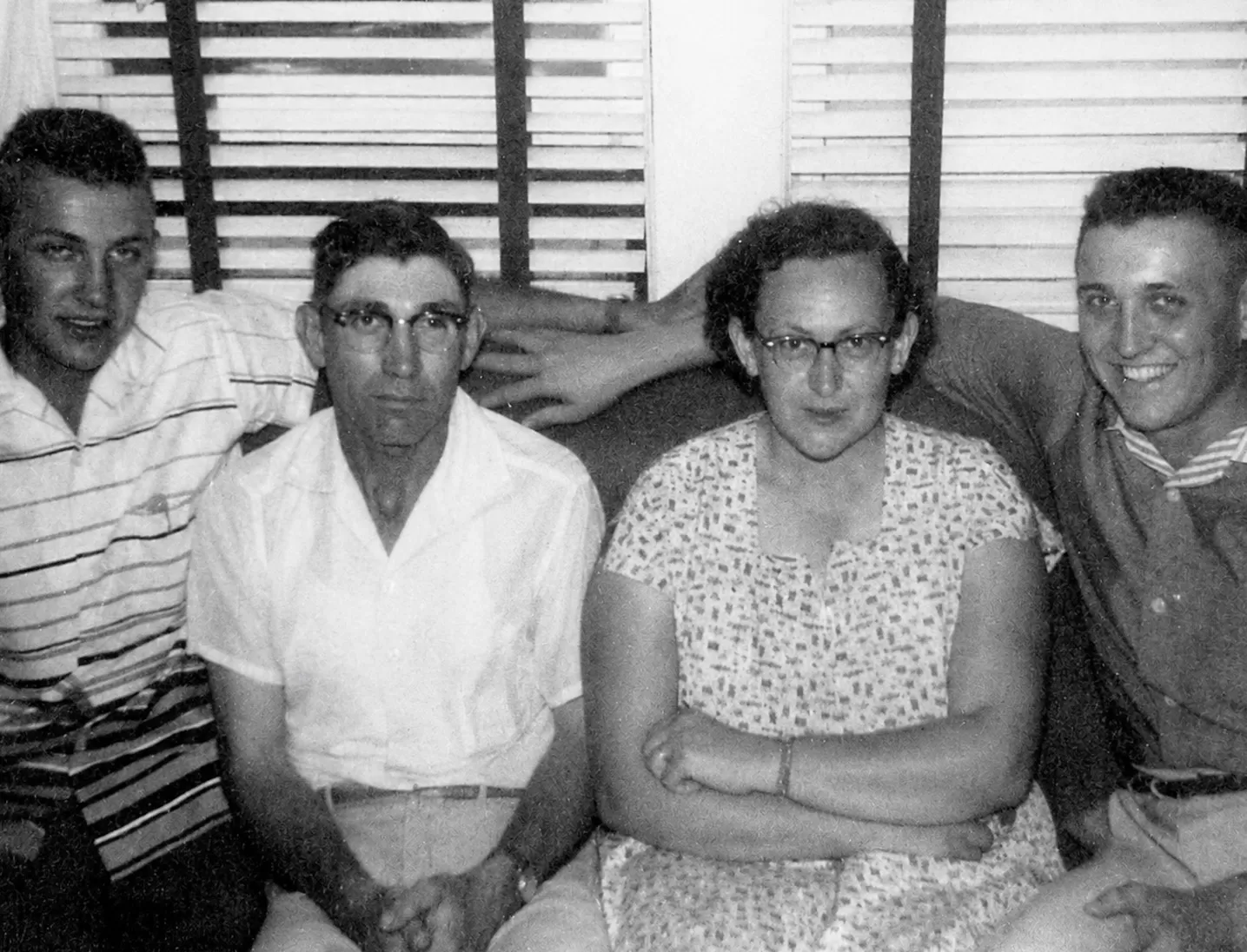
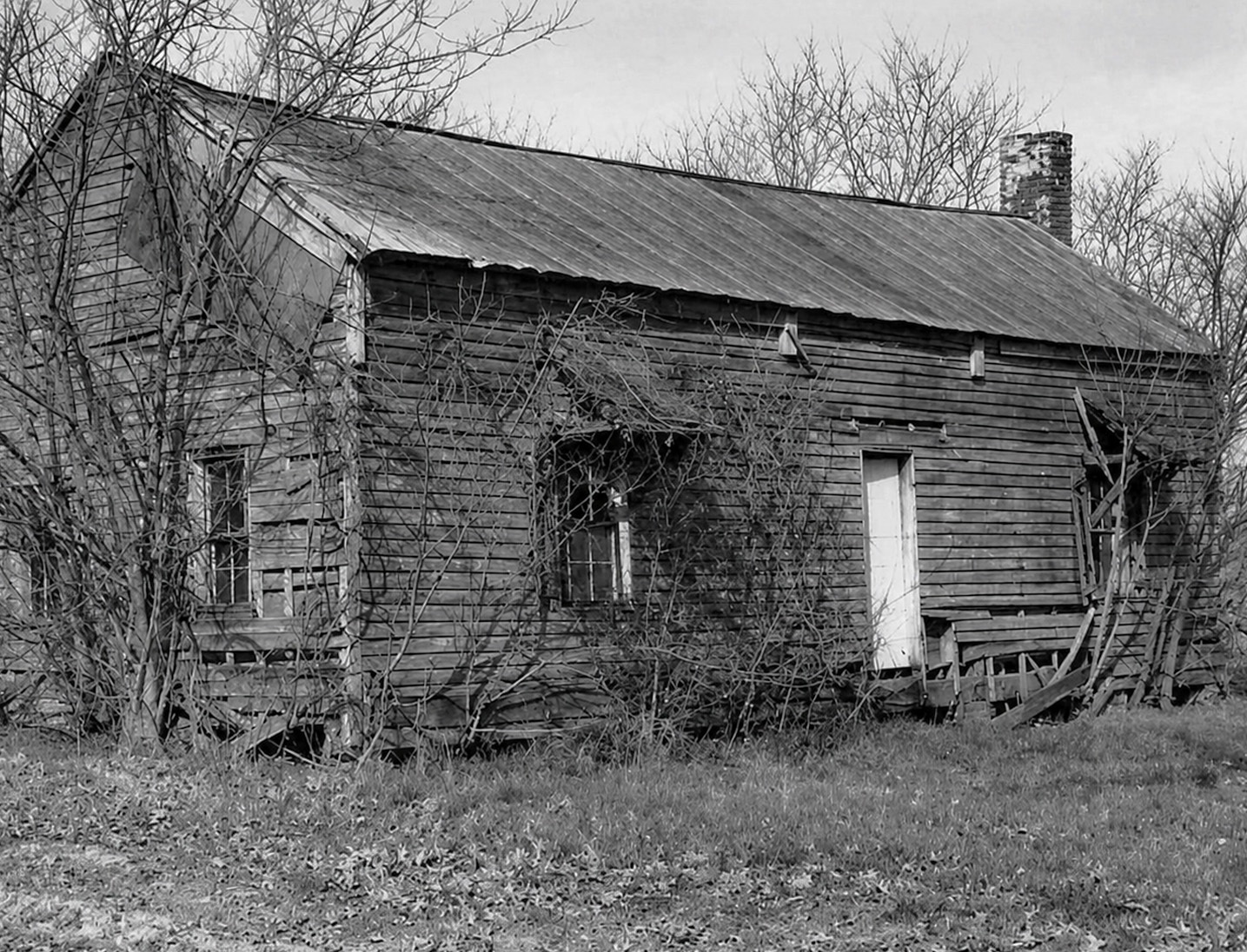
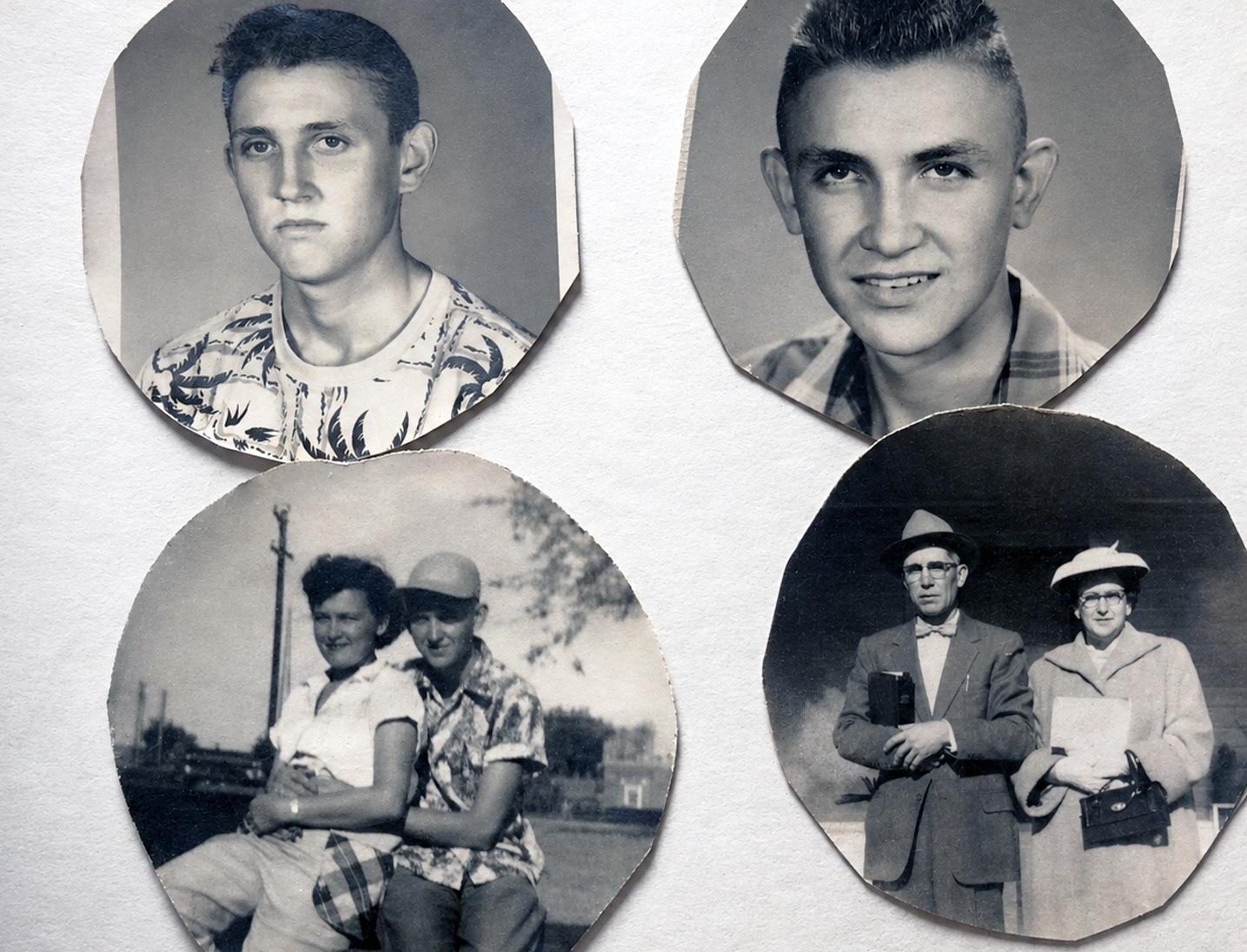
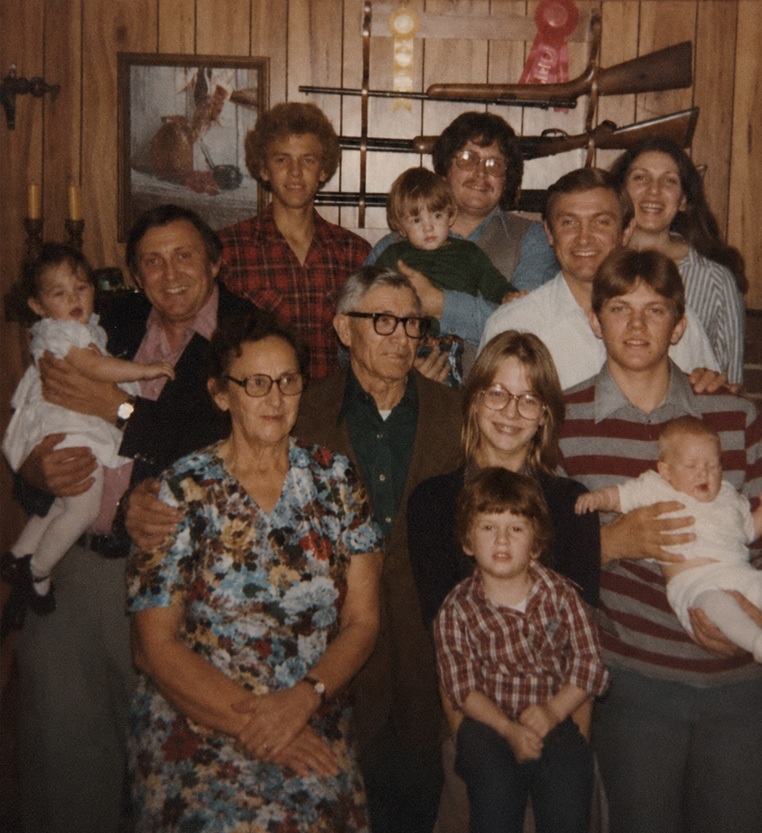
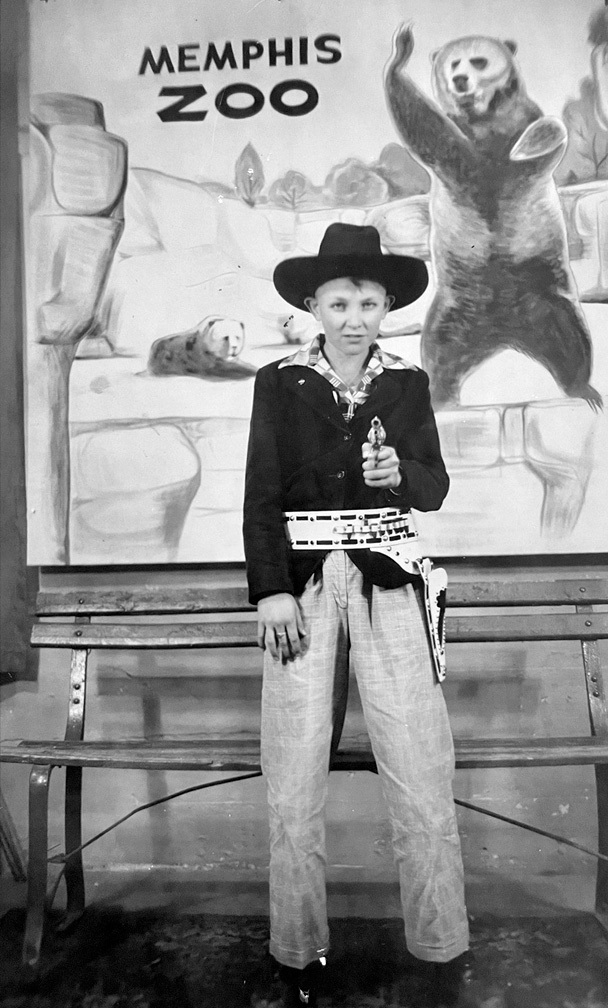
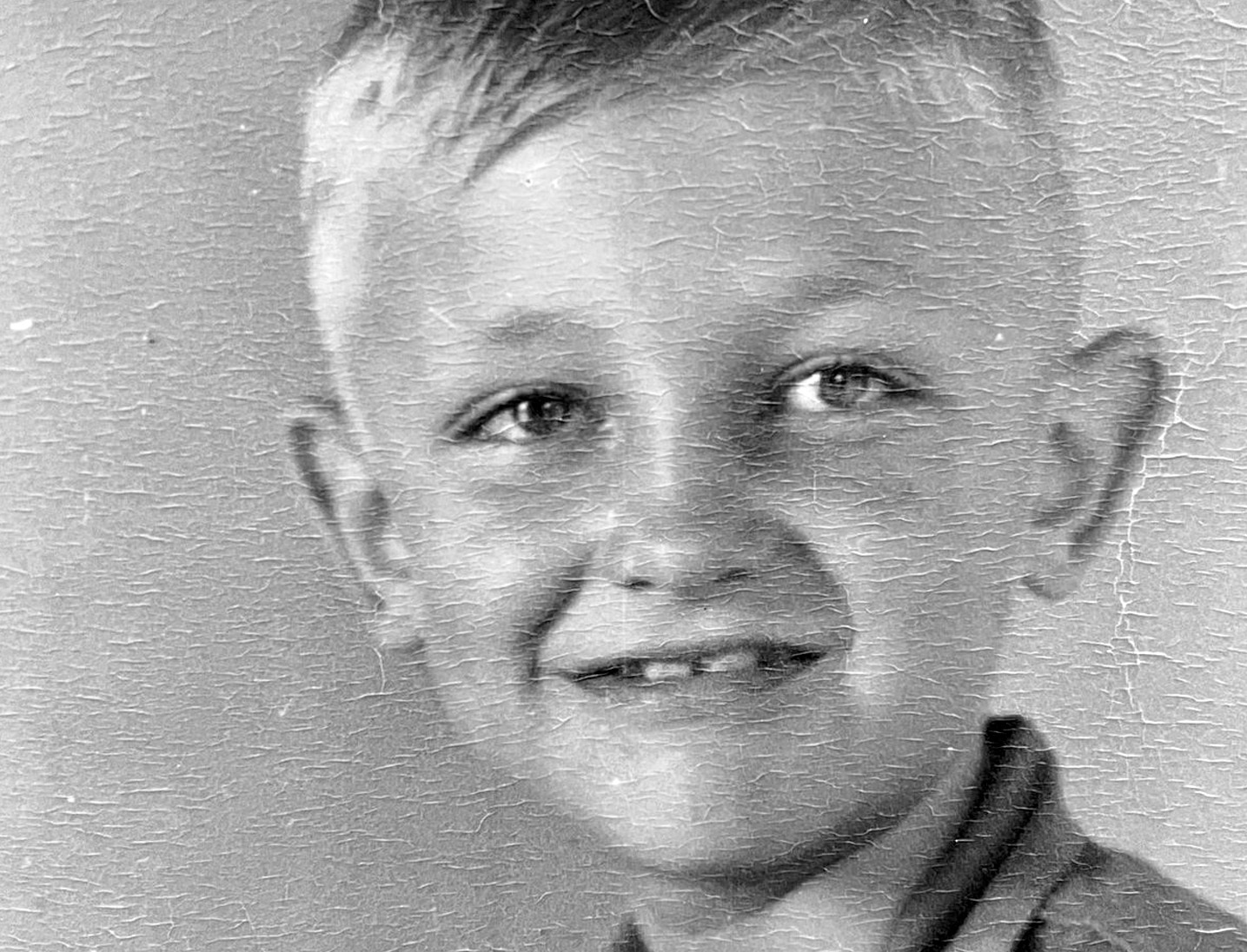
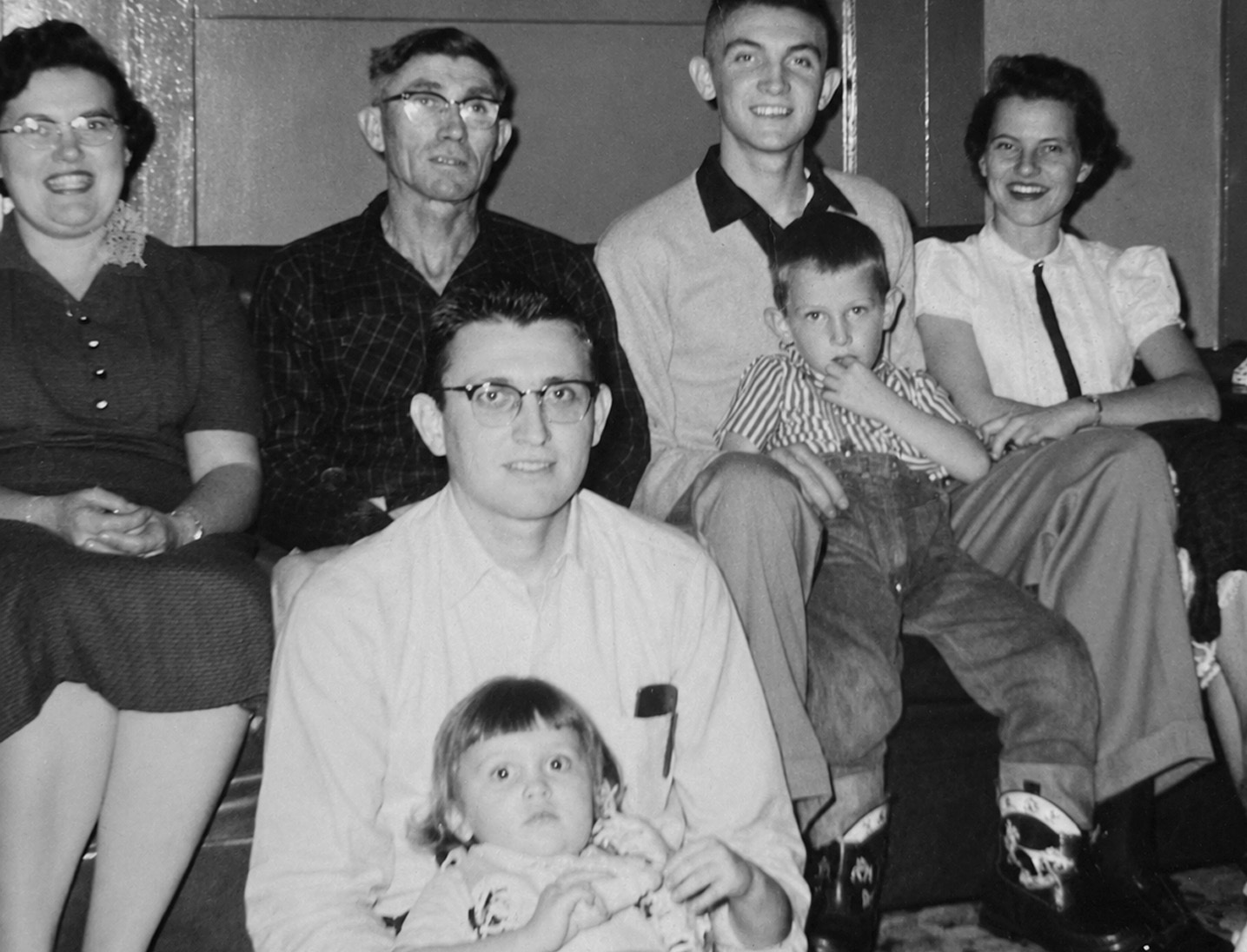

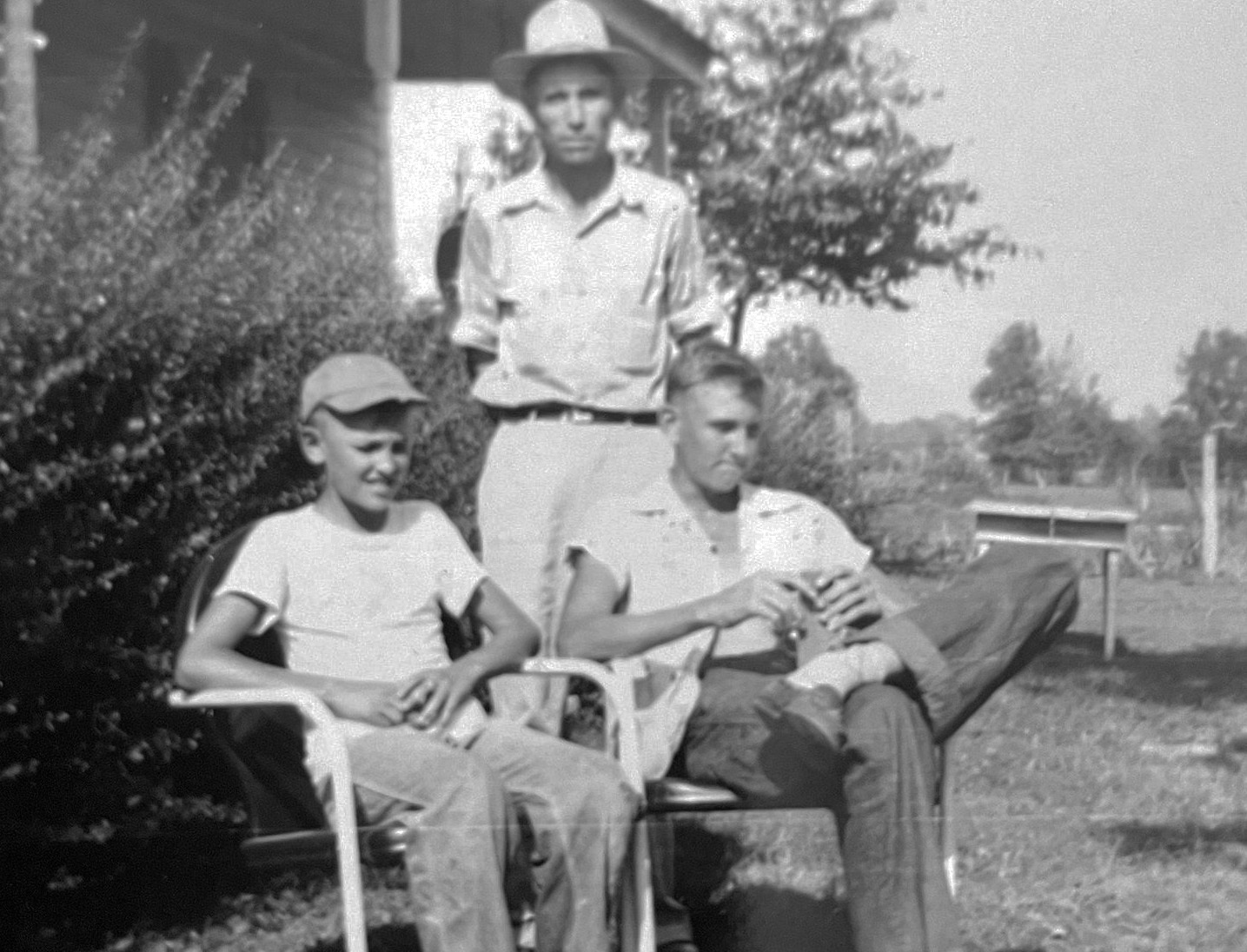
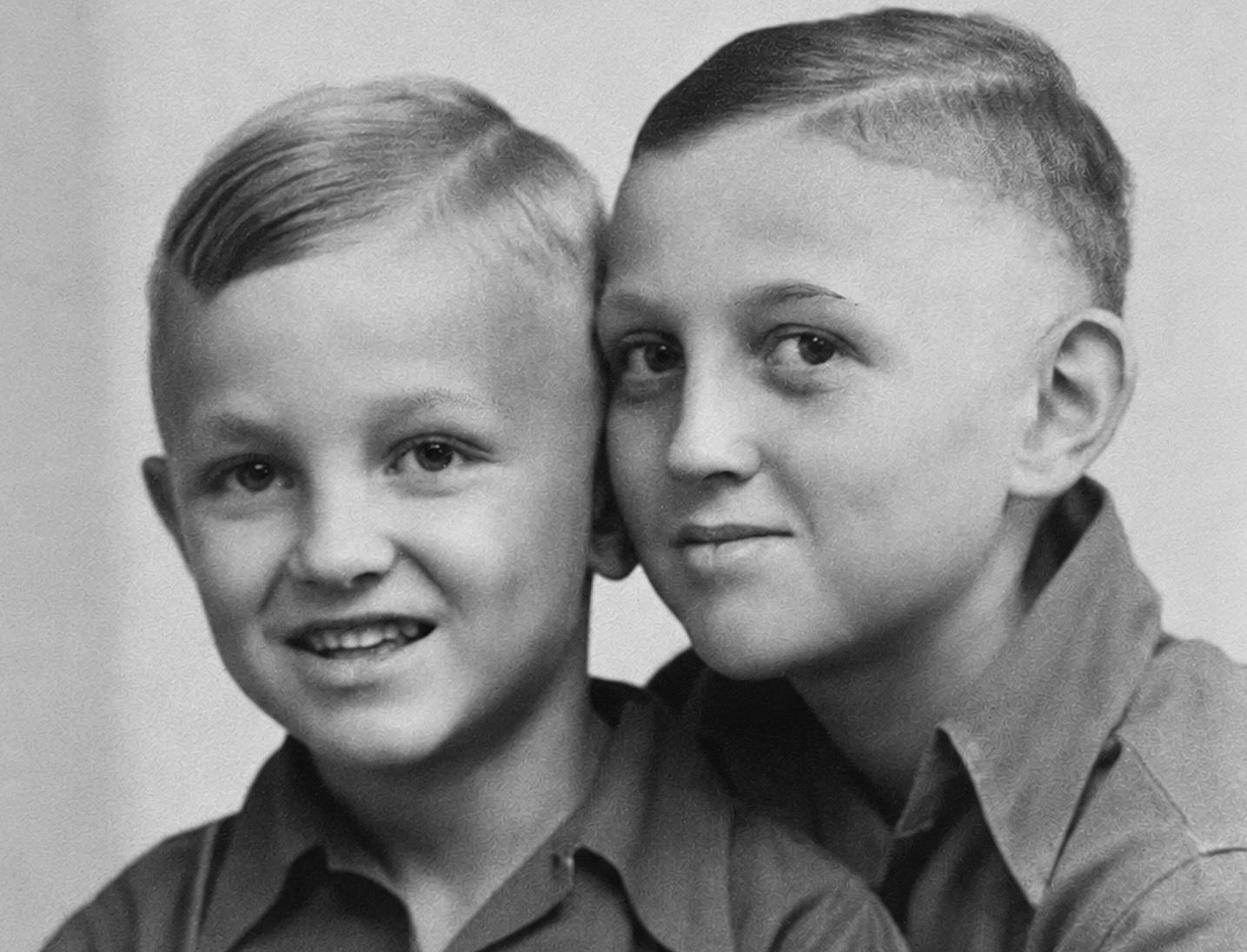
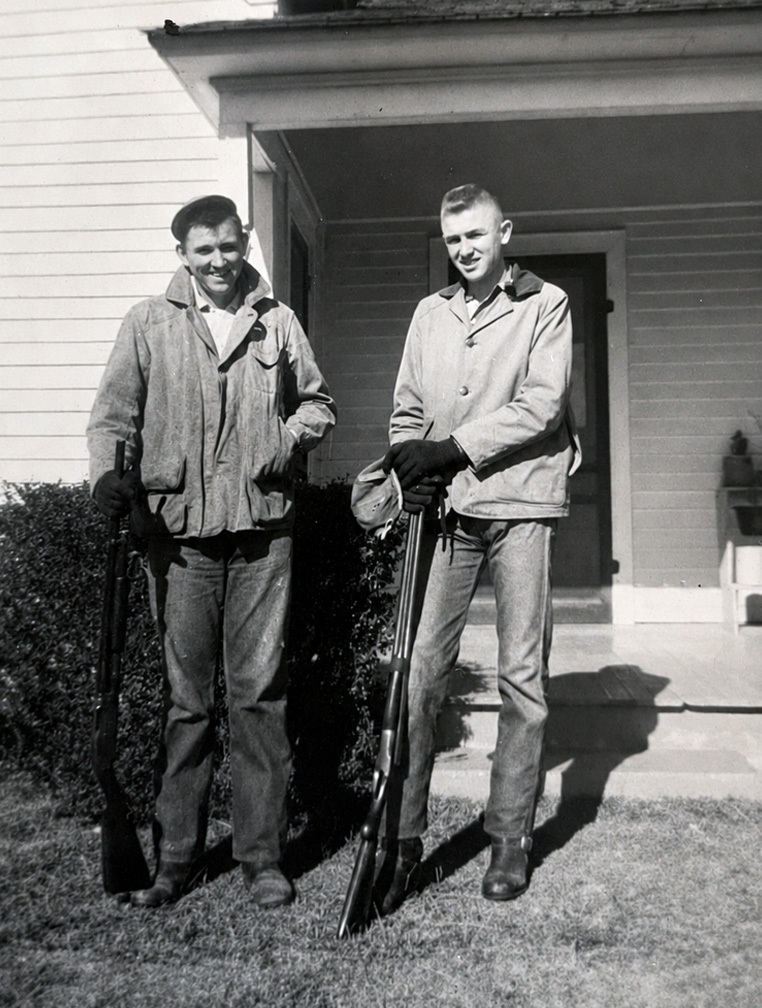
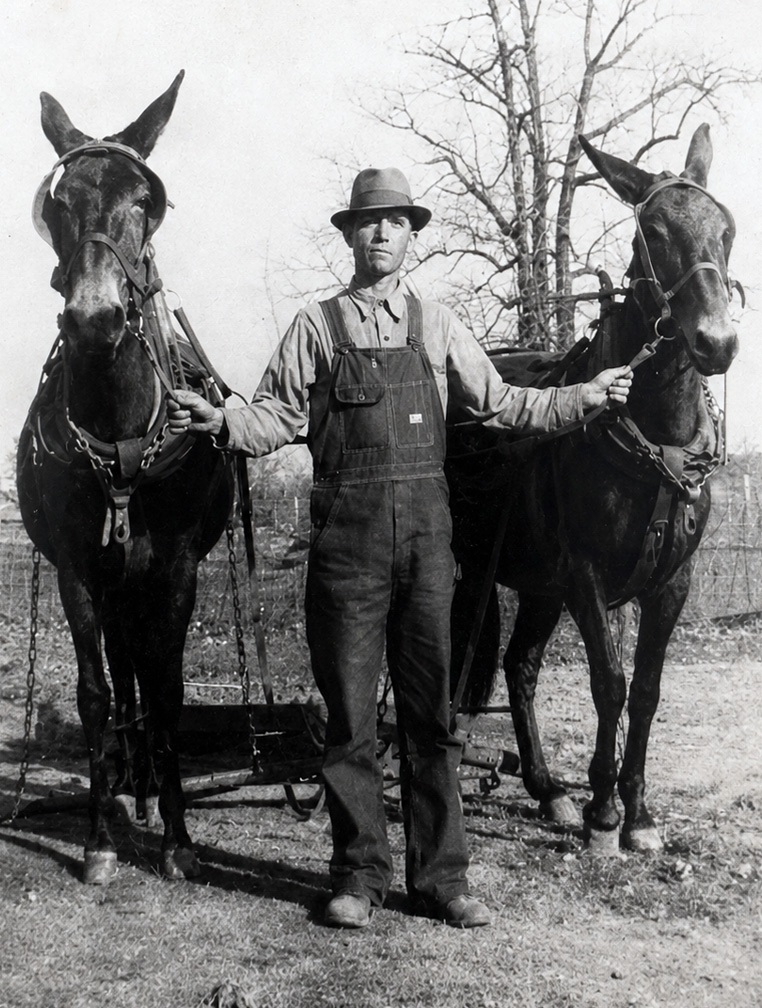
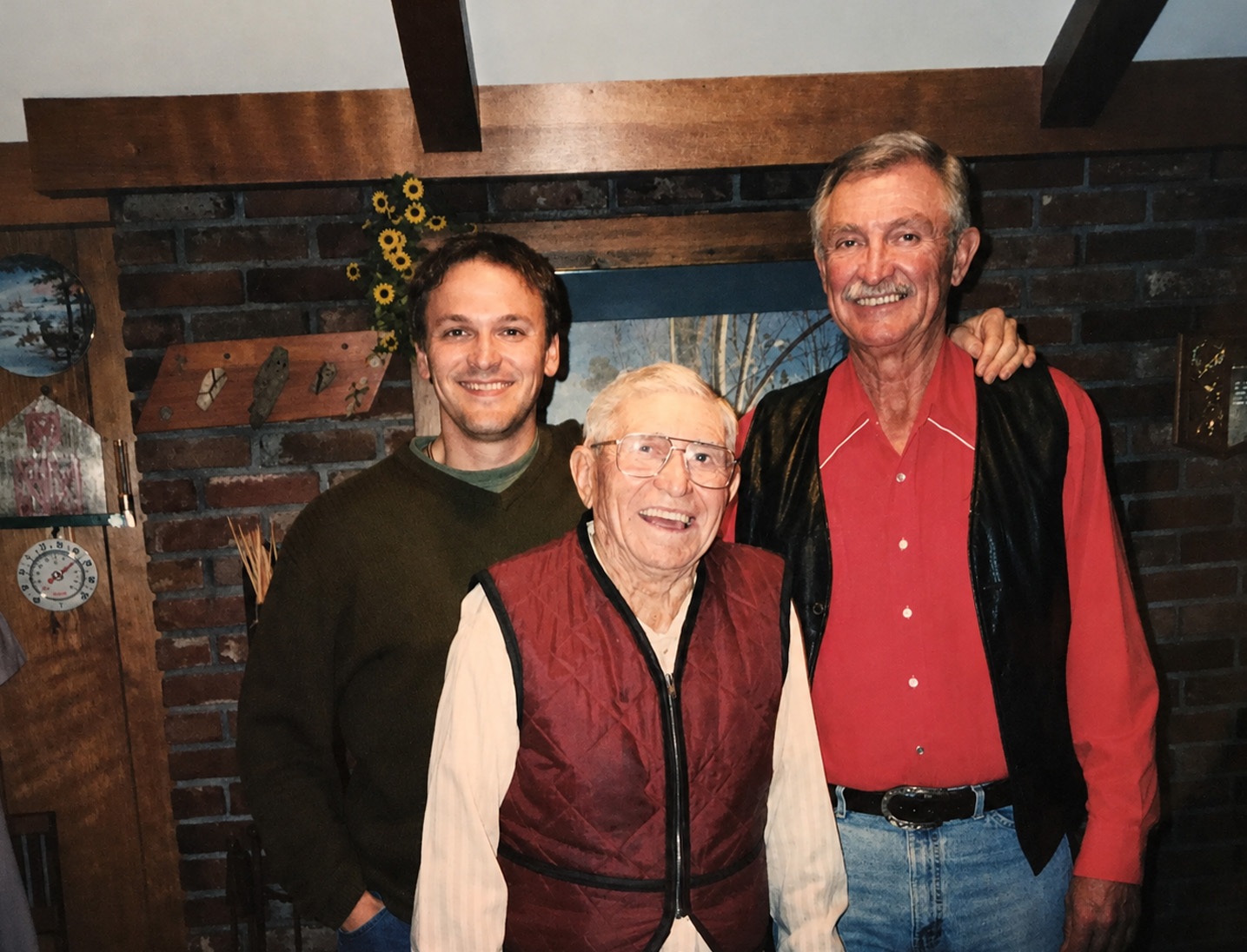
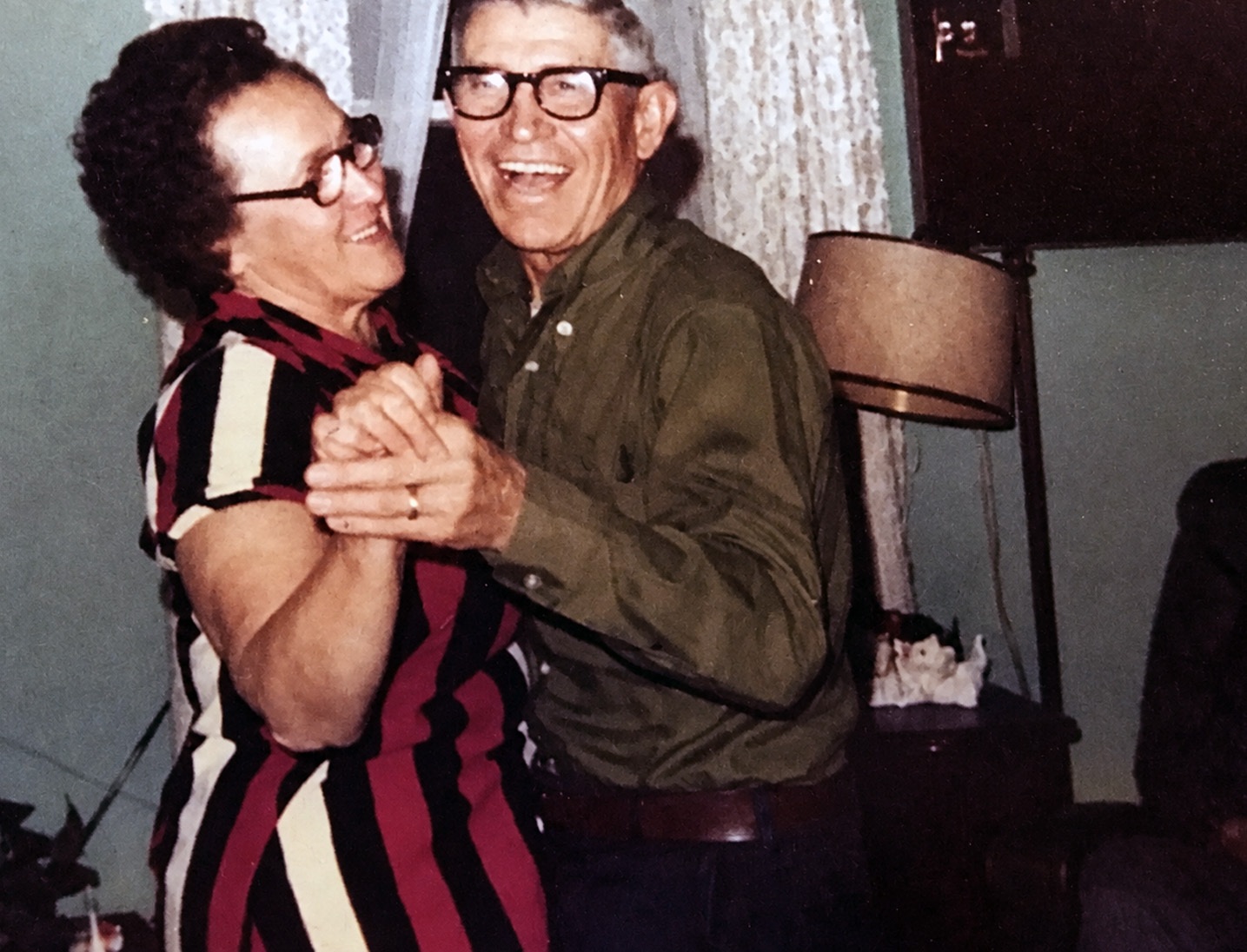
They were active in their church, Holly Grove Baptist and then, when some disagreement with my grandmother arose there, Providence United Methodist Church. My grandmother was a unique combination of the holy — no drinking, reading your Bible, and frequent church attendance — and the slightly profane: a set of small ceramic frogs with human male and female anatomy underneath. It was she who took me on a tour of filming locations from Buford Pusser’s “Walking Tall.” I have very fun memories of my grandmother and Aunt Jo Reid, my grandfather’s aunt who lived across the road, taking me fishing when I visited. While my grandmother never worked outside her home, it seems she was always a whirlwind of things to do.
Always pinching pennies, they kept the back part of their house unair-conditioned in the summer and unheated in the winter until you needed to use that space to sleep. Turning the lights out when you left a room was required.

I do not know what they were like as young people or when my father was a boy, but I know that as old folks, they ran very hot and cold. We knew whether they were getting along by whether his recliner was in the den or in the kitchen. When residing in the kitchen, he kept himself entertained with a tiny black and white televsion with poor reception. I suspect my grandmother’s overly dramatic tendencies may have come from undiagnosed bipolar disorder or some sort of personality disorder. Today, she likely would have been provided a combination of medication and talk therapy that would have given her a much more stable quality of life. However, for my undeveloped preteen brain, her spontaneous behavior provided a unique adventure each time I visited. In fact, some of my love of history likely came from her storytelling, that is, gossip about previous generations and current friends, family, and neighbors.
Sadly, Bo and Elizabeth’s son Jesse died in a tragic accident in September 1997. He was clearing the edge of his pond with a tractor when the tractor flipped over. His wife, Jo, survived him by 18 years, dying in May 2015.

Elizabeth died Dec. 31, 1998, after more than 65 years of marriage. Bo remained in their home on Poplar Corner Road for another nine years, dying on May 27, 2008, at the age of 97. He was buried next to Elizabeth at Providence Methodist Church Cemetery, close to the grave of the mother he had lost as a little boy nearly 94 years earlier and among generations of relatives.
>My grandparents, Bo and Elizabeth Williams with my daughter, Alex
Bo Williams lived long enough to enter the 21st century while remaining in the same community where his parents, grandparents and great-grandparents had built their lives. He never flew in an airplane and rarely traveled far from home, venturing no farther than the Smoky Mountains or Texas, where his son attended seminary. His was among the last generations in rural West Tennessee whose daily lives were still shaped so directly by what they could grow or raise on their farms. I am grateful that, through both sets of grandparents, I was able to experience a small firsthand glimpse of the world in which so many of my ancestors had lived.

If you have photos or information about of any of these Williams ancestors, email me at [email protected]. For more of my genealogy research, visit rscottwilliams.info.