
The Lovelace surname has deep roots in medieval England. The name is a variant of the older surname Loveless, derived from the Middle English loveles, meaning “without love” and probably used in the sense of “fancy-free.” The surname is documented in England by 1251 in the form Loveles. Over the following centuries, spellings varied considerably, eventually producing the modern forms Loveless and Lovelace.
John Lovelace
My 7th great-grandfather, c. 1698–1775
By the time the Lovelace name begins appearing regularly in the surviving records of Charles County, Maryland, John Lovelace (c. 1698–1775) had already acquired land and begun a family. He is the earliest generation in my direct Lovelace line for whom I can begin to reconstruct a hint of the world in which he lived including the farms he occupied, the land he acquired, the names he gave those properties and the children to whom he passed them.
John’s exact place and date of birth remain a mystery. One of the strongest clues comes from a legal deposition taken Sept. 25, 1764, when John gave his age as 65. That places his birth around 1699. By Christmas Day 1721, when he would have been about 22 or 23, he was already appearing in Charles County land records in connection with a 59-acre lease in Zachia Manor, one of the proprietary manors established during Maryland’s colonial period.
Note: John Loveless/Lovelace of Charles County, age 65, gave a deposition in late September 1764. Henry C. Peden Jr. indexed it in Maryland Deponents, and Robert W. Barnes independently abstracted Charles County depositions in the Maryland Genealogical Society Bulletin. The index to Barnes’s article specifically lists “LOVELESS, John, 15,” meaning John’s entry appears on page 15 of Volume 34, No. 1 (Winter 1993). Source
A family rooted in the land
John’s records suggest that he was an established colonial Maryland landholder. His known properties included Hickory Thickett, Lovelace’s Addition and Poor Man’s Hope, along with leases and interests in other Charles County lands. John was among the first to participate in what would become Maryland’s land economy: surveying property, leasing acreage, acquiring tracts and eventually transferring land to his children to help establish them and their families.

Read more about the Lovelace early
Maryland land holdings in this blog post.
That land was central to economic and social standing in 18th-century Maryland. A family’s property represented its principal source of wealth and the best chance for the next generation to thrive. Tobacco dominated much of southern Maryland’s agricultural economy, and farms were connected to a wider Atlantic marketplace through rivers, roads, merchants and ports along the Chesapeake.

Charles Carroll of Carrollton, owner of the vast Carrollton plantation in Frederick County, Md., was among the wealthiest men in colonial America.
| Charles Carroll lived at the same time and general area as John Lovelace, but Carroll stood at the very top of colonial Maryland’s wealthy elite and was regarded as one of the richest men in America. His fortune was a result of vast landholdings, rents, agricultural production, lending and investments in enterprises including ironworks, canals and, later, the Baltimore & Ohio Railroad. Much of that wealth also depended on the labor of hundreds of enslaved people on Carroll family properties. John Adams knew Carroll and described his fortune as “perhaps the largest in America.” By 1789, U.S. Sen. William Maclay simply called him “the richest man in the Union.” |
While John’s land holdings could not touch that of Carroll, it seems he could most likely be called a planter rather than simply a landholder. In colonial Maryland, and later in the south, the word “planter” generally referred to a landowning farmer who produced crops, particularly tobacco and cotton, for the commercial market. Planters ranged from relatively modest farmers to some of the wealthiest men in the colony during John Lovelace’s time.
Who was John’s wife?
One mystery that remains is the identity of the mother of John Baptist and John’s other children. Some genealogies identify John’s wife as Mary, but there seems to be no documentation proving that Mary was John Baptist’s mother. By 1780, John’s widow, Ann Lovelace, was disposing of portions of the family’s property. Whether Ann was the mother of John’s children or a later wife is unproven.
Who was John’s father?
John’s own parentage remains the point at which the proven Lovelace line begins to fade into uncertainty. Earlier family researchers proposed that he descended from William Loveless or Lovelace, who arrived into colonial Maryland in 1663. More recent examination of the Maryland land records has raised another possibility: a man named Thomas Lovelace.
Thomas works for a few reasons. He held a 125-acre tract called Batchellor’s Forest, which he acquired in 1745. After Thomas’s death, that property later appears in records involving John Lovelace. Under Maryland’s inheritance laws of the period, real estate belonging to a man who died without a will could descend to his eldest son. That has led researchers to suggest that John may have inherited Batchellor’s Forest as Thomas’s son. For now, it is just a theory.
John’s final years
By the time John died, the Lovelace family had been established in Charles County for more than half a century. His children were adults, portions of his land had passed to the next generation and one piece of Maryland still carried the family name: Lovelace’s Addition.
That may be the most tangible legacy he left behind. Nearly three centuries later, the old land records allow us to place the family in a particular corner of colonial Maryland and see the beginnings of a line that would eventually move south and west — from Maryland to North Carolina and, generations later, to the farms and communities of West Tennessee.
John appears to have died about 1775, but his final years are difficult to reconstruct. Charles County records contain several men named John Lovelace during this period, including another John who also appears to have died about the same time. Although an inventory index lists a John Lovelace in the 1774–1775 probate records, I have not yet located an estate inventory that can be confidently identified as belonging to John Baptist Lovelace’s father. Until I can make that identification, the details remain fuzzy. This is at the top of my list of things to research in the future.
John Baptist Lovelace, born to John about 1721, would eventually become the next documented generation in my line. Through him the family continued to Charles Lovelace (1747–1796), then Thomas Lovelace (1772–1829) and eventually from Maryland through North Carolina and into West Tennessee.
Latest Blog Post

More Blog Posts
-
Lewis Grave Yard with Some Mention of Early Settlers Along Fifth Creek, Iredell Co., N.C.
-
Will of Thomas Lovelace, 1772-1829
-
Holly Grove Baptist Church: A Castellaw Legacy
-
What I Discovered About my Family Tree from my DNA
-
George Williams of Bertie County and the Battle of Stono Ferry
-
Following my Williams Line Back to Bertie County, North Carolina
-
Maggie Williams Sullivan: A Haywood County Tragedy
-
Townmania: Marcus Winchester and the Making of Memphis
-
Johnny Lee Williams: From Omaha Beach to the Bakersfield Sound to France’s Legion of Honor
-
Johnny Lee Williams: French honor service of local WWII veteran
-
Northern Ireland Trip Report: Belfast, Portrush and a Wedding at Dunluce Castle, Part I
-
Northern Ireland Trip Report: Belfast, Portrush and a Wedding at Dunluce Castle, Part II
-
John Williford of Bertie County, North Carolina
-
Scotland Trip Report: Part II
-
Scotland Trip Report: Part I
-
Tech. Sgt. Aaron S. Castellaw: ‘Spirit, Courage and Devotion to Duty’
-
A Chickamauga Battlefield Map With a Haywood County Connection
-
The Accidental Fame and Lack of Fortune of West Tennessee’s David Crockett
-
Nathan Washington Parlow and his 170-Year-Old Clock
-
April 4, 1920: 100 Years Ago Today in Haywood County, Tenn.
-
Sharing Old Family Photos Found in an Envelope
-
Barbara Trefren Mayer (1948-2018)
-
Remembering Dempsey Williams, a West Tennessee Bird Dog Sportsman
-
“Fury in the Earth”: Harry Harrison Kroll and the New Madrid Earthquakes
-
The Battle of the Bozos
-
‘I’d Like to Kiss You, but I Just Washed My Hair’: Tennessee Writer Harry Harrison Kroll
-
Cotton-Picking Robots
-
Unity Shirley: An Early Haywood County Settler
-
William Smallwood: My Second Cousin, Seven Times Removed
-
Nancy Ross Joyner and Her Family’s Journey to West Tennessee
Visit my blog for more
John Baptist Lovelace
My 6th Great-grandfather, about 1721-1765
John Baptist Lovelace was born in Maryland in or around Charles County about 1721. While his exact birth date has not been proven, what can be documented is that his father was John Lovelace, a landholder in Charles County. A later land record refers specifically to 39 acres of a tract called “Lovelace’s Addition” that the elder John Lovelace had given to “his son John Baptist Lovelace.”

Augustine Herrman’s map of Virginia and Maryland, surveyed about 1670 and published in 1673, shows the Chesapeake world into which the early Lovelace family settled. The Potomac River and its tributaries formed the geography of their lives as successive generations established farms and acquired land in Maryland. Although this map predates the Lovelaces’ later documented landholdings, it provides a remarkably detailed view of the region as it appeared near the beginning of their family’s story in colonial America. Credit: Library of Congress Geography and Map Division, Check it out for yourself.
As mentioned earlier, older family traditions identify the name of John Baptist’s mother as Mary, while others state her name was Ann. The best I can do right now is state her surname remains a mystery. The absence of any records could mean she died fairly young.
John Baptist married a woman named Eleanor sometime before the births of their children. Her first name is documented repeatedly, including in his will. Her maiden name is often given as Wilcoxen, but no marriage record proving that surname exists. The two witnesses to John Baptist’s will were John Wilcoxen and Jesse Wilcoxen, so that certainly suggests a close relationship between the two families.

The colonial Chesapeake tobacco economy, 1755. This colorized detail from the Fry-Jefferson map shows a planter conducting business while enslaved African laborers prepare barrels of tobacco for shipment. The cartouche was intended to represent Virginia’s tobacco trade, but it depicts the broader plantation and Atlantic economy that also shaped neighboring Maryland during John Baptist Lovelace’s lifetime.
As John Baptist Lovelace came of age and raised his family, Maryland was still a British colony and much of the land west and north of the older Chesapeake settlements was being opened to European settlement. His world was centered on farms, plantations, tobacco and grain production, local mills and country roads. Land meant wealth, security and status, which helps explain the importance of tracts with names such as “Hermitage” and “Job’s Comfort” in the records he left behind.

Maryland and the surrounding colonies in 1755, during the adult life of John Baptist Lovelace can be seen on a map beautifully drawn by Joshua Fry and Peter Jefferson in 1751 and published in London in 1755 by mapmaker and engraver Thomas Jefferys. The map depicts the roads, rivers, creeks and settlements of the region during John Baptist’s lifetime and also traces the Great Wagon Road that would help carry thousands of families south into Virginia and the Carolinas. Credit: Library of Virginia, Maps of Early America and Virginia, accession No. 5408. Check it out here.
Land was the principal source of wealth and security in John Baptist’s world and he had accumulated enough of it to divide among several sons. The Lovelace family lived and farmed in the Rock Creek country of colonial Maryland, east of Great Falls on the Potomac River. On this 1755 map above, Great Falls appears near the upper center and “Rock Cr.” just downstream to the east. John Baptist Lovelace’s Hermitage property was in this general area, in what was then Frederick County and is now part of Montgomery County, Maryland.
My family and I visited Great Falls many times when we lived in Northern Virginia. Little did I know we may have been walking in — or at least very near — the footsteps of some of my Lovelace ancestors.

When John Baptist was growing up in southern Maryland, Native peoples, particularly the Piscataway and related Algonquian communities, were still part of the region’s history and population, although European settlement had already displaced many Native communities from their land. By the time John Baptist was an adult, much of Charles and Prince George’s counties had been settled by Europeans for generations.
Enslaved labor had already become deeply embedded in Maryland’s economy, while indentured servants also remained part of the labor system. During John Baptist’s adult years, the colony experienced the French and Indian War from 1754 to 1763, and settlements closer to Maryland’s western frontier lived with the threat of raids and military conflict. At the same time, families were steadily pushing south and west in search of cheaper and more plentiful land, following rough roads and wagon routes into Virginia and the Carolina backcountry. John Baptist died in 1765, just before Britain’s disputes with its American colonies began escalating toward revolution.
John Baptist Lovelace lived his entire life as a subject of the British Crown, but several of the children he left behind, like Charles Lovelace, my 5th great-grandfather, would experience a dramatically different world. They migrated to the Carolina frontier and, within little more than a decade of their father’s death, some members of the family would fight in the American Revolution.
Geography can be confusing when researching ancestry because county lines move and names change. In John Baptist Lovelace’s case, Frederick County was created in 1748 from parts of Baltimore and Prince George’s counties. In 1776, after John Baptist’s death, the eastern portion of Frederick County became Montgomery County. Consequently, a piece of land can appear in Prince George’s, Frederick and later Montgomery County records without the family having ever moved.
Mary Elinor Lazenby, writing about the Maryland families who later settled along Fifth Creek in North Carolina, specifically identified John Baptist’s Hermitage property and noted that the area later became part of suburban Washington, D.C. Her 1944 history remains particularly valuable because she worked from local wills, deeds, cemetery evidence and letters that were written much closer in time to the first settlers than we are today.
The Will of John Baptist Lovelace
On July 13, 1765, John Baptist made his will in Frederick County, Maryland. The document describes him as being in “perfect health” and of sound mind. Yet the will was proved only a little more than a month later, on Aug. 16, 1765, so John Baptist had died sometime between those two dates.
His will provides the clearest picture we have of his immediate family and economic circumstances. He left his wife, Eleanor, 129 acres of Hermitage, where the family was then living, together with part of an adjoining property, for the remainder of her life. After Eleanor’s death, that property was to be divided among their sons William, Elias and Luke. He gave his son Charles Lovelace, my 5th great-grandfather, the remaining portion of the Hermitage.

The Beatty-Cramer House in Frederick County, Md., offers a glimpse of the kind of domestic architecture that existed in the region during John Baptist Lovelace’s lifetime. The oldest portion of the house dates to about 1748 and preserves an unusual mixture of Dutch and English building traditions; I have it here only as a period comparison, not as a reconstruction of the Lovelace home. Preservation remains a work in progress. The Frederick County Landmarks Foundation, which owns the property, has undertaken repairs to windows, walls, gutters and porches, including a county-supported project to rehabilitate the deteriorated west porch and repair the east porch roof. As of 2026, the house remains closed for regular tours while the foundation and Preservation Maryland continue seeking a sustainable long-term use that will allow this remarkable house to be fully preserved and reopened to the public. Source: Maryland Historical Trust and Frederick County Landmarks Foundation.
John Baptist gave his son Isaac Lovelace approximately 121 acres of Job’s Comfort in Charles County. Eleanor was to receive one-third of his personal estate after his debts had been paid. The remainder was to be divided among four younger children: Vachel, Mary Ann, Archibald and Millicent.
The will therefore proves nine children of John Baptist and Eleanor: Charles, Isaac, William, Elias, Luke, Vachel, Mary Ann, Archibald and Millicent.
The will also tells us something about John Baptist’s place in colonial Maryland society. At his death he owned more than 249 acres specifically identified in the will. That included 129 acres of Hermitage and roughly 121 acres of Job’s Comfort, plus the remaining portion of Hermitage that he left to his son Charles. He also owned a personal estate substantial enough to divide one-third to his wife and the remaining two-thirds among four of his children. Taken together, the land and personal property suggest that John Baptist was a well-established landowner of comfortable means, even if he was not among Maryland’s wealthiest planter elite.
From Maryland to Fifth Creek
John Baptist died at around age 44 in Maryland before his family’s migration to North Carolina began.
Soon after the death of John Baptist, his 42-year-old widow, Eleanor, married widower Thomas Robey (about 1712-1774), whose first wife had been Sarah Smallwood Robey (1708-1767). Robey was in his mid-50s. The marriage joined two large Maryland families. Carol and Mike Brady had nothing on Eleanor Lovelace and Thomas Robey. Eleanor brought nine Lovelace children into the blended family, while Thomas had at least six surviving Robey children from his first marriage, creating a family of at least 15 children between them.
Members of the combined family then began moving south into the Fifth Creek country of what was then Rowan County, North Carolina. The migration appears to have occurred in stages rather than as one large wagon train. You can find records of Isaac Lovelace involved in Rowan County affairs by the early 1770s. Thomas Robey was still conducting business in Maryland in October 1771 but was purchasing land in Rowan County by May 1772. Charles Lovelace, my 5th great-grandfather, was certainly in Rowan County by 1773. Elias Lovelace later testified that he moved from Frederick County to Rowan County when he was about 20 years old, around 1775.
Lazenby described these Lovelaces and Robeys as part of a larger migration of Maryland families into the Fifth Creek neighborhood. They settled among families whose names would remain intertwined through marriage, land ownership, military service and church and community records for generations.
The marriage of the Widow Lovelace and the Widower Robey produced another unusual twist in the family tree. Charles Lovelace, my 5th great-grandfather, married Sarah Robey, Thomas Robey’s daughter, while Charles’s brother Elias Lovelace married another Robey daughter, Anne. The children of Eleanor Lovelace and Thomas Robey married one another across the two sides of their newly combined family. In modern terms, I guess you could say Marcia and Jan married Greg and Peter.

Eleanor Lovelace Smallwood’s grave in the Lewis Cemetery in Iredell County, N.C.
Eleanor Lovelace Robey lived only a few years after the move. She wrote her will in Rowan County on Oct. 8, 1776 and died the following year at around age 54. She was buried at in the Lewis Grave Yard. The family would spread remarkably far in the coming years. Some remained in North Carolina. William may have gone to Georgia. Mary Ann apparently went to South Carolina. Elias and Vachel eventually carried the family name west into Kentucky. Of course, some eventually ended up in Haywood County, Tennessee. Within one generation, the nine children born into colonial Maryland had helped establish branches of the Lovelace family across the southern and western frontier.
The children of John Baptist and Eleanor Lovelace
| Name | Birth-Death Year | Spouse | Children |
|---|---|---|---|
| Charles Lovelace My 5th great-grandfather | about 1747-1796 | Sarah Robey (1731-1796) | Eleanor “Nelly,” Cassandra, Ann, Thomas, Erasmus “Rasmus,” Sarah “Sally,” Verlinda “Linny” |
| Isaac Lovelace | about 1742-1785 | Catherine Beall (about 1731-before 1796) | David, James, John, Mahala, Margaret, Eleanor, Nancy |
| William Lovelace | 1747-1815 | Margaret “Margery” Beall (about 1740-1803) | Mary, Elizabeth, James, Margaret, Allen, Martha |
| Elias Lovelace | 1755-1834 | Anne “Nancy Anne” Robey (1757-1841) | Andrew, Archibald, Elizabeth, John, Ann, Verlinda, Emily, Isaac, Cassandra |
| Luke Lovelace | about 1756-about 1800 | Mary Ann, possibly Ridgeway (about 1759-Unknown) | Eunice, Luke Harris |
| Vachel Lovelace | 1758/59-1837 | Margaret “Peggy” Adams (1757-Unknown) | George Adams, William, Elizabeth, Elias, one child whose name is illegible in the family record, John, Walter Williams Morris |
| Mary Ann Lovelace | about 1751-Unknown | Robert Shaw (dates unknown) | Not yet verified |
| Archibald Lovelace | 1761-1845 | Jean “Jane” Erwin (dates unknown) | At least one son and one daughter; names not yet verified |
| Millicent “Milly” Ann Lovelace | about 1763-Unknown | Alexander Francis (dates unknown) | Not yet verified |
Charles Lovelace
Charles Lovelace is the son through whom my family line continues. His father gave him the remaining portion of the resurvey attached to Hermitage. Charles sold that Maryland inheritance to his stepfather, Thomas Robey, on June 21, 1768. By 1773, Robey’s Rowan County will makes it clear that Charles was part of the North Carolina family group. He later acquired his own land in Rowan County and wrote his will in what had become Iredell County on Oct. 8, 1796.
Charles married Sarah Robey, Thomas Robey’s daughter. Some older genealogies mistakenly identify Charles as the husband of Catherine Beall. That appears to be one of the major errors repeated through early Lovelace research.
Isaac Lovelace
Isaac Lovelace received one of the most substantial individual bequests in his father’s will: approximately 121 acres of Job’s Comfort in Charles County. In 1769 he transferred his interest in the property to Thomas Robey. By May 1772, Isaac and Catherine were associated with land purchases in Rowan County, making them among the earliest of John Baptist’s children firmly documented there.
Isaac married Catherine Beall, daughter of James and Margaret Edmonston Beall. Later Beall estate settlements support that relationship and name descendants of Isaac and Catherine. Isaac died intestate in Rowan County on May 4, 1785, leaving Catherine and a family that included sons David, James and John and daughters Mahala, Margaret, Eleanor and Nancy.
William Lovelace
William Lovelace is one of the more frustrating children to follow. He sold his interest in the Hermitage property to Thomas Robey in 1771 and was named executor of his mother Eleanor’s 1776 will. After that, the paper trail becomes difficult because several men named William Lovelace or Loveless were living in Maryland during the same period.
Family tradition identifies him as the William Lovelace who married Margery or Margaret Beall and eventually settled in Columbia County, Georgia, where a William of the appropriate family name died in 1815.
Elias Lovelace
Elias Lovelace left one of the richest records of any of John Baptist’s children because he survived long enough to apply for a Revolutionary War pension. In 1833, Elias stated under oath that he had been born in Frederick County, Maryland, on Jan. 27, 1755 and that the date came from his father’s record of his children’s ages. He said he moved to Rowan County, North Carolina, when he was about 20 years old.
In May 1776, Elias volunteered for three months in a company of men described in the records as “Indian Spies” or frontier scouts. Elias described ranging the countryside around the Catawba River, watching Native American movements and spending time at Fort Rutherford. He later served five months during the Savannah campaign in 1779 and another five-month tour in 1781. His pension credited him with 13 months of Revolutionary War service.
His pension file is particularly important genealogically because it preserves a transcription of the family Bible identifying him as “Elias Lovelace son of John Babtest Lovelace and Eleanor his wife.” The same record gives the Jan. 12, 1775 marriage of Elias and Anne Robey, daughter of Thomas Robey. Elias remained in Rowan County until 1798, when he moved to
Butler County, Kentucky. He later lived in McCracken County and died Dec. 23, 1834. His descendants became associated with the western Kentucky community that was eventually named Lovelaceville.
Luke Lovelace
Luke Lovelace inherited an eventual interest in Hermitage along with William and Elias. He was in North Carolina long enough to witness Eleanor’s will in October 1776, but he later returned to Maryland and appears in Prince George’s County census records in 1790 and 1800. His most intriguing surviving record dates from Oct. 24, 1786, when property originally devised to him by John Baptist was confiscated by the State of Maryland because Luke had not taken the required oath of allegiance. Older family histories sometimes convert this into the more dramatic statement that Luke was a Loyalist who “refused” to swear allegiance. His wife is generally identified only as Mary Ann, but some use the unproven surname Ridgeway.
Vachel Lovelace
Vachel Lovelace also left a Revolutionary War pension file. Vachel testified that he was born in Frederick County on June 12, 1758. At about age 16 he moved to Rowan County. On April 1, 1777, he volunteered for six months as an Indian spy, ranging the frontier around Davidson’s Fort and the headwaters of the Catawba River. He returned to military service in September 1780 and described scouting around British positions, guarding ferries and mills and taking part in fighting at Fish Dam and Blackstock’s Plantation. His total credited service was nine months.
Vachel married Margaret “Peggy” Adams in Rowan County on July 28, 1778. The family record in his pension file gives his death as Jan. 15, 1837, while Margaret’s pension application says Jan. 16. Either way, the record conclusively places his death in Graves County, Kentucky, in January 1837.
Mary Ann Lovelace
Mary Ann Lovelace received a share of her father’s personal estate as one of his four younger children. By the time Eleanor wrote her will in October 1776, Mary Ann had married Robert Shaw.
Robert Shaw appears in Rowan County records during the Revolutionary period, and a man of that name appears in the 1790 census of Laurens District, South Carolina. Lovelace researchers have generally concluded that Mary Ann and Robert moved there.
Archibald Lovelace
Archibald Lovelace was among John Baptist and Eleanor’s younger children. A church record used by Lovelace researchers gives his birth as July 26, 1761 in Frederick County. He was still a minor when his mother made her will in 1776. By 1779, Archibald was entering land along Fifth Creek. He remained associated with the Rowan-Iredell area before eventually moving into Wilkes County, North Carolina. He married Jean Erwin in 1786. Archibald made his will in Wilkes County on Oct. 24, 1844 and was dead by the time the estate was being handled in 1847.
Millicent “Milly” Ann Lovelace
Millicent Ann “Millie” Lovelace, appears as one of the four younger children in John Baptist’s will and was still under age when Eleanor made her own will in 1776. Unlike several of her siblings who remained in North Carolina or continued west, Millicent returned to Maryland. A Prince George’s County marriage record is associated with her marriage on Dec. 22, 1783. The husband’s name can be found both as Alexander Francis and Francis Alexander.
From Maryland to North Carolina and beyond
John Baptist Lovelace represents the last generation of my direct Lovelace line whose life was centered entirely in colonial Maryland. His children, including Charles, began the migration that eventually carried the family from Maryland to North Carolina and, over the generations that followed, across much of the rest of the country.
Charles Lovelace
My 5th Great-grandfather, (about 1747-1796)
Charles Lovelace was born in Maryland, probably sometime in the 1730s or 1740s, to John Baptist Lovelace (1721-1765) and Eleanor Lovelace (about 1723-1777). His exact date of birth remains one of the unresolved questions in this branch of the family. Published and online genealogies have assigned him birth years ranging from about 1730 to 1747. The surviving records do not settle the question. What they do establish is that Charles was old enough to conduct his own land transaction by June 1768, which means he was probably born no later than about 1745.
Charles’ father, John Baptist Lovelace, specifically named Charles in his 1765 Frederick County, Maryland, will and left him the remaining portion of the family property associated with Hermitage. On June 21, 1768, Charles sold the Maryland property he had inherited from his father to Thomas Robey who either was already, or soon would become, Charles’ stepfather.
About 1766, Charles married Sarah Robey (1731-before 1796), daughter of Thomas Robey (about 1712-1774) and Sarah Smallwood Robey (1708-1767) of Charles County, Maryland. The idea that Charles “married his stepsister” is not as simple as it seems. Technically, that appears to put things in the wrong order. Sarah’s mother, Sarah Smallwood Robey, reportedly died in 1767. Charles and Sarah are generally said to have married about 1766. Only afterward did the widowed Thomas Robey marry Charles’ widowed mother, Eleanor Lovelace. If those dates are correct, Charles and Sarah were already husband and wife when their parents married and made them stepbrother and stepsister. Of course, either way, they were not biologically related.
The relationship is confirmed from the other direction in Thomas Robey’s will, written in Rowan County, North Carolina, on May 17, 1773. Thomas called Sarah “Sarah Lovelace” among his own children and named Charles Lovelace among his stepchildren. Whatever the precise dates of the two marriages, the document proves that by 1773 the two families had become thoroughly intertwined.
From Maryland to North Carolina
Charles belonged to the generation that transformed the Lovelace family from Maryland colonists into Carolina backcountry settlers. After selling his inherited Maryland property in 1768, Charles disappears for a few years from records that would determine his whereabouts. His brother Isaac appears in Rowan County records by 1771. Thomas Robey was still conducting business in Frederick County, Maryland, in October 1771 but was buying land in Rowan County by May 1772. Thomas’ 1773 will strongly suggests that Charles was also living in Rowan County by then.

Photo: A historic marker noting The Great Wagon Road, one of colonial America’s great migration routes. It carried thousands of settlers south from Pennsylvania and Maryland through Virginia’s Shenandoah Valley and into the North Carolina Piedmont. Families such as the Lovelaces, who moved from Maryland into North Carolina during the 18th century, were part of this larger southward migration in search of land and new opportunities. Much of their journey would have followed this network of old roads and trails that became known as the Great Wagon Road.
On Oct. 8, 1776, Charles and his brother Luke witnessed their mother Eleanor’s will in Rowan County. Charles therefore was in North Carolina at exactly the time some have placed him in a Maryland military unit.
By 1778, Charles appeared on the Rowan County tax list in the district around Little Dutchman Creek. On Aug. 24 of that year, he acquired North Carolina land under Land Grant No. 1401. Later Iredell County family research described Charles as a substantial landowner and recorded another acquisition of 400 acres in 1784.
This was the same general area described by Mary Elinor Lazenby in her 1944 history of the Fifth Creek settlers. The Lovelaces, Robeys and other Maryland families formed a recognizable community there before and during the Revolution.
There is also an important geographical point when following Charles through the records. He first appears as a resident of Rowan County and later as a resident of Iredell County, but that does not mean he necessarily moved. Iredell County was created from Rowan County in 1788. The county changed around Charles. Statesville became the new county seat the following year.
Charles’ World in North Carolina
The country into which Charles moved was still relatively new to European settlement. Scots-Irish and German settlers had begun establishing communities in what became Iredell County by the early 1750s. Only a generation earlier, the colonial government had constructed Fort Dobbs near present-day Statesville during the French and Indian War. The area had also long been part of the homelands and hunting grounds of Native peoples, particularly the Catawba and Cherokee.
Then came the American Revolution.
Charles was raising his family and acquiring land while the war unfolded around them. His brothers Elias and Vachel Lovelace have much better documented Revolutionary War service than Charles and both served for periods as frontier scouts described in their pension records as “Indian spies.”
The fighting eventually came remarkably close to the future Iredell County community. On Feb. 1, 1781, British commander Lord Cornwallis crossed the Catawba River, and British cavalry under the notorious Lt. Col. Banastre Tarleton attacked American militia at Torrence’s Tavern, in what is now Iredell County.
Did Charles Lovelace serve in the Revolutionary War?
Proving the Revolutionary War service of their ancestors is an important and enjoyable task for many who spend time researching their genealogy. For years, Charles Lovelace has been identified as a Revolutionary War patriot, and there is evidence supporting that opinion. However, if you take a closer look at Maryland records, you may decide Charles is not the best candidate for your DAR membership application.

Much of the claim rests on research published by Henry C. Peden Jr. in “Revolutionary Patriots of Frederick County, Maryland, 1775-1783.” Peden identified a Charles Loveless who enrolled in the Frederick County militia on July 10, 1776. The enrollment was part of Maryland’s effort to organize local militia during the opening months of the Revolution. If this Charles Loveless was my ancestor, it would place him in Maryland performing military service at the same time much of his family was just beginning its migration to North Carolina.
Photo: A recreated Revolutionary War uniform on display in “Witnesses to the Revolution: North Carolina and the War for Independence.” The exhibit is a collaboration between the University of North Carolina at Chapel Hill Library and the North Carolina Museum of History. Photo credit: Johnny Andrews/UNC-Chapel Hill
A second Maryland military record has sometimes been used to support the claim, but it actually raises more questions than it answers. On July 18, 1776, a muster roll for men accepted into Maryland’s Flying Camp lists a soldier as “Barton Lovelass,” followed in parentheses by “Charles Lovless.” Was that, in fact a correction ot was it wishful thinking? The Flying Camp was a temporary force created to reinforce George Washington’s Continental Army during the critical campaign of 1776. The parentheses appear to represent an alternate reading or version of the name, as similar notations occur throughout the published roster. In this instance, however, “Barton” and “Charles” are clearly different given names. Maryland records prove that a separate man named Barton Loveless was actually living there at the time. He appears in the 1776 Maryland census, later took the state’s Oath of Fidelity and was still appearing in Maryland tax records in 1783. For that reason, I do not beleive the Flying Camp entry is reliable proof of my Charles’ service.
The July 10 militia enrollment naming Charles Loveless is more reliable because it appears to be a separate record and does not depend on the Barton notation. Even so, there remains a significant problem establishing that the Charles in that document was Charles Lovelace, son of John Baptist Lovelace and husband of Sarah Robey. Charles had sold the Maryland land inherited from his father in 1768, and by 1773 his family was becoming established in Rowan County, North Carolina. Most significantly, Charles personally witnessed his mother Eleanor’s will in Rowan County on Oct. 8, 1776, only three months after the Maryland militia enrollment. He was firmly established in Rowan County by 1778, when he appeared on the tax list and acquired land there.
Of course, none of this makes military service impossible. Charles could have returned temporarily to Maryland, enrolled in the militia and then traveled back to North Carolina. Families continued to move between Maryland and the Carolina backcountry, and several of Charles’ brothers retained strong connections to both places. What is missing is a document that ties the Maryland soldier unmistakably to this “my” Charles Lovelace. I have not found a pension application, discharge, pay record or military document naming Sarah Robey, his father John Baptist, his North Carolina residence or another identifying detail that would eliminate the possibility that the record belongs to another man named Loveless.
There is also an important Daughters of the American Revolution connection. Charles Lovelace, husband of Sarah Robey, has been associated with DAR Patriot Ancestor No. A071884, meaning Charles Lovelace has historically been used as a Revolutionary-era ancestor for DAR proof. That is meaningful, but it appears older DAR applications sometimes relied on identifications that later genealogical research has questioned or corrected. The most useful evidence would be the original DAR application and the supporting documentation used to establish that the Maryland soldier and Sarah Robey’s husband were the same man. Unfortunately, Right now, the database returns a message: “The public access to DAR’s Genealogical Research System (GRS) is unavailable at this time. Thank you for your patience!” I have added this to my “things to research in the future” list.
| Until I can prove otherwise, I believe the most accurate conclusion is that Revolutionary War service has long been attributed to Charles Lovelace and there is a genuine 1776 Maryland militia record for a man named Charles Loveless. However, I have not yet found enough evidence to prove beyond a reasonable doubt that the soldier was my “Charles Lovelace.” Rather than claim another man’s military service as his own, I am leaving the question open until I can get those DAR records. |
By the end of his life, Charles had accumulated enough property to leave substantial land to both of his sons.
| Charles Lovelace’s Will, Oct. 8, 1796 In the Name of God Amen this the Eighth day of October one thousand seven hundred and ninety Six. I Charles Lovelace of the County of Iredell and State N. Carolina, being sick and weak in Body but of sound and perfect memory thanks be to God all his mercies and calling to mind the mortality of my Body and knowing that it is appointed for all men to die do make this my last Will and Testament that is to Say Principally and firstly all, I Recommend my Soul to God that first gave it and Body to be Decently Buried [in the] ordinary manner by [my Executors] and touching such worldly Estate wherewith [it hath] pleased God to Bless me with in this life I give and Demise and Dispose of in the following manner Viz: Item I give and bequeath unto my son Thomas Lovelace my Mill and two Hundred Acres of land to be laid off on the west side of the tract of land I now live on by a North and South course to him and his heirs forever which two hundred acres is to extend across my new entry. Item I give and bequeath unto my son Rasmus Lovelace all the remaining Part of the tract of land I now live on, also all the remaining part of my new entry that joins my said tract, to him his heirs & assigns forever. [Also] one new Saddle, one Cow and Six head of hogs that is running at home. Item I give unto my Daughter Cassandra, Negro Rach, one feather bed. Item I give unto my Daughter Linny Summers, Negro Bet. Item I give unto my Daughter Sally Johnston, Negro [Hannow/Hannah?] and Forty Pounds N. Carolina Currency. Item I give unto my Daughter Nelly Gaither, Negro Jane and Thirty Pounds N. Carolina Currency. Item I give unto David Thompson forty Pounds Currency of N. Carolina to be paid him by my Executors when he arrives at the age of twenty one years. All the Rest and Residue of my Estate both Real and Personal I leave to be Sold [for?] my just Debts, and Such a amount of more then will pay my Debts and the Legacys that is to be paid in money, to be equally Divided between my Children; that is to say Thomas, Rasmus, Cassandra, Eleanor, Sally, Linny, and Ann. Last of all I order and Ordain my trusty friends Burgess Gaither and my son in law Jeremiah Gaither to be my lawful Executors and do hereby Disallow revoke and make Void all other wills heretofore made allowing this to be my last will and Testament as witness whereof I have hereunto set my hand seal the day and year above Written. Signed Sealed and acknowledged in the presence of: [Richard?] Gaither Zephaniah Ellis Junr. Charles Lovelace [seal] |

Charles’ 1796 will reveals a man who had become firmly established in the North Carolina backcountry. He lived on his own land, owned additional acreage, livestock and a mill, and had accumulated enough property to provide substantial inheritances for seven children.
His will is very specific about how he wanted his property divided among his family. Thomas Lovelace, my direct ancestor, received what may have been the most economically valuable inheritance: Charles’ mill and 200 acres of land on the west side of the tract where Charles was living, with the “200 acres extending across part of a newer land entry.” His other son, Rasmus Lovelace, received all the remaining portion of Charles’ home tract, the remainder of the adjoining new entry, a new saddle, one cow and six hogs.
Photo: The will of Charles Lovelace can be found in the archives of familysearch.org, image #246-247
Charles’ daughters generally received personal property rather than land in order to keep the land in the Lovelace family. Cassandra Lovelace received an enslaved person identified in the will as Rach, probably Rachel, and a feather bed. Linny Summers received an enslaved person named Bet, possibly Betty. Sally Johnston received an enslaved person whose name appears to be Hannah, along with £40 in North Carolina currency. Nelly Gaither, who was evidently the daughter Charles later called Eleanor, received an enslaved child named Jane and £30 in North Carolina currency. Charles also made a separate bequest of £40 to David Thompson, “to be paid when Thompson reached age 21,” although Charles did not identify him as a son and his relationship to the family remains uncertain.
Finally, Charles ordered the remainder of his real and personal estate sold to pay his debts and the monetary legacies. Anything left afterward was to be divided equally among his seven children: Thomas, Rasmus, Cassandra, Eleanor, Sally, Linny and Ann. The distribution gives a detailed picture of Charles’ estate: land and the mill went primarily to his sons, while his daughters received enslaved people, household property and cash, a pattern typical of inheritance practices among landowning families in his place and time.

Charles makes no provision for Sarah indicating that she had died by the time he made his will. Genealogical compilations consequently place her death before Oct. 8, 1796. His will was probated Nov. 3, 1796, so Charles almost certainly died sometime between Oct. 8 and Nov. 3.
My Smallwood ancestors
Charles’ wife, Sarah Robey Lovelace (1731-1796), connects this generation to another prominent early Maryland family. Her mother, Sarah Smallwood Robey (1708-1767), was a daughter of Thomas Smallwood (1675-1735) and granddaughter of the immigrant James Smallwood (about 1638-1714), who arrived in Maryland in the 17th century.
Sarah Robey Lovelace was a second cousin of Gen. William Smallwood. He later became a major general in the Revolution and governor of Maryland. His home, Smallwood’s Retreat, was built about 1760 and survives today at Smallwood State Park. Maryland’s Department of Natural Resources describes the estate as part of the tobacco-based plantation economy of colonial Maryland and records that Smallwood enslaved 56 people by 1790. You can read more about my visit to Smallwood’s Retreat here.
Photo: Visiting Gen. William Smallwood’s home in Maryland, Smallwood’s Retreat
| James Smallwood (about 1639-1714/15), Sarah Robey Lovelace’s great-grandfather and my 8th great-grandfather, was likely born in England and was living in Maryland by 1663. He may have begun his life in the colony as an indentured servant, making his rise over the next half-century especially remarkable. James became a planter, Indian trader and keeper of an ordinary, or licensed tavern, and accumulated substantial land in Charles County, including tracts with names such as “Welcome,” “Eltham,” “May Day,” “Porke Hall” and “Batchellors Hope.” By the end of his life, he owned about 1,845 acres. His prominence extended well beyond farming. He served as a Charles County justice for more than 20 years, rose through the colonial militia from major to lieutenant colonel and finally colonel, and represented Charles County in Maryland’s Lower House of Assembly for eight consecutive terms between 1692 and his death. James also supported the Protestant Associators’ Revolution of 1689, which overthrew Lord Baltimore’s proprietary government and brought Maryland temporarily under direct royal control. His estate included enslaved people, placing him firmly within the plantation and slaveholding economy that increasingly shaped colonial Maryland. His son, Thomas Smallwood (about 1675-1734), my 7th great-grandfather, continued the family’s rise as a substantial Charles County landowner. By the 1690s, Thomas was conducting business in his own name, and over the following decades he accumulated several hundred acres, including tracts called “Smallwoods Plains,” “Smallwoods Addition,” “Amendment” and “Wheelers Choice.” A 1732 deed referred to him as “Thomas Smallwood, Sr., Gent.,” a designation that reflected his recognized standing as a man of property in colonial society. Surviving court records also reveal something of his family life. After his brother William died, Thomas took William’s children into his home and later successfully sued his father’s estate for the tobacco he had been promised for their support. Thomas made his will in April 1734, naming eight children, including Sarah Smallwood Robey Lovelace, through whom my line continues. He died the following month. Through Sarah, the Smallwood family became intertwined with the Robeys and, eventually, the Lovelaces, joining several of the old Maryland families that would later migrate together into the Carolina backcountry. |
The Children of Charles and Sarah Robey Lovelace
| Name | Birth-Death Year | Spouse | Children |
|---|---|---|---|
| Eleanor “Nelly” Lovelace | about 1766-1800 | Jeremiah Gaither (1762-1815) | Matilda, Greenbury “Dockie,” Enos |
| Cassandra “Cassie” Lovelace | 1769-1811 | — | — |
| Ann Lovelace | about 1780-Unknown | William Summers (dates uncertain) | Family lists include Malinda, Alfred Charles and Lillis; needs further verification |
| Thomas Lovelace | 1772-1829 | Amelia “Millie” Dyson (1761-1829) | Charles, Elam, Anna, Erasmus, Levi, Dyson, Archelaus, Sarah, Thomas A., William, Elizabeth Elvira |
| Erasmus “Rasmus” Lovelace | 1774-1828 | Lydia Johnson (about 1779-Unknown) | At least Amos and Sarah; later compilations also identify William Erasmus, Harriet, Eliza and Elizabeth/Bettie |
| Sarah “Sally” Lovelace | 1777-1852 | Asa Johnson (1775-1846) | Lydia Almedia, Eleanor B., Elizabeth, Wilson L., Jeremiah E., Amos, Asa Simpson, Courtney A., James J., Anne Newell, Martha |
| Verlinda “Linny” Lovelace | 1778-1820 | Benjamin Summers (1772-1829) | Lizza, Lilles, Alvin, Alpha, Abner, Hiram, Elitha, Amon, Ira, Jerusha, Thomas Franklin, George W., John W., Charles Lovelace |
Eleanor “Nelly” Lovelace married Jeremiah Gaither, and Charles explicitly called Jeremiah his son-in-law when he made him one of the executors of the 1796 will. Their known children included Matilda, Greenbury “Dockie” and Enos Gaither.
Cassandra “Cassie” Lovelace apparently never married. She remained in Iredell County and made her own will in December 1811. Her unmarried status makes the conflicting “Cassandra/Rach” versus “Anne/Ben” transcription in her father’s will.
Ann Lovelace is one of the least well-documented children. She is explicitly named in Charles’ will, and later compilations identify her husband as William Summers.
Thomas Lovelace (1772-1829) is the son through whom my direct family line continues. Charles gave him perhaps the most economically important single asset in the estate, his mill, along with 200 acres. Thomas remained in Iredell County, married Amelia “Millie” Dyson and became the father of the next Lovelace generation, including Thomas A. Lovelace, whose branch would eventually move west to Tennessee.
Erasmus “Rasmus” Lovelace (1774-1828) received the remaining portion of Charles’ principal landholding, along with livestock and a saddle. He married Lydia Johnson, a sister of Asa Johnson, meaning two of Charles’ children married into the same Johnson family. Compiled records identify at least six children.
Sarah “Sally” Lovelace (1777-1852) married Asa Johnson (1775-1846) about the same time her father died in 1796. They remained in Iredell County and had a large family. Their descendants provide another substantial branch of the Fifth Creek Lovelace story.
Verlinda “Linny” Lovelace (1778-1820) married Benjamin Summers (1772-1829) in 1794. Their family is unusually well represented in later records, and a Benjamin Summers-Verlinda Lovelace family Bible is indexed in genealogical collections. One compiled Summers history identifies 14 children born between 1796 and 1819.
Thomas Lovelace
My 4th Great-grandfather, about 1772-1829

Thomas Lovelace (about 1772-1829) was born during a period of enormous change for the Lovelace family. His parents were Charles Lovelace (about 1747-1796) and Sarah Robey Lovelace (1731-before 1796), whose families had deep roots in colonial Maryland. In Charles’ original 1796 will, he specifically called Thomas “my son” and left him his mill and 200 acres of land in Iredell County, North Carolina.
Family histories traditionally place Thomas’ birth in Frederick County, Maryland, in 1772, and that is certainly possible. But his birth occurred at almost exactly the time the extended Lovelace-Robey family was moving from Maryland into Rowan County, North Carolina. Charles appears to have been associated with the North Carolina family group by 1773. I would therefore describe Thomas as more than likely born in Maryland about 1772.
> Photo: The Waddell House in Iredell County, N.C. provides a rare glimpse of the world the Lovelace family knew. The house was built about 1820-1835 only a few miles from the Fifth Creek community where Thomas and Amelia Dyson Lovelace lived. This photo and others in the series, photographed by Frances Benjamin Johnston in 1938 for the Carnegie Survey of the Architecture of the South, illustrate the kind of Piedmont farmstead that existed in the Lovelaces’ immediate neighborhood during Thomas’ lifetime. Photo credit: Library of Congress, Prints and Photographs Division.
If Thomas was born in Maryland, he would have had little memory of it. He grew up in the Carolina backcountry along with the children and grandchildren of the Maryland families who had settled around Fifth Creek. In 1788, when Thomas was about 16, the portion of Rowan County in which the family lived became the newly created Iredell County, N.C. The family did not necessarily move; the county boundary changed around them.
Thomas therefore represents a different stage in the Lovelace story from his father and grandfather. He came of age in North Carolina, inherited land and a mill, raised 11 children and spent the remainder of his life establishing a family whose descendants would eventually spread from North Carolina into Illinois, Kentucky, Missouri, Texas, Tennessee and beyond.
The Mill and 200 Acres

< Photo: Historic Yates Mill, near Raleigh, North Carolina, offers a rare glimpse of the kind of water-powered mill that would have been familiar in Thomas Lovelace’s world. Built about 1756, Yates Mill was already roughly 40 years old when Charles Lovelace (about 1742–1796) left his son Thomas Lovelace (1772–1829) “my Mill and Two Hundred Acres of Land” in Iredell County in 1796. Mills such as these harnessed flowing water to power machinery and became important fixtures in rural communities, where farmers brought grain for milling and neighbors exchanged news and business. Yates Mill served its community for more than 200 years and today is Wake County’s last operable water-powered gristmill. You can even go see it for yourself.
When Charles Lovelace made his will on Oct. 8, 1796, Thomas was probably about 24 years old. Charles gave him: “my Mill and Two Hundred Acres of Land” The 200 acres were to be laid off on the west side of the tract where Charles lived, extending across part of Charles’ newer land entry. That was a substantial start for a young man establishing his own household. Land provided food, timber, livestock pasture and long-term wealth. The mill may have been even more important. In a rural community, a water-powered mill could serve neighboring farmers as well as its owner, turning grain into meal or flour and making the mill site a local center of economic activity. Interestingly, an early-settlers map of Iredell County later identifies a place called “Lovelace Mill.” Its logical to assume that was the same mill Charles left Thomas in 1796.
Amelia “Milly” Dyson
Thomas married Amelia “Milly” Dyson (about 1777-1829), probably by 1795 or early 1796. Their first documented child was born in December 1796. It the past, Amelia has frequently been identified as the Amelia Dyson born Jan. 29, 1761, daughter of Thomas Dyson of Charles County, Maryland. But that woman married Henry Henson Bean on Nov. 24, 1778 and remained associated with the Bean family in Maryland. She therefore cannot also have been Thomas Lovelace’s wife in North Carolina.
The Thomas Eaton Swann genealogical papers preserved by the Iredell County Public Library identify Thomas’ wife as “Amelia (Dyson) Lovelace, daughter of Barton Dyson.” Later family research identifies that Barton as Barton Dyson (1750-1832), another Marylander who settled in Iredell County. Amelia’s exact birth date remains uncertain, but a birth around 1777 fits both the family chronology and the births of her children.
Thomas and Amelia appear to have spent their married life in the same general Iredell County community in which Thomas had grown up. Between 1796 and about 1815 or 1816, they had 11 children — 8 sons and 3 daughters.
A Family Record That Survived
One of the most interesting things about this Lovelace generation is that we have a handwritten list of Thomas and Amelia’s children that was passed down from one generation to the next. It eventually came into the possession of Sarah Holman Lovelace, wife of their youngest son William. After Sarah’s death, the list remained in the family and was eventually given to Faye Allen Lovelace by Willie Inglish. Faye shared the record with Iredell County researcher Thomas Eaton Swann, whose papers are now preserved by the Iredell County Public Library. Swann’s papers describe the writing as “being in ink and remarkably legible.”
The record gives not only the date of each child’s birth but also the day of the week. Today, a quick Google search will make quick work of that, but you have to give credit to the author of that list for their attention to detail. Thanks to her, we know Charles was born Dec. 17, 1796, “on Saturday”; Elam on Aug. 22, 1798, “on Wednesday”; Anna on March 10, 1800, “on Monday”; Erasmus on Jan. 10, 1802, “on Sunday,” and so forth. That is the first time I have run across that. The surviving copied page ends with William’s birth in 1814. Yet Thomas’ original will identifies another daughter, Elizabeth Elvira Lovelace, apparently born around 1815 or 1816. A later family Bible record says she married Martin Baggerly on Dec. 29, 1831.

A War of 1812 reenactor photographed by Luke Copping at Old Fort Niagara in Youngstown, New York. Copping created his Through Timeworn Eyes portrait series to capture the reenactors and historical interpreters who bring the War of 1812 era to life. The image offers a sense of the clothing, equipment and appearance of soldiers from the world known by Thomas Lovelace (1772–1829), who served with an Iredell County militia company during the War of 1812. Photo credit: Luke Copping, Through Timeworn Eyes: War of 1812 Portraits, Old Fort Niagara. More
Thomas Lovelace and the War of 1812
Thomas’ military service is much more securely documented than the Revolutionary War service traditionally attributed to his father, Charles, even if his surname was mispelled.
North Carolina’s official published muster rolls list a “Thomas Lovelus” as a private in the Fifth Company, Seventh Regiment, detached from the Iredell Regiment, commanded by Capt. John Moody. Lovelace, Loveless, Lovelus and similar variants appear repeatedly in records from this period. More importantly, the soldier was serving in an Iredell County company at exactly the place and time we would expect to find “my” Thomas.
Thomas was about 42 years old at that time, married and the father of a large family. That makes his enlistment particularly interesting. He was not an unattached young man looking for adventure; he left behind a farm, wife and children.
The Seventh Regiment was part of the western North Carolina militia mobilized in 1814 under Col. Jesse A. Pearson (1776-1823). Pearson’s men assembled around Salisbury and marched south with Brig. Gen. Joseph Graham’s North Carolina force during the campaign against the Creek Indians in Alabama. They arrived after Andrew Jackson’s victory at the Battle of Horseshoe Bend. North Carolina’s state history says Pearson’s men instead performed garrison duty and participated in the campaign’s aftermath, during which hundreds of Creeks surrendered.
One company of the same Seventh Regiment is documented as rendezvousing in Salisbury on Feb. 1, 1814, marching March 1 and returning around Aug. 1. I have not found evidence of exact dates for John Moody’s company, but I have added that to my list.
A Landowner in Iredell County
After the war, Thomas returned to the life that occupied most of his years: land, farming, family and the affairs of his neighborhood. A transcription of an Iredell County court record records an appointment that is easy to overlook but tells us something about Thomas’ standing in the community: “That Thomas Lovelace be Overseer of the road from the County line to the So Yadkin at Caldwells ford.”
A road overseer was responsible for seeing that a designated stretch of public road was maintained, generally by calling out local men who owed road labor. His father’s will had started him off with 200 acres and a mill. By the end of Thomas’ life, his own will demonstrates that he had accumulated or retained a considerably larger landed estate.
The word “plantation” appears in his will. In Thomas’ world, that did not necessarily mean one of the enormous cotton plantations associated with the later Deep South. The word could simply describe an operating farm or landed estate. Thomas was, however, also a slaveholder, so his farm economy did include enslaved labor.
Amelia and Thomas Die
Family records give Jan. 16, 1829, as the death of Amelia in her early 50s. If that date is correct, what happened next gives Thomas’ original will considerably more emotional weight. Six days after Amelia died, on Jan. 22, 1829, Thomas sat down to make his own will. He described himself as “weak in body” but of sound mind and memory. They may have suffered from the same sickness. Amelia is nowhere mentioned in the document, which makes complete sense if she had died less than a week earlier. Thomas apparently knew that his own death might occur soon.
The couple had spent more than 30 years together and raised 11 children. Now, within days of Amelia’s death, Thomas began deciding which children would receive which farms, livestock, household goods and other property.
Thomas Lovelace’s Will
| In the Name of God Amen I Thomas Lovelace of the County of Iredell and State of North Carolina being weak in body but of sound and perfect mind and memory do this the twenty second day of January in the year of our Lord one thousand Eight hundred and twenty Nine Make and [illegible] this my last will and testament in the manner and forme as following that is to say principally and first I bequeath my soul to Almighty God who gave it and my body to be buried in a decent and orderly manner at the discretion of my Executors And touching such worldly Estate as it has pleased God to bless me with in this my life I dispose of in the manner following — Item I give and bequeath unto my beloved Son Eramus Lovelace 76 acres of Land where he now lives. Item I give and bequeath unto my beloved son Levy Lovelace one hundred and fifty Acres where he now lives. Item I give and bequeath unto my beloved son Dyson Lovelace one hundred Acres where he now lives. Item I give and bequeath unto my beloved son Archelaus Lovelace one Negro Boy Jerry. Item I give and bequeath unto my [beloved daughter Anna] Prather five Dollars. Item I give and bequeath unto my grand son Thomas R. Mathew one colt one gun and [illegible]. Item I give and bequeath unto my beloved Daughter Sarah Davis one Negro girl Named [illegible] also one mare which she has now one cow and calf also in possession. Item I give and bequeath unto my beloved sons Thomas Lovelace and William Lovelace the home plantation where I now live one to be Equal divided between them also Thomas one horse [illegible] also William to have one best Named [illegible] filly & also one [illegible] gray filly to be Equal divided between the two boys Thomas and William Lovelace also one saddle and Bridle apiece and one sute of Clothes of good Cloth and learning such as the others [illegible] also one bed apiece also one cow and calf apiece. Item I give and bequeath unto my beloved Daughter Elvira Lovelace one Negro girl name Emeline also one [illegible] worth seventy five Dollars and one Desk and bed and furniture one cow & calf and [illegible] and [illegible] and to have learning. Item all the balance of my Property to be sold including Every thing that is not willed and to pay my just debts and the balance to be Equal divided between all my Children. And I do hereby Constitute and ordain my true and trusty sons Eramus Lovelace and Levi Lovelace my Executors of this my last will and testament and do desire that all men receive them as such in witness whereof I have to this my last will and testament set my hand and seal this the day and year above written. Signed in presence of us Thomas Lovelace [seal] [first witness illegible] Henry Lazenby, Jurat |

Thomas gave Erasmus Lovelace (1802-1871) 76 acres where Erasmus was then living. He gave Levi Lovelace (1804-1871) 150 acres where Levi was then living, and Dyson Lovelace (1806-unknown) received 100 acres where he was living. Those three gifts alone account for 326 acres. Thomas gave his sons Thomas Lovelace (1812-1876), my 3rd great-grandfather, and William Lovelace (1814-1861) the home plantation where Thomas himself was living, to be divided equally between them. The acreage of that tract is not stated in the will, meaning Thomas controlled more than 326 acres at his death.
That distribution tells us something about how Thomas had structured his family before he died. Erasmus, Levi and Dyson were already living on separate portions of Thomas’ property. His will converted those arrangements into permanent inheritances. The two younger sons, Thomas and William, were to divide the home place.
Thomas also tried to equalize what the younger boys received. The will provides them with horses, saddles and bridles, good clothing, beds and other property and refers to giving them “learning” comparable to what their older siblings had received. That implies Thomas placed some monetary value on his children’s education.
His daughters and grandchildren were remembered differently since land typically passed through the male heirs to keep it in the family. Sarah Lovelace Davis (1810-unknown) received an enslaved girl named Nancy, together with a mare already in her possession and a cow and calf. Elizabeth Elvira Lovelace (about 1815/16-unknown) received an enslaved girl named Emeline, along with household goods, livestock and provision for her education. Archelaus, or Archibald, Lovelace (1808-1898) received an enslaved boy named Jerry. Thomas also remembered two of Anna Lovelace Prather’s children. His granddaughter Amelia Prather received five dollars, while grandson Thomas Prather received a separate bequest. Finally, Thomas directed that the remainder of his property be sold, his debts paid and the balance divided equally among all his children. He appointed his sons Elam and Levi Lovelace as executors.
Thomas enslaved at least three people whom he identifies by name at the time of his death: Jerry, Nancy and Emeline. Jerry was left to Archibald, Nancy to Sarah Davis and Emeline to Elvira. The will and distribution of enslaved people to adult children highlights another horror of slavery. Whether Jerry, Nancy or Emeline had families or not, they were expected to leave their homes and move to the plantations of their new “masters.”
The Death of Thomas Lovelace
Thomas was wise to get his affairs in order. He survived Amelia by only about six months.
He died on July 20, 1829. The Thomas Eaton Swann papers report that his gravestone in Lewis Graveyard near Statesville was still legible enough to establish that he died in 1829 at age 57. Swann’s notes identify both Thomas and Amelia as buried there.

Thomas died in a dramatically different country from the one into which he had been born. He was probably born a British subject in colonial Maryland. As a child he lived through the American Revolution in the Carolina backcountry. As a young adult he watched North Carolina become part of the new United States. In middle age he served in the War of 1812. He died during the presidency of Andrew Jackson, with roads, mills, farms and county government firmly established across the country that had still been a relatively new European settlement when his parents arrived.
After his death, many of his children would head west in search of land and opportunity.
The Children of Thomas and Amelia “Milly” Dyson Lovelace were:
| Name | Birth-Death Year | Spouse | Children |
|---|---|---|---|
| Charles Lovelace | 1796-1877 | Priscilla (dates unknown); Rebecca Ann Morrow (1796-1853); Louisa Agnes Sims Lair (about 1823-1901) | Amelia “Milly” Maria, Allen, William P. “Pink,” Washington/John, Andrew J. “Dack,” Lewis W., Martin Baggerly, Thomas “Tim,” Douglas; by Louisa: Ella E., Lewis Belle |
| Elam Lovelace | 1798-1837 | Elizabeth (surname uncertain; dates unknown) | Lewis Randolph, Bradshaw; additional children not yet fully verified |
| Anna Lovelace | 1800-1867 | Hiram Henry Prather (1796-1861) | Thomas Robey, Lempah, Eli, Amelia Elvira, Elam Lacy, William Julius Alexander, Alfred Albert, Sarah Ann Vashti, Mary Narcissa |
| Erasmus “Ras” Lovelace | 1802-1871 | Jane Stimson (dates unknown); later wife identified in family records as Elizabeth Ann Travis Pember (1825-1891) | Mary P., Isaac, Thomas E., Charles P. |
| Levi Lovelace | 1804-1871 | Sarah Lazenby (about 1798-1880) | Complete list not yet verified |
| Dyson Lovelace | 1806-Unknown | Louisa Fite (dates unknown) | Not yet verified |
| Archelaus “Archibald” Lovelace | 1808-1898 | Nancy A. Holman (about 1809-1867); later Hannah F. Wheeler/Morris (about 1815-1880); Letitia Wright Ferguson (about 1838-1890) | David Holeman, Thomas William, Elam B., Millie Elizabeth, James Martin, Lucy Ann, Nancy R., William Cook |
| Sarah Lovelace | 1810-Unknown | Allen Davis (dates unknown) | Not yet verified |
| Thomas A. Lovelace | 1812-1876 | Quincy Angeline Shirley (1828-1898) | Lynn Boyd, Charles Buchanan “Charlie,” Thomas A. Jr., John Alford, William Wilbert, Infant Lovelace |
| William Lovelace | 1814-1861 | Sarah Holman (about 1816-1904/06) | Rachel, Mary, Thomas, David, Setha, James E., Amelia, Caroline, William E., Daniel |
| Elizabeth Elvira Lovelace | about 1815/16-Unknown | Martin Baggerly (dates unknown) | Not yet verified |
What Became of Thomas and Amelia’s many children?

Charles Lovelace (1796-1877) became one of the great migrants of this generation. He headed west with the habits of a family accustomed to farming, milling and hard work. Years later, Fannin County judge W.A. Evans remembered him as a “model farmer” who carefully cultivated his land and reliably produced good grain crops regardless of whether the season was wet or dry. “No one ate any idle bread on his place,” Evans wrote. “Industry and thrift attended him.” Charles’ success was not limited to farming. After establishing his property north of Bonham, he built an ox-powered inclined-wheel mill, where “six oxen provided the power to grind as much as 50 to 60 bushels of grain a day.” The combination of a productive farm and a mill made Charles both a farmer and a small businessman serving the surrounding agricultural community in Texas where he settled..

Charles’ household also became the center of a remarkably interconnected pioneer family. He married three times. His first wife, Priscilla, died in childbirth only about 11 months after their 1820 marriage. In 1821 he married Rebecca Ann Morrow, with whom he raised the large family that eventually accompanied him west. After Rebecca died in 1853, Charles married the widow Louisa Sims Lair in 1854. Louisa brought four children from her first marriage into the Lovelace household, and three eventually married members of the Lovelace family. By the late 19th century, the Lovelaces and Lairs were so thoroughly intertwined that the story of one family is difficult to tell without the other.
At least one of Charles’ sons also became fought in the Civil War. A later Fannin County history records that Martin Baggerly Lovelace served in Alexander’s Regiment, the Confederate 34th Texas Cavalry. Organized largely from North Texas men, the regiment campaigned west of the Mississippi and fought in several major engagements in Arkansas and Louisiana. Further research into Martin’s original military record is needed before the details of his service can be stated with certainty. Charles died in May 1877 at aged 80 and was buried in the Brown Cemetery in Bonham, Fannin County, Texas.
<Photo: W. A. Evans, “The Trim Family—The Lovelaces—Younger Lair—William Lovelace,” The Bonham News (Bonham, Texas), June 22, 1909.Floy Crandall Hodge, A History of Fannin County Featuring Pioneer Families (Hereford, TX: Pioneer Publishers, 1966), 204.Hodge, A History of Fannin County, 204–205.Thomas Eaton Swann Papers, “Family of Thomas and Amelia (Dyson) Lovelace,” Lovelace-McClelland file, Iredell County Public Library, Statesville, North Carolina. The file includes Lovelace family Bible information and genealogical material supplied by Faye Allen Lovelace.“Thirty-Fourth Texas Cavalry,” Handbook of Texas Online, Texas State Historical Association, https://www.tshaonline.org/handbook/entries/thirty-fourth-texas-cavalry.

Elam Lovelace (1798-1837) remained in Iredell County and was sufficiently trusted by his father to be named one of the executors of the 1829 will. Swann’s material says he belonged to Society Baptist Church and died in 1837, leaving his own will. The family Bible identifies his wife simply as Elizabeth and records their son Lewis Randolph Lovelace, born Oct. 27, 1819. A son named Bradshaw also appears in the family’s later correspondence.
Elam died in November 1837 at age 39 and is buried in the Lewis Cemetery in Iredell County near his parents.
Anna Lovelace (1800-1867) was born March 10, 1800, in Iredell County, the first daughter of Thomas and Millie. In August 1818, at age 18, she married Hiram Henry Prather (1796–1861), a member of another longtime Iredell County family whose ties to the Lovelaces seems to have stretched back at least a generation. Anna and Hiram had 10 children and spent their married lives in Iredell County. Her father’s 1829 will identifies her as “my beloved Daughter Anna Prather” and leaves her $5, a relatively small bequest that indicates Thomas believed she had already been provided for after her marriage. An Iredell County slave-deed index records a 12-year-old enslaved girl named Lethy as property of Hiram Prather in a transaction involving Andrew Griffin. Hiram died May 10, 1861, just as the Civil War began, leaving Anna a widow at 61. She lived through the entire war, emancipation and the first years of Reconstruction before dying Nov. 29, 1867, at age 67. She was buried in the Butler Family Cemetery in Iredell County, where her daughter and several members of her family were also laid to rest.
Erasmus “Ras” Lovelace (1802-1871) was left 76 acres in January 1829, and subsequently lived for more than four decades. His own will was written in Marshall County, Kentucky, on May 9, 1871 and probated June 28. It names children Mary P. Martin, Isaac, Thomas E. and Charles P. Lovelace and shows that Erasmus himself had become a substantial landowner and slaveholder. While his grave has not been located, a memorial marker is placed in the Ray Cemetery Brewers, Marshall County, Kentucky. near the grave of his stepson, Kendred Pember. Another step son, Lucius Penber, is buried in the nearby Lyles Cemetery. Both stepsons were living with Erasmus at Brewers Mills in the 1870 census shortley before his death.
Levi Lovelace (1804–1871) was born Jan. 10, 1804, in Iredell County, the fourth son of Thomas and Millie. His father’s 1829 will left Levi 150 acres “where he now lives,” showing that by age 25 he was already established on a farm of his own near the family’s Fifth Creek home. Levi later acquired additional Lovelace property before joining the movement of family members westward. The 1850 census already finds Levi and his wife Sarah in Franklin County, Missouri, with a large household of children. Their youngest son, William, was about 5 and had been born in North Carolina, suggesting the family probably moved west during the second half of the 1840s. Levi became a substantial landowning farmer in Missouri. A federal land patent issued May 1, 1859, under President James Buchanan granted 197.56 acres to “Levi Lovelace of Franklin County, Missouri.” The property lay in Township 42 North along the boundary of ranges 3 and 4 west, in the rural part of Franklin County associated with Boone Township. By 1870, Levi was still farming there. The census valued his real estate at $2,000 and his personal property at another $2,000. Levi lived through the Civil War in a state bitterly divided between Union and Confederate loyalties. Missouri remained in the Union, but guerrilla warfare and military activity made much of the state extraordinarily unstable. Levi was in his late 50s when the war began, and I have not found evidence that he personally served. His farm survived the conflict, and he was still there when the 1870 census was taken. Levi died the following year. A Franklin County probate document records that he died intestate, or without a will, and that the Probate Court appointed William Lovelace administrator of his estate on Oct. 18, 1871. Online family records commonly give Levi’s death as Oct. 10, which would place the probate proceeding only eight days later. Levi’s descendants eventually produced one of the most remarkable members of the extended Lovelace family. His son Thomas Jones Lovelace became the great-grandfather of Dr. William Randolph “Randy” Lovelace II, the aviation medicine pioneer who helped develop the medical testing used to select America’s first astronauts and later became a major figure in the effort to prove that women could qualify for spaceflight. You can read about that here.
Dyson Lovelace (1806–about 1850) was born March 2, 1806, in Iredell County, North Carolina, the fifth son of Thomas and Millie. Dyson was clearly named for his mother’s family. He married Louisa Fite on March 10, 1825, when he was 19. The marriage is recorded in the old Lovelace family material, and other North Carolina marriage references also place the couple’s marriage in Mecklenburg County. By the time Dyson’s father wrote his will in January 1829, the 22-year-old was already established on property of his own. Thomas specifically left Dyson 100 acres “where he now lives.” Dyson was only 23 when both of his parents died in 1829. Dyson’s movements after that are not clearly documented. Later family research places Dyson and Louisa in Pettis County, Mo. and gives Dyson’s death there about 1850. There is actually some evidence suggesting Dyson remained in North Carolina for much of the 1840s. Family-tree material identifies a son, William “Bill” Lovelace, as born in North Carolina as late as 1848.
The more likely story is that his brother Archibald established the family’s Pettis County presence first and Dyson followed years later, perhaps during the late 1840s. That would fit a common migration pattern of the period: one sibling went west, established himself and was followed later by brothers, sisters, children and in-laws. Dyson apparently did not have many years to enjoy his new home. Family research consistently places his death around 1850, when he would have been only about 44. His wife Louisa also appears to have died about this period. Unfortunately, Dyson disappears from the record just when his brother Archibald’s Missouri story becomes much better documented.
Archelaus “Archibald” Lovelace (1808–1898) was born March 28, 1808, in Iredell County, North Carolina, the sixth son of Thomas and Millie. Archibald married Nancy A. Holman (1809–1867) on Feb. 5, 1827, in North Carolina. They would eventually raise a large family together. A Missouri newspaper profile later credited Archibald with raising 10 children. When Archibald’s father wrote his will in January 1829, Archibald was still a young man. Unlike several older sons who received acreage, Archibald was left an enslaved boy named Jerry. There is evidence Archibald first saw Missouri years before permanently settling there. One later Pettis County newspaper account said Archibald came from Iredell County to Pettis County in 1831, “although he did not remain.” Family research places a similar early trip around 1832. He returned to North Carolina and continued living there for several more years. Then, in the fall of 1838, Archibald and Nancy left North Carolina for good.

A remarkable newspaper profile published in 1889 recalled that they traveled west in a four-horse wagon with five children and their household goods, eventually settling on the open prairie of Pettis County. Half a century later, the writer reported that Archibald still owned the same wagon that had carried the family from North Carolina to Missouri.
When Archibald arrived, this part of central Missouri was still sparsely settled. The newspaper remembered deer, wild turkeys and wolves as common sights in the countryside. Roads were few and much of the landscape remained open prairie. Archibald established a farm northeast of what later became the small community of Beaman and spent most of the remainder of his extraordinarily long life there. The migration also helps explain why so many Lovelaces eventually appear in Pettis County. Archibald seems to have been one of the family members who established a permanent base there. Other relatives followed, and his numerous children and grandchildren eventually made the Lovelace name a familiar one in the northeastern part of the county.
The Sedalia Weekly Bazoo, April 16, 1889, 5. (Note: The writer was incorrect about Archibald’s father being a “gallant soldier in the Revolutionary War.”
Archibald and Nancy also became closely associated with Providence Baptist Church. The 1919 “History of Pettis County” describes Providence Baptist as the oldest Baptist congregation in the county and says it was organized at its location northeast of Sedalia in 1842 — only four years after Archibald permanently arrived. Later family accounts identify Archibald and Nancy with the congregation, and members of the Lovelace family were buried in the adjoining Providence Cemetery. Nancy’s life ended tragically in 1867. Family tradition says she was killed in a runaway accident while returning from Smithton after she and Archibald had gone to purchase clothing for the upcoming wedding of their daughter Nancy. Archibald subsequently married Hannah F. Wheeler and, after her death, Letitia Belle Wright Ferguson. A newspaper notice after Archibald’s death remembered that he had married three times and was buried at Providence beside his second and third wives.

By the 1880s and 1890s, Archibald had become something of a local landmark himself. Newspapers described him as one of Pettis County’s oldest residents. One article reported that he had lived on essentially the same farm northeast of Beaman for about 60 years. When advancing age finally made independent living difficult, he spent a period in Beaman with his son James Martin Lovelace, but apparently did not care much for town life and returned to the farm with James and his family.
< Photo: This image uploaded to Ancestry.com is identified as being Archibald Lovelace
Another obituary remembered that Archibald had been associated with the Baptist church for about 70 years. His long life connected remarkably different periods of American history. Archibald was born in North Carolina during Thomas Jefferson’s presidency. As a boy he lived in a world of wagon roads, water-powered mills and subsistence farms. He migrated across the country by wagon before railroads reached central Missouri. He saw Missouri transformed by settlement, the Civil War, the coming of the railroad and the growth of nearby Sedalia. By the time he died in 1898, his children, grandchildren and great-grandchildren formed a substantial part of the community his family had entered as pioneers six decades earlier.
Perhaps the most visible legacy of the family in that community was the Lovelace School. The State Historical Society of Missouri’s historical place-name collection identifies Lovelace School as a rural school in the northeastern part of Bowling Green Township and specifically says its name was “a family name.” The school appears in the 1916 Pettis County plat book and in the 1919 county history. The location is particularly important. Historical geographic records place Lovelace School northeast of Beaman — the same neighborhood in which newspaper accounts place Archibald’s farm and where generations of his descendants lived. That makes it extremely likely that the school was named for this Lovelace family, although I have not yet found the deed or school-board record identifying the particular Lovelace for whom it was named.
By 1919, Lovelace School was one of four public schools operating in Bowling Green Township. It enrolled 18 students, and Adelia Wallace was the teacher. The county history described the township’s school buildings as well built and well maintained. The name survived well into the 20th century. Newspaper references document community events associated with the school, and in 1928 local residents even purchased an upright piano for Lovelace School.
Sarah Lovelace Davis (1810–between 1840 and 1848) was born March 18, 1810, in Iredell County, North Carolina, the second daughter of Thomas and Millie. Sarah married Allen Morrow Davis (about 1804–1883) while still a teenager. We know they were married by Jan. 22, 1829, because her father’s will identifies her as “my beloved Daughter Sarah Davis.” Thomas left Sarah an enslaved girl as well as a mare, cow and calf and other property. Some of the livestock was described as already being in Sarah’s possession, suggesting that she and Allen had already established their own household by the time the will was written. Sarah was only 18 when her father died in 1829, and she had lost her mother earlier that same year. Within the next several years, she and Allen joined the westward movement that was carrying so many North Carolina families westward. Allen was a son of James Davis and Jane Morrow Davis, another North Carolina family. The Davises migrated to Greene County, Illinois, in the 1830s and settled in the agricultural country around Apple Creek Prairie and White Hall. As one would expect, Sarah appears to have moved west as part of that Davis migration rather than with her Lovelace brothers.
By 1840, Sarah and Allen were definitely living in Greene County, Illinois. Their son Thomas Alfred Davis (1840–1923) was born there Dec. 19, 1840. Family records also identify a daughter named Elvira Davis, a name that may have honored Sarah’s younger sister Elvira Lovelace. Allen Morrow Davis married Margaret Houston in Greene County on Oct. 5, 1848, so its likely Sarah died before that date. The 1850 census then shows Allen living in Greene County with Margaret and a blended household of children. Because Sarah gave birth to Thomas Alfred in December 1840, her death can presently be narrowed to sometime between Dec. 19, 1840, and Oct. 5, 1848. She would have been no older than 38.
Thomas A. Lovelace (1812-1876) is the son through whom my direct family line continues. He and his younger brother William were still young when their father died, and Thomas Sr. arranged for them to divide the home plantation. This Thomas would eventually leave North Carolina and carry my branch of the Lovelace family west to Haywood County, Tennessee, where the family remained for generations. His son Charles Buchanan “Charlie” Lovelace is my 2nd great-grandfather. You can read more
William L. Lovelace (1814–1861) was born May 29, 1814, in Iredell County, North Carolina, the eighth and youngest son of Thomas and Millie. William was only 14 when his parents died in 1829. His father’s will gives us an unusually personal glimpse of what Thomas intended for his two youngest sons, William and his older brother Thomas. Unlike several older sons who were already established on separate farms, Thomas and William were still teenagers. Their father left them the “home plantation where I now live,” to be equally divided between them, along with livestock, clothing and other provisions intended to help them begin adult life. So William spent his childhood on the Lovelace home place near Fifth Creek in Iredell County and inherited part of that property just as he was entering adolescence without either parent. On Jan. 28, 1836, William married Sarah Ann Holman Lovelace (1816–1909) in Iredell County. William was 21 and Sarah was 19.
Sarah came from another old North Carolina family with deep roots in the same part of the state. The Holmans and Lovelaces were part of the interconnected network of families that had lived around Rowan, Iredell and Davie counties for generations. Their marriage therefore joined two families already connected by geography, churches, farms and extended kinship. William and Sarah spent nearly two decades of married life in North Carolina. Their older children were born there, including Rachel Elizabeth Lovelace, Lazarus H. Lovelace, Mary S. Lovelace, Thomas A.W. Lovelace, David W. Lovelace, Cetha Jane Lovelace, James Elick Lovelace and others. Then, like so many members of William’s generation of the Lovelace family, they headed west. William’s oldest brother, Charles Lovelace (1796–1877), had settled in Fannin County in 1847 after briefly living in Illinois. By the early 1850s, Charles had established a farm and mill north of Bonham. That existing family foothold almost certainly made Fannin County a more attractive destination for William, Sarah and their children. In the mid-1850s, William purchased a home about two miles north of Bonham and lived there for the rest of his life.

Booklet produced in 1902 outlining general information about Bonham, Texas focusing primarily on businesses, newspapers, and educational institutions along with images of business interiors, residences, and other buildings. (https://texashistory.unt.edu/ark:/67531/metapth1627987/), University of North Texas Libraries, The Portal to Texas History, https://texashistory.unt.edu; crediting Fannin County Museum of History.
Bonham itself was still a young frontier town. Bailey Inglish had established the settlement in 1836 and built Fort Inglish the following year. The community first called Bois d’Arc became the Fannin County seat in 1843 and was renamed Bonham in 1844 in honor of James Butler Bonham, who died at the Alamo. When William arrived only about a decade later, the town was becoming an agricultural and supply center for settlers moving into northeastern Texas. William had traveled a long way from the Fifth Creek farm where he had been born, but he was again surrounded by relatives. Charles lived only a few miles away, and the Lovelaces became closely intertwined with the Stimpson, Lair, Cowart, Inglish and other families north of Bonham, Texas.

William died May 8, 1861, at only 46 years old and less than a month after the opening shots of the Civil War. The timing could hardly have been worse for Sarah and the children. Fannin County had actually voted against secession, but once Texas joined the Confederacy, the county supplied soldiers and became an important Confederate military and supply center. Bonham served as headquarters for the Confederate Northern Subdistrict of Texas and contained a commissary and military hospital. Sarah was suddenly a widow in her mid-40s with a very large family, a farm to manage and a war unfolding around her.
> Photo: Patrick Wayne, son of John Wayne, played James Butler Bonham in the 1960 film “Alamo.”
One story associated with this family appears in Hodge’s “A History of Fannin County.” In a section describing how women kept Fannin County farms operating while men went to war, Hodge specifically singles out “Mrs. William Lovelace.” She says Sarah, whom she describes there as the mother of 15 children, managed the Lovelace homestead while the men were away fighting. At least two of William and Sarah’s sons served during the Civil War: Thomas A. W. Lovelace (about 1842–1861) was killed in the war and David W. Lovelace (1844–1923) fought and later moved to Oklahoma.
The Thomas Eaton Swann Papers contain an even more poignant reference. Faye Allen Lovelace wrote that she had found many letters Thomas sent home to his mother from the different places where he was stationed during the Civil War. The sequence apparently ends with a letter from one of Thomas’ comrades telling Sarah of her son’s death and burial.
Among the children of William and Sarah most securely identified are Rachel Elizabeth, Lazarus H., Mary S., Thomas A.W., David W., Cetha Jane, James Elick, Amelia, Sarah Caroline “Callie,” William Erasmus, Richard and Daniel, along with at least one infant whose identity remains uncertain.

William was buried in the Inglish Cemetery in Bonham, where several of his children and other members of the extended family would also be buried. The cemetery is particularly appropriate for a pioneer family. Bailey Inglish donated the land near old Fort Inglish, and it became the oldest public cemetery in Fannin County. Among those buried there are some of the area’s earliest settlers and veterans of the Texas Revolution.
Sarah remained in the community for almost half a century after William’s death. When Judge W. A. Evans wrote about the family in June 1909, Sarah was 93 years old. Evans said she still owned the home William had purchased when they came from North Carolina more than half a century earlier. She was no longer keeping house by then but lived with her daughter Amelia Lovelace Cowart, wife of Alex Cowart, whose house was within sight of the old Lovelace home. Evans calculated that Sarah had spent 55 years of her life within less than two miles of Bonham.
Faye Allen Lovelace later added an even more personal memory. She wrote that while her great-grandmother Sarah was still maintaining her own household, she supplied Judge Evans’ family with “cow butter” and produce. Sarah died later in 1909, having outlived William by 48 years.
Sarah is also responsible for one of the most valuable surviving records of the entire Lovelace family. Among her possessions was that old handwritten record listing the children of her father-in-law and mother-in-law, Thomas and Millie Dyson Lovelace, with precise birth dates and even the days of the week on which they were born. That record remained in Sarah’s lockbox and eventually passed through her granddaughter Willie Inglish to her great-granddaughter Faye Allen Lovelace, who transcribed it in 1969. Faye believed the original list had probably been written around the time William and Sarah married in 1836. The material later became part of the genealogical research preserved in the Thomas Eaton Swann Papers at the Iredell County Public Library.
Mildred Elvira Lovelace Baggerly Dodson (about 1816/1817–about 1895) was the youngest daughter of Thomas and Millie. Her father’s 1829 will calls her simply “Elvira Lovelace.” Other Lovelace family records identify her as Elizabeth Elviria or Elvira, while later Missouri records call her Mildred E. or Mildred Elvira. Her exact birth date is also uncertain. Later records generally place her birth in North Carolina around 1816 or 1817, with some family trees giving Jan. 27, 1817. Whatever the exact date, Elvira was a young girl of around 12 when both her parents died.

Because she was still dependent on him, Thomas made special provisions for his youngest daughter in his will. He left his “beloved Daughter Elvira Lovelace” an enslaved girl named Emeline, along with household property, livestock and money, and specifically provided that Elvira was “to have learning.” That last phrase is especially interesting. In an era when formal education for rural girls could be limited, Thomas apparently wanted to ensure that his youngest daughter received an education after his death. As a young woman, Elvira married Martin C. Baggerly. The Baggerlys were another family established in the Iredell County area. A North Carolina marriage record places Martin and Elvira’s marriage on Dec. 20, 1831, which would make Elvira around 14 if the 1817 birth year is correct. The couple remained connected to North Carolina for several years before joining the westward migration that carried so many members of the Lovelace family away from Iredell County.
< Photo: Shared on Ancestry.com and identified as Dr. William Madison Dodson and Elvira Lovelace Baggerly Dodson
By 1840, Martin and Elvira had moved to Missouri. Later records place them first in Greene County, Illinois, or western Missouri during the migration period and then more securely in Missouri. A biography published during Elvira’s lifetime says she and Martin came to Missouri in 1840.
Martin died there about 1842, leaving Elvira a young widow still only in her mid-20s. According to an 1889 biographical history of Camden County, Elvira went to Camden County intending to take a boat to return to Kentucky after Martin’s death. Instead, she met Dr. William Madison Dodson (1811–1892). The two married Feb. 21, 1843. Her journey began with plans to leave Missouri but resulted in a new husband and a permanent home in the Ozarks. William was one of Camden County’s pioneer physicians. He had studied medicine under his father and brother, attended medical lectures in Lexington, Kentucky, during the winter of 1836–37 and began practicing medicine in Missouri in 1837. For many years he was reportedly the only physician in Camden County, and his practice covered a circuit of approximately 45 miles. That meant Elvira’s married life was tied closely to the demanding world of a country doctor. William would have traveled long distances by horse over rough roads to visit patients scattered across farms and small settlements. Illness, childbirth, accidents and epidemics brought people to the Dodson household and repeatedly took William away from it. The family eventually settled along the Wet Glaize community in Camden County, in an area close to Glaize City in what is now the Lake of the Ozarks region.
The landscape looked very different then. There was no Lake of the Ozarks. The Dodsons lived among wooded ridges, streams, farms, mills and small settlements connected by primitive roads. Elvira and William appear to have created a relatively educated and religious household. A county biography published while both were still alive reported that William kept the home supplied with medical journals and church publications and made an effort to remain current in his profession. Both William and Elvira were active in the Methodist Episcopal Church, South, and William served as a deacon.
Their two well-documented daughters were: Lucy Elvira Dodson (1844–1906), who married Dr. John W. Armstrong and Penelope Dodson Traw (about 1852–1916), who married Josiah S. Traw. Some online family trees attach a son, William M. Dodson Jr., to the couple, but contemporary records identify only Lucy and Penelope as Elvira’s children by Dr. Dodson.

The Civil War disrupted the Dodsons’ Missouri life dramatically. Missouri became one of the most bitterly divided states in the nation. Confederate and Union forces fought for control while guerrilla warfare swept across much of the countryside. Dr. Dodson was appointed chaplain of a Confederate company, but ill health forced him to resign. Before or during his military service, William moved Elvira and their daughters to Texas in 1861. Elvira’s older brothers Charles Lovelace (1796–1877) and William Lovelace (1814–1861) had both established families and farms just outside Bonham years earlier. Charles had lived in Fannin County since the 1840s, and William had settled there in the 1850s.
< Photo: Chaplains of the 9th Corps in Petersburg, Virginia. Photo credit: Library of Congress
It is likely that when the Dodsons left war-torn Missouri, Elvira took her family to the part of Texas where her own brothers, nieces and nephews already lived. William eventually joined his family in Texas after leaving Confederate service, and they remained there through the end of the war.
In July 1866, Elvira and William returned to Camden County, Missouri. Elvira’s daughter Lucy Elvira Dodson Armstrong (1844–1906) married another physician, Dr. John W. Armstrong (1838–1884). Armstrong had served in the Confederate army with the 16th Missouri Infantry and was wounded at the Battle of Helena, Arkansas, on July 4, 1863. Later accounts attributed his eventual death in part to complications from that wartime wound.
Lucy and John returned to Camden County, where he became a physician and businessman and was remembered as one of the founders of the community of Lebanon Rustic. After returning from Texas, Elvira and William spent the remainder of their lives in Camden County. William practiced medicine intermittently into old age and remained involved in church and community affairs. He died in the early 1890s, leaving Elvira a widow for the second time. Her own death came only a few years later, about 1895, and she was buried in the Glaize City/Dodson cemetery in Camden County, where other members of the family were also laid to rest. The local newspaper gave her death only a brief mention.
“Death of Mrs. M. E. Dodson. Richmond, Mo., March 22 — Mrs. M. E. Dodson, widow of the late Dr. W.M. Dodson, died at her home on the Wet Glaize in Camden County, yesterday, aged 78.”
Thomas A. Lovelace
My 3rd Great-grandfather, 1812–1876

Thomas A. Lovelace and Quincy A. Shirley Lovelace. Photo courtesy of Diane.
Thomas A. Lovelace (1812–1876) was born Oct. 1, 1812, in Iredell County, North Carolina, the seventh son of Thomas Lovelace (1772–1829) and Amelia “Millie” Dyson Lovelace.
The elder Thomas was the North Carolina planter who wrote his will in 1829 and died that same year. His son Thomas A. was the 16-year-old named in that will who would eventually leave North Carolina, move west and establish the branch of the Lovelace family that became part of Haywood County, Tennessee.
Thomas was born into an Iredell County that was itself only 24 years old. The county had been created from Rowan County in 1788, and the Lovelace family had been living in the area since the generation of Thomas’ grandparents, Charles Lovelace (about 1742–1796) and Sarah Robey Lovelace (about 1731–1796).
His childhood would have been rooted in the rural world around Fifth Creek near Statesville — farms, mills, churches, wagon roads and extended families whose connections often stretched back through Virginia and Maryland. The Lovelaces had already been in America for generations, and Thomas’ grandfather Charles had left land and a mill to his children when he died in 1796. Thomas’ childhood came to an abrupt end in 1829.
His mother, Millie, died in January and his father wrote his will only days later, on Jan. 22. Thomas’ father died that July at about age 57 when Thomas was only 16. His father gave Thomas and his brother William the “home plantation where I now live,” to be equally divided between them.
After the death of their parents, the siblings bagan moving west in search of opportuity. Thomas’ brother Erasmus, for example, eventually lived in Marshall County, Kentucky, while his younger brother William moved to Texas. The Thomas Eaton Swann Papers contain an annotation apparently placing Thomas in Kentucky in 1842. By the middle 1850s, however, Thomas was in Haywood County, Tennessee.
Quincy Angeline Shirley
In Haywood County, Thomas married Quincy Aneline Shirley Lovelace (1828–1898), who was born Oct. 13, 1828, and grew up in Haywood County amongst the original settlers. Quincy was a daughter of Uriah Shirley (about 1789–before 1843) and Unity Shirley (1794–1869). Uriah had lived in Muhlenberg County, Kentucky, before the family moved into Haywood County. His estate was being settled there by the 1840s. After his death, Unity became head of a substantial household while raising a large family. In 1850 she was recorded in Haywood County with nine enslaved people.
Quincy’s obituary later said she was “born and reared in Haywood County.” Other family records leave some uncertainty about whether the Shirleys had completely relocated from Kentucky at the exact moment of her birth. What is clear is that Haywood County was her home from childhood onward and remained her home for the rest of her life.
The Shirley family would remain closely intertwined with the Lovelaces for decades.
By about 1855, Thomas and Quincy were starting their family. Their first surviving son, Lynn Boyd Lovelace (1855–1928), was born April 26, 1855. Their second, my second great-grandfather Charles Buchanan “Charlie” Lovelace (1858–1938), was born Feb. 20, 1858.
A Haywood County farm on the eve of war
The 1860 census provides the clearest snapshot of Thomas and Quincy immediately before the Civil War changed everything around them. Thomas was 47 and listed his occupation as farmer. Quincy was 33. Their sons Lynn and Charlie were small children. Also living in the household was 53-year-old William C. Byrd, a North Carolina-born carpenter. Thomas reported real estate valued at $3,400 and personal property valued at $3,820.
Those figures placed Thomas well above a landless farm laborer, though he was nowhere near the enormously wealthy cotton planters who dominated parts of Haywood County.
Haywood County’s antebellum economy had become heavily dependent on cotton and slavery. By 1860 the county contained 19,232 people, including 11,026 enslaved people — more than 57% of the population. Cotton cultivation in West Tennessee demanded enormous amounts of hand labor and, before emancipation, that labor was commonly supplied through slavery.
The 1860 federal slave schedule lists Thomas as the enslaver of two children — a 14-year-old girl and a 13-year-old boy. Their names were not recorded on the schedule, which reduced enslaved people to age, sex and color under the name of the person legally claiming ownership of them.
Thomas was 48 when the Civil War began in 1861, and it does not seem he fought in the war and none of Thomas and Quincy’s sons was old enough to serve. Lynn was about 6 when the war began. Charlie was 3. Their third surviving son, Thomas A. Lovelace Jr. (1861–1919), was born Nov. 9, 1861, several months after the fighting started. The remaining children were born in 1865 or later.

Quincy’s older brother Berry J. Shirley (1820–1861) was among the Haywood County men who went off to war during the first months of the Civil War. A husband and father of three, Berry served as a private in Capt. Robert W. Haywood’s “Haywood Rangers,” which became Company D of Logwood’s 6th Tennessee Cavalry Battalion. The battalion entered Confederate service in August 1861 and was stationed that fall with Confederate forces around Columbus, Kentucky. Berry’s service was brief. He became ill and returned home. Berry died of pneumonia in Haywood County on Dec. 27, 1861 — one day after his 41st birthday — leaving his wife, Elizabeth, and their three children. He was buried near other members of the Shirley family at Zion Baptist Church Cemetery.
> Photo: Two unidentified Tennessee Confederate soldiers pose with rifles and a pepperbox pistol during the Civil War. The hand-colored sixth-plate ambrotype offers a look at how young Tennessee men chose to present themselves for the camera before heading into an uncertain war. Photo credit: Liljenquist Family Collection of Civil War Photographs, Library of Congress.
Brownsville initially resisted secession sentiment, and local men eventually served in both Union and Confederate forces. I have Brantley ancestors who saw the war literally pit brother against brother. The town was occupied at different times by troops from both sides. During a Confederate raid in July 1862, about 300 bales of cotton were burned. Contemporary historical accounts describe Brownsville’s economy slowing dramatically as merchants closed and agricultural production was disrupted. In one instance, an independent group of older, established Haywood County residents came together to defend the Memphis and Ohio Railroad bridge over the Big Hatchie River.
For farm families like the Lovelaces, the disruptions were economic as well as military. When the war ended, Thomas returned not to the antebellum South he had known but to a fundamentally different economic world.

The cotton economy eventually revived, but the labor system underneath it had been thankfully overturned. Formerly enslaved people sought wages, land and greater independence, while white landowners searched for ways to cultivate their land without enslaved labor. Across West Tennessee, wage labor, tenant farming and sharecropping emerged as central parts of the new agricultural economy. Sharecropping expanded especially rapidly after the war and eventually became one of the defining features of rural Tennessee.
Haywood County followed that pattern. Freedmen’s Bureau officials worked in the region following the war, and many freed families entered labor contracts, rented farms or worked land for a share of the crop. Some eventually acquired land of their own. May migrated to the urban areas like Memphis and Atlanta for work.
< Photo: This carte de visite, made by Brownsville photographer J. E. Gause between about 1860 and 1870, shows an African American man identified in the archival record as a formerly enslaved servant standing beside a cow on the property of Robert Frederick Johnson and Sarah Madison Taylor Johnson. Photo credit: Tennessee State Library and Archives, Haywood County collection, ID hayw007.
The Lovelace boys grow up in a different South
By the 1870 census, Thomas and Quincy’s three surviving sons were growing up as young farmers on the land my family would make their living on for generations to come.
Lynn was about 15, Charlie, my direct ancestor about 12, and Thomas Jr. 8. Farm children commonly contributed to the work of a household, so all three likely became familiar with the rhythms and demands of agriculture at an early age, although the census does not tell us exactly what work each boy performed.
Their childhood was very different from their father’s.
Thomas A. had grown up in North Carolina before the great expansion of the Cotton South. His sons were growing up during Reconstruction, after slavery had ended and while Southern farmers, Black and white, were struggling to define new relationships involving land, labor, credit and political power.
Thomas lived long enough to see the first decade of that attempt transformation, but not much beyond it.
The years immediately following the Civil War also brought extraordinary personal loss to the family of Thomas and Quincy.
A son, John Alford Lovelace (1865–1866), was born May 4, 1865, and died March 24, 1866, before reaching his first birthday. Another son William Wilbert Lovelace (1867–1867) was born July 28, 1867, and died Oct. 3, only a little more than two months later. Finally, another baby was born July 16, 1868, and family records indicate that child died in infancy.
Those dates are easy to move past on a genealogy chart, but I cannot imagine what they represented inside that house. Quincy had lost a brother in the Civil War, watched the family’s economic world change around her and then buried child after child in the Zion Baptist Church Cemetery.
Her son Charlie was old enough to remember at least some of that grief. Years later, when Charlie and Nancy Jane Yelverton Lovelace (1861–1936) had a son of their own, they named him William Wilber Lovelace (1883–1943). It seems very likely that the name honored Charlie’s baby brother William Wilbert, who had died when Charlie was a boy.

Thomas Lovelace had little of his own family around him, but he remained closely involved with his wife’s family. His mother-in-law, Unity Shirley, died Sept. 6, 1869. When the administrator’s bond for her estate was filed Jan. 3, 1870, it was signed by her son James R. Shirley and co-signed by her son Norfleet and her son-in-law Thomas.
Thomas A. Lovelace died Oct. 22, 1876, at age 64. He was buried alongside his children at Zion Baptist Church Cemetery where generations of the Lovelace and Shirley families would eventually join him.
Only a year later, D.G. Beers & Co. published its detailed 1877 map of Haywood County. Beers maps are particularly valuable because they identify roads, churches, streams and the approximate locations of many rural landowners and residences. Near Zion Church appears a property identified as “Mrs. A. Lovelace,” a notation of the farm of Angeline Lovelace, still occupying the Lovelace property. The Shirley names clustered nearby reinforce what the probate and census records tell us: these families lived close to one another in a tightly connected rural community.

< Photo: D.G. Beers & Co.’s 1877 map of Haywood County showing Zion Church and property associated with the Shirley and Lovelace families. Tennessee State Library & Archives.
Quincy: head of the family
Quincy lived more than 21 years after Thomas’ death. By the 1880 census she was the head of her household. Lynn, still unmarried, remained with her, as did 18-year-old Thomas Jr. Charlie had married Nancy Jane Yelverton on Nov. 14, 1877, and had begun a household of his own nearby.
Angeline’s oldest brother, Norfleet B. Shirley, never married and accumulated considerable property. In his will dated May 8, 1889, he left “my sister Mrs Quincy A. Lovelace” $600. Even more valuable genealogically, he identified her three surviving sons — Lynn Boyd, Charles and Thomas Lovelace — among the relatives who were to share in the remainder of his estate. He also left a bit of a mystery.

Headstone of Norfleet B. Shirley in Zion Baptist Church Cemetery
| The Will of Norfleet B. Shirley Norfleet B. Shirley’s will, written May 8, 1889, offers a look at the life he had built in Haywood County. His estate included 567 acres of land along with five town lots in Brownsville, including four buildings around the Public Square. He instructed his executor to sell property either privately or at auction, subdivide land when doing so might attract buyers, collect one-third of the purchase price in cash and finance the balance over one and two years at 6% interest. He was not simply disposing of property. He was directing his executor to manage the estate carefully and obtain as much value from it as possible. He wanted his debts paid, his affairs put in order and what he described as a “plain and neat” improvement placed over his grave. He chose his friend Marcellus Boyd, a former Haywood County Court clerk and experienced businessman, to serve as executor of what was clearly a complicated estate. After several specific bequests, Norfleet directed that the remainder be divided among 13 nieces and nephews representing the families of his half brother Richard T. Wells, his brother James R. Shirley, his sister Quincy A. Shirley Lovelace and his deceased brother John F. Shirley. For a bachelor with no children of his own, the will reads almost like a family tree, preserving in Norfleet’s own words the relationships among several branches of the Shirley family. One provision stands apart from all the others. Norfleet left $1,000 to “my faithful servant Louisa J. Smith.” It was the largest specific cash bequest in the will. His sister Quincy received $600, while several nieces and nephews received $200 each. We do not yet know exactly who Louisa was or how long she had been part of Norfleet’s household, but the size of the bequest and his use of the word “faithful” suggest a long relationship. For an unmarried man growing older, she may have been a housekeeper, cook, domestic manager or caregiver, though the surviving records provide few clues. It is a fact that many white men had Black enslaved women the considered their wife, but without any sort of legal agreement like a marriage license. Of course, in all cases, an enslaved woman had no agency or freedom and therefore no power. A glimpse of Louisa may be seen if you look back into the years before emancipation. Federal slave schedules show that Norfleet enslaved five people in 1850 and 13 by 1860. Among them was an unnamed Black woman listed as about 28 years old in 1850 and another as about 35 in 1860. The ages are close enough that they could represent the same woman. It is possible that this woman was Louisa and that she remained connected to Norfleet’s household after slavery ended The slave schedules did not record the names of enslaved people, so there is no evidence that proves the connection one way or the other. Still, the possibility illustrates how much of the history of enslaved and formerly enslaved people can remain hidden behind unnamed entries in official records. Norfleet’s life spanned enormous change. He came of age in the agricultural, slaveholding society of antebellum West Tennessee, lived through the Civil War, emancipation and Reconstruction and entered old age as a substantial landowner and commercial property owner in Brownsville. His will shows that much of his economic standing survived those upheavals. At the same time, it preserves traces of the people around him — relatives, business associates and Louisa Smith — who otherwise might have disappeared from the story. More than a list of possessions, the document provides a final portrait of a careful, prosperous and deeply connected Haywood County man deciding how the world he had accumulated would be divided after he was gone. |

Mother in Israel
Quincy died Feb. 8, 1898, at age 69. Her funeral was preached the following morning by her pastor, the Rev. C.J. Mauldin, before what her memorial described as a large gathering of relatives and friends. She was buried in. the Zion Baptist Church Cemetery beside Thomas and other members of the family.
Mrs. Quincy A. Lovelace
The sad messenger, death, with its silent tread, has again invaded our community and taken from our midst a beloved sister, mother in Israel, in the person of Mrs. Quincy A. Lovelace, nee Shirley, who departed this life, February 8, 1898. Her funeral was preached by her pastor, Rev. C. J. Mauldin, to a large company of relatives and friends, on the morning of the 9th, and her remains were interred in the Old Zion Cemetery to await the resurrection morn.
Sister Lovelace was born and reared in Haywood County, Tennessee, which has been her home through life. In young womanhood, she was happily married to Thomas A. Lovelace, who with several children preceded her to the Glory Land. She believed in and enjoyed the old time religion. Though rather a timid woman, she rarely ever failed to stand up and declare herself a witness for Jesus, when an opportunity was offered.
On the 13th of October, 1897, she passed her sixty-ninth birthday. She leaves three sons with their family, two brothers and hosts of friends to mourn her loss, but we sorrow not as those who have no hope.
Her tears of joy and frequent shouts of victory, together with her true Christian character lure us onward towards the home of the true and faithful.
Chestnut Grove, Feb. 10, 1898.

Headstones of the Lovelace and Shirley family in Zion Baptist Church Cemetery.
The writer called her a “mother in Israel” and described her as a timid woman who nevertheless openly expressed her Christian faith whenever the opportunity arose. It said she had spent her life in Haywood County and left three sons and their families, two brothers and many friends.
By then, the little girl who had grown up among the Shirleys of pioneer-era Haywood County had lived through almost seven decades of extraordinary change.
She had seen Haywood County develop into one of Tennessee’s major cotton-producing areas. She had lived through slavery and emancipation, civil war and Reconstruction. She had buried her husband and several of her children. She had watched three surviving sons marry, establish farms and begin families of their own.
Those sons carried the Lovelace name into the 20th century.
The children of Thomas A. and Quincy A. Shirley Lovelace
| Child | Life | Spouse | Notes |
|---|---|---|---|
| Lynn Boyd Lovelace | 1855–1928 | Anna Sullivan Lovelace | Oldest surviving son; active for years at Zion Baptist Church; father of Russell Boyd, Walter Lee and Vernan Clayton |
| Charles Buchanan “Charlie” Lovelace | 1858–1938 | Nancy Jane Yelverton Lovelace (1861–1936) | My 2nd great-grandfather; remained in Haywood County and became ancestor of my Lovelace branch |
| Thomas A. Lovelace Jr. | 1861–1919 | Ada Sullivan Lovelace (1870–1962) | Born during the Civil War; later moved to Robertson County, Tennessee |
| John Alford Lovelace | 1865–1866 | — | Died before his first birthday |
| William Wilbert Lovelace | 1867–1867 | — | Died at about 2 months old |
| Infant Lovelace | 1868–1868? | — | Family records indicate the child died in infancy |
Lynn Boyd Lovelace (1855–1928) was born April 26, 1855, in Haywood County and grew up on the family farm near Zion Baptist Church. He was 21 when his father died and remained at home with his widowed mother for several more years. In 1886, he married Anna Sullivan Lovelace (1868–1956). They had three sons: Russell Boyd, Walter Lee and Vernan Clayton.
The surviving Zion Baptist Church records give us a much better picture of Lynn than census schedules alone. He served on the committee to paint the church in 1902, helped plan an all-day missions meeting in 1904 and served on a pastor search committee in 1905. In 1907, the congregation selected him as a delegate to the Baptist Association.
His church work continued through the following years, including committees, volunteer work and assistance with obituaries for fellow church members. His last appearance in the church material I have found comes in 1911, when he was collecting money for the Baptist Orphan’s Home.
Lynn died Oct. 2, 1928.
His family also created another link between the Lovelaces and Fowlers. Lynn’s son Walter Lee Lovelace (1890–1976) married Daisy Fowler, while Lynn’s nephew James Luther “Jim” Lovelace married Daisy’s sister Ruby Fowler. Two Fowler sisters therefore married men descended from the two oldest surviving sons of Thomas and Quincy.
Charles Buchanan “Charlie” Lovelace (1858–1938) was born Feb. 20, 1858, in Haywood County. He was only 3 when the Civil War began and about 7 when it ended. His childhood therefore spanned the precise moment when the economic system under which his father had farmed was being dismantled and replaced. Charlie married Nancy Jane Yelverton Lovelace (1861–1936) on Nov. 14, 1877. Their large family continued the Lovelace line in the Zion community and included my great-grandfather James Luther “Jim” Lovelace (1885–1968). Charlie’s life is covered in greater detail in the next generation of this family history.
Thomas A. Lovelace Jr. (1861–1919) was born Nov. 9, 1861, while the Civil War was underway. He was only 14 when his father died in 1876, and the 1880 census still finds him living with his widowed mother and older brother Lynn. On Feb. 9, 1890, he married Ada Sullivan Lovelace (1870–1962). The couple eventually moved from Haywood County to Robertson County in Middle Tennessee and settled in the Ridgetop-Greenbrier area. Their children included Alcey Mahon, Thomas Elmer, Clifton Bryan, Clara Catherine, Ernest R. and Florence Ada Lovelace.
Military service did eventually come to this branch of the family — just not during the Civil War. Their son Alcey Mahon Lovelace (1891–1918) served in the U.S. Army during World War I and died in 1918. Another son, Thomas Elmer, also died that year. Thomas Jr. died Nov. 19, 1919, at Ridgetop, only 10 days after his 58th birthday. Ada survived him for more than four decades.
Charles Buchanan Lovelace
My 2nd Great-grandfather, 1858-1938
Charles “Charlie” Buchanan Lovelace (1858-1938) was born Feb. 20, 1858, in Haywood County, Tennessee, the son of Thomas A. Lovelace (1812-1876) and Quincy Angeline Shirley Lovelace (1828-1898). My grandfather was 22 when his grandfather died, and I remember him calling his grandfather “Charlie B.”

Charlie was among the first generation born in Haywood County after settlers arrived. He spent his entire life there and died in Haywood County at age 80. His descendants would remain clustered in the same rural community for generations. Charlie was also born at a moment of enormous change in the U.S. and particularly in the South. He was only 3 years old when the 1860 census was taken. The federal slave schedule that year records that his father enslaved two teenagers, a 14-year-old girl and a 13-year-old boy. Charlie was 7 when the Civil War ended and slavery was abolished, and he grew to adulthood during Reconstruction.
His father, Thomas, continued farming after the war but died Oct. 22, 1876, when Charlie was 18. A little more than a year later, Charlie began a family of his own.
On Nov. 14, 1877, Charlie married Nancy Jane Yelverton (1861-1936), the daughter of Samuel Yelverton (1828-1876) and Ann Forrest Yelverton (1834-1880). Nancy had been born Feb. 1, 1861, in neighboring Madison County, Tennessee.
| The Yelverton Family Nancy brought an interesting colonial North Carolina ancestry into the Lovelace family. The Yelverton line in my family research traces back to John Yelverton Sr. (about 1685-1750) and his wife, Elizabeth Blount (about 1685-1724). Both John Yelverton Sr. and his son John Jr. are included by the Order of the First Families of North Carolina among documented residents of the portion of Carolina that became North Carolina before 1729. Elizabeth Blount was a grandaughter of Capt. James Blount (died about 1686), an important figure in the early history of colonial North Carolina. Blount moved from Virginia into the Albemarle colony by 1669, served repeatedly on the colonial council and as a burgess representing Chowan Precinct and became one of the leaders of Culpeper’s Rebellion in 1677. NCpedia’s history of the family confirms that Blount’s granddaughter Elizabeth married John Yelverton before 1706. Visit the Blog for More |

Charlie and Nancy Jane Yelverton Lovelace
By the 1880 census, Charlie was 23 and Nancy was 19. They were already the parents of two young daughters, Addie Angeline Lovelace (1878-1913) and infant Dora Lovelace (1880-1975). They lived next door to Charlie’s widowed mother, Quincy. She would live more than 20 years after her husband’s death.
That arrangement — parents, children, siblings and cousins living on adjoining farms — became a familiar pattern among the Lovelaces. Decades later, Charlie and Nancy would still be surrounded by children and grandchildren in essentially the same community.

One of the best little glimpses I have found into Charlie’s personality comes not from a census or death certificate, but from the records of Zion Baptist Church.
In 1890, the church appointed a committee that included Daniel W. Watridge (my great-grandfather on my paternal side) to visit “Bro. Charles Lovelace and Sister Martha Marbury” about allowing dancing in their homes. The investigation apparently confirmed the accusation because Charlie was subsequently “disciplined” by the church.
Today that may seem like a peculiar concern for a church committee, but church discipline could be a serious matter in 19th-century rural Baptist congregations. Churches frequently concerned themselves not only with matters of belief but also the personal conduct of their members. Dancing was among the activities many conservative Protestants considered inappropriate.
What makes the story even better is that a little something of Charlie’s musical life apparently survived and sits on a shelf in my own home.

My grandmother eventually gave Michelle a fiddle that had belonged to Charlie. I cannot prove that Charlie played that particular fiddle at one of the dances that got him in trouble with Zion Baptist Church, but I certainly like to imagine that he did. More than a century later, the fiddle remains a tangible connection for me to the man behind the census records and one of my favorite items on our bookshelf.
By 1900, Charlie and Nancy had built a large household on their Haywood County farm. The census reported that they owned the farm free of a mortgage.

Early phone directory from the Wellwood community in Haywood County that includes Charlie Lovelace, Jim Lovelace and other family members.
Still living at home were Dora, 20; William, 16; James, 14 (my great-grandfather); Eva, 11; Ida, 9; Arthur, 6; Alice, 4; Lizzie, 2; and a 2-month-old child recorded as Zelmer, who appears in later records as Volen or Volin Zelma.
Ten years later, the household was still full. Two younger daughters, Carrie Viola Lovelace (1902-1994) and Bethie Clara Lovelace (1904-1993), had joined the family.
By 1920, Lizzie, Volan and Bethie were still living with Charlie and Nancy. Also in the household was 2-year-old Floyd Rector, Lizzie’s son. Next door lived Charlie and Nancy’s son (my great-grandparents) Jim Lovelace (1885-1968) Ruby Fowler Lovelace (1887-1952) and their rapidly growing family. Family research describes Charlie and Nancy’s house as having been built around the time of the Civil War. The census records help establish the names, ages and relationships, but some of the best information about Charlie and Nancy comes from people who actually remembered them.
Farming dominated life in rural Haywood County, and cotton dominated much of the county’s economy. Cotton agriculture had been central to Haywood County before the Civil War under the plantation and slave-labor system. After emancipation, cotton production returned and continued to shape the county through tenant farming, sharecropping and family farms. A 1923 description of Haywood County listed cotton, corn, fruit, grass and livestock among its most important agricultural products. Cotton was an important crop on Charlie’s farm, but family stories suggest he was not one to let anything of value go to waste. He was known to gather cotton that had fallen from wagons along the road and take it to the gin along with the cotton his family had picked from their own fields. That story probably says as much about Charlie as any census ever could. He appears to have been frugal, industrious and unwilling to leave money lying alongside the road.
He also maintained an orchard with apples, peaches and other fruit. His granddaughter Marie Lovelace Carlton (1921-2018) remembered that “Grandpa Charlie,” as she called him, did not allow the grandchildren simply to help themselves whenever they wanted. That did not necessarily stop them. Marie remembered the children hiding in a ditch near the orchard and then making a dash for the trees to grab some fruit when they thought Charlie was not watching. Nancy was remembered for making preserves from the fruit, although Marie said the grandchildren did not get into those very often either.
For a time in 1903, it seems Charlie’s life apparently hung in the balance. The Oct. 2, 1903, issue of Brownsville’s States Graphic included a short item from the Rein community: “Mr. Charlie Lovelace, whose serious illness was reported last week is improving.” Whatever it was, he recovered. Charlie would live for another 35 years.
There is one unresolved mystery concerning the number of children born to Charlie and Nancy. Census, cemetery and family records allow me to identify 12 children by name: Addie, Dora, William, Jim, Eva, Ida, Arthur, Alice, Lizzie, Volen, Carrie and Bethie. However, a family letter from Helen Cobb to Leah Ruddock says Charlie and Nancy also had daughters named Aubry and Hattie, both of whom died young. Elsewhere in my family research, Jim Lovelace is identified as the fourth of 14 children, which is consistent with adding Aubry and Hattie to the 12 children I can otherwise document. The same family account says Aubry and Hattie died of yellow fever, but I have not found contemporary records proving either their births or the cause of their deaths.
While Brownsville suffered badly in the great yellow fever epidemic of 1878, one of several West Tennessee communities described as experiencing staggering losses. But Charlie and Nancy had married only in November 1877 and their oldest known daughter was born in 1878. If Aubry and Hattie lived into their teens, they clearly could not have been teenage victims of the 1878 epidemic. Yellow fever did not strike Memphis in epidemic proportions after another outbreak in 1879.
For now, I consider Aubry and Hattie possible but not proven. The story that they died young may well be true, and I will continue to search the records.

Four of Charlie and Nancy Jane Lovelace’s children; Back row, from left: Ida Mae Lovelace Kail and Alice Lovelace White. Front row, from left: Dora Lee Lovelace Neely and James L. Lovelace. Photo credit: Marie Lovelace Carlton.
Charles and Nancy Jane Lovelace’s Children
| Name | Birth-Death Year | Spouse | Children |
|---|---|---|---|
| Addie Angeline Lovelace | 1878-1913 | Egbert Oscar White (1875-1948) | Odie Thomas “O.T.”, Chester Aubry, Myrtle Lee, Oscar “Dock” McDonald |
| Dora Lee Lovelace | 1880-1975 | Robert “Bob” Neely (1874-1945) | Leslie T. |
| William Wilbert “Will” Lovelace | 1883-1943 | Lillie L. Overton (1883-1979) | Peabody, Clyde “Rabbit,” Ebbie Lee, Charles Edward “Buddy,” Robert |
| James Luther “Jim” Lovelace | 1885-1968 | Ruby Fowler (1887-1952) | Ovid, Earl “Jack,” Blanche, Homer, Guy, Otha, Marie, Hobert |
| Eva Pearl Lovelace | 1889-1951 | Edward Mansfield Patterson (1880-1944) | Irene, Nancy Helen, Homer Edward, Viola, Richard Hess |
| Ida Mae Lovelace | 1891-1969 | Joseph Austin Kail (1886-1986) | No children together |
| Arthur Franklin Lovelace | 1893-1964 | Clara McCrary Sheffield (1892-1955) | Florence Mae |
| Alice Lovelace | 1896-Unknown | Egbert Oscar White (1875-1948) | Carl Odell |
| Lizzie Lovelace | c. 1898-1974 | Oscar Rector; James Wood Shelton (1883-1953) | Floyd Rector, Elizabeth Shelton, Verla May Shelton |
| Volin Zelma Lovelace | 1900-1954 | John “Johnnie” Lee Williamson (1908-1987) | Sybil, Bobby, Betty, infant who died |
| Carrie Viola Lovelace | 1902-1994 | William Johnston Jacocks (1898-1993) | Edna Ruth, Dorothy Elizabeth, Flora Leigh, William “Billy” Ray, Mary Jane |
| Bethie Clara “Berthie” Lovelace | 1904-1993 | Dorsey Castellaw (1907-1975) | Doris May |

Addie Angeline Lovelace (1878-1913) married Egbert Oscar White (1875-1948). Addie died in 1913 at only about 35 years old, leaving four young children: Odie Thomas “O.T.,” Chester Aubry, Myrtle Lee and Oscar “Dock” McDonald White. According to family tradition, as Addie was dying, she asked her younger sister Alice to marry Oscar and help raise her children. Alice eventually did just that. Alice Lovelace (born 1896) married her brother-in-law Oscar White, and they later had a son of their own, Carl Odell White, born in 1918. Oscar and his son O. T. operated a grocery store on Poplar Corner Road that my paternal Williams grandparents took me to when I was young. My maternal Lovelace grandparents shoped at Mr. Lawrence Cobb’s store that was a half mile a away, closer to their house.
Dora Lee Lovelace (1880-1975) married Robert “Bob” Neely (1874-1945). They had a son, Leslie T. Neely (1906-1989). Bob died in 1945. Dora, who lived her entire life in Haywood County, died 30 years after Bob when she was 94. They were members of Zion Baptist Church and were buried there in the church cemetery.
< Photo: Granddaughters of Charlie and Nancy Jane Lovelace. Top row, from left: Irene Patterson and Berthie Lovelace. Middle row, from left: Blanche Lovelace and Helen Patterson. Bottom row, from left: Myrtle White and Ebbie Lee Lovelace. The photo looks as though it was taken at the house where Jim and Ruby lived. If so, that is the house my grandparents eventually purchased in the bacground. Photo credit: Diane Lyle.

William Wilbert “Will” Lovelace (1883-1943) married Lillie Overton Lovelace (1883-1979). Their children included Peabody, Clyde “Rabbit,” Ebbie Lee, Charles Edward “Buddy” and Robert. Will’s name had special meaning in the family. Charlie had an infant brother named William Wilbert Lovelace (1867-1867) who died at only about two months old. Charlie and Nancy later gave their own son the same name. Will’s son Clyde, known throughout his life as “Rabbit,” became a close friend and neighbor of the Willie Brantley family. Rabbit and his wife, Lutie Mae, raised a large family and lived on the Jim Cobb homestead.
> Photo: Lillie Overton Lovelace
James Luther “Jim” Lovelace (1885-1968), my great-grandfather, married Ruby Fowler (1887-1952) on May 28, 1905, at Allens Church. Jim and Ruby established their own home next to Charlie and Nancy and became the parents of Ovid, Earl “Jack,” Blanche, Homer, my grandfather Guy Lovelace, Otha, Marie and Hobert.

Eva Pearl Lovelace (1889-1951) married Edward Mansfield Patterson. Their children included Irene, Nancy Helen, Homer Edward, Vera Viola and Richard Hess Patterson, who died in infancy. Eva died in February 1951 and was buried with Ed in Zion Baptist Church Cemetery.
< Photo: Eva Pearl Lovelace Patterson and Edward Mansfield Patterson
Ida Mae Lovelace (1891-1969) married Joseph Austin Kail (1886-1986) in 1915. They had no children together, but Joseph had a son, William Amos Kail, from his first marriage to Eva P. Taylor. Ida and Joseph are buried in Robertson Cemetery at Johnson’s Grove in Crockett County.
Arthur Franklin Lovelace (1893-1964) married Clara McCrary Sheffield. Clara already had three sons, E. B., George and John, and she and Arthur had a daughter, Florence Mae. Arthur and Clara are buried in Fannin Methodist Church Cemetery in Mississippi.
Alice Lovelace (born 1896) was the sister who married Oscar White following Addie’s death. Together Alice and Oscar had their son, Carl Odell, in addition to the children Alice helped raise from Oscar’s marriage to Addie.
Lizzie Lovelace (about 1898-1974) first married Oscar Rector. Their son, Floyd Rector, was born about 1918. By the 1920 census, Lizzie had divorced and she and Floyd were living with Charlie and Nancy. Lizzie later married James Wood Shelton (1883-1953) in 1923. Their children included Elizabeth and Verla May.
Volen Zelma Lovelace (1900-1954) — whose name appears in various records as Volin, Volan, Zelma and even “Zelmer” — married John “Johnnie” Lee Williamson in 1927. Their children included Sybil, Bobby and Betty, along with an infant who died. Johnnie was a descendant of Beverly Williamson, another of my Haywood County ancestors.
Carrie Viola Lovelace (1902-1994) married William Johnston Jacocks, connecting this Lovelace branch with another of my family lines. Johnston was the son of James Alonzo Jacocks Jr. and Mary Jennie Castellaw Jacocks, my 2nd great-aunt in my Castellaw line. Carrie and Johnston eventually lived near Zachary, Louisiana, where Johnston operated a large dairy. My grandfather Guy Lovelace occasionally took his family from Haywood County to Louisiana to visit them, and my mother remembered playing in a large creek near their home. Their children were Edna Ruth, Dorothy Elizabeth, Flora Leigh, William “Billy” Ray and Mary Jane. Many of the early photos of trips in my grandmother’s photo album were taken on trips to “visit Aunt Carrie.” Carrie and Johnston are buried in Redwood Baptist Church Cemetery in Louisiana.
Bethie Clara Lovelace (1904-1993), sometimes recorded as Berthie, was the youngest of Charlie and Nancy’s documented children. She married Dorsey Castellaw (1907-1975) in 1925, bringing another Castellaw connection into the family. They had a daughter, Doris May, and are buried in Belleview Cemetery in Bells, Tennessee. When Bethie was born in December 1904, her oldest sister, Addie, was already about 26 years old. Charlie and Nancy’s years of raising children had stretched across more than a quarter-century. That seems to have been an unofficial family tradition. Jim and Ruby’s last child, Hobert, was born when their first born, Ovid, was 20. My grandparents youngest child, Dawn, was born when their first born, Bobby was 23. The Lovelaces that came after ended that trend.
By the 1930 census, the old family home had become much quieter. Charlie and Nancy no longer had children living with them, but family was still just next door. Their son Jim and his wife Ruby, my second great-grandparents, were raising the next generation of Lovelaces nearby. The house itself would remain in the family. Charlie and Nancy’s grandson, my grandfather Guy Lovelace, eventually bought it and lived there throughout his life. It has stayed in the family. His son, Bill and Bill’s wife Sarah own it now, so we still get to gather for family events — like my daughter’s recent wedding shower — on land settled by the Lovelace family before the Civil War.

My generation of Lovelaces on the porch of the house originally built and remodeled by our ancestors.

| The old Southern magnolia tree in the front yard of the Lovelace home has shaded generations of our family. I worried when my daughters climbed it when they were younger, but then reminded myself that I had climbed it as a boy, just as my cousins, aunts and uncles had before me. My mother remembers climbing and playing in its branches with her brothers nearly 80 years ago, when the tree was already well established. On one occasion, her brother Bill climbed so high that he could not get down until their Uncle J.T. Jacocks came along in his buggy and helped him down. Years later, my mother used leaves from the same tree to decorate Zion Baptist Church for her wedding. Today, the magnolia measures about 12 feet in circumference roughly five feet above the ground, with a massive root flare measuring about 25 feet around. Based on its size and growth characteristics, it is likely more than 150 years old, perhaps dating to the late 19th century. Whatever its exact age, it is almost certainly more than a century old and ranks among the oldest surviving Southern magnolias in Tennessee. |
Nancy Jane died Feb. 13, 1936, just 12 days after her 75th birthday. She and Charlie had been married for more than 58 years. Charlie lived another two years and nine months. He died Nov. 16, 1938, three months short of his 81st birthday. Both were buried in Zion Baptist Church Cemetery in Haywood County, surrounded by the graves of the family members and neighbors with whom they had shared their lives. In the decades to come, hundreds of other descendants would join them. Someday, I will as well.
James L. “Jim” Lovelace
My great-grandfather, 1885-1968

Jim Lovelace at a Lovelace Family Reunion; Photo credit: Marie Lovelace Carlton
My great-grandfather James Luther “Jim” Lovelace (1885-1968) spent nearly his entire life in a small section of rural Haywood County where Lovelaces, Fowlers and other related families lived on neighboring farms, attended the same churches, sent their children to the same country school and depended on one another through good times and bad. He lived through enormous changes in rural West Tennessee. Born just 20 years after the end of the Civil War in the horse-and-buggy era of his childhood, he lived to see the birth of automobiles, electricity, modern farm equipment, radio and television.
Jim was born Sept. 27, 1885, in Haywood County to Charles Buchanan “Charlie” Lovelace (1858-1938) and Nancy Jane Yelverton Lovelace (1861-1936). He was the fourth of 14 children in what became a sprawling Lovelace family centered around Poplar Corner Road and Zion Baptist Church.
Jim was not the first generation of the family to farm there. His grandfather, Thomas A. Lovelace (1812-1876), had been born in Iredell County, North Carolina, spent time in Kentucky and was farming in Haywood County by 1855.
By the 1900 census, 14-year-old Jim was still at home with Charlie, Nancy Jane and eight of his brothers and sisters.

In 1905, Jim married Ruby Fowler Lovelace (1887-1952), another young person from the same rural community. Family records place their marriage in the Allen community.
By the 1910 census, Jim and Ruby were living next to Jim’s parents and their large family. On the other side were Ruby’s parents and members of the Fowler family. In other words, when Jim and Ruby walked out their door, parents, brothers, sisters, nieces, nephews, aunts, uncles and cousins were scattered all around them.
> Photo: Ruby Fowler Lovelace around 1910;
Photo credit: Jenny West
By 1920, Jim and Ruby had recently completed the house where they were raising their growing family. Six children were then living at home: Ovid Monroe Lovelace (1906-1983), Earl Jack Lovelace (1907-1989), Blanche Lovelace (1910-1994), James Homer Lovelace (1914-1976), Guy Clinton Lovelace (1916-1997) — my grandfather — and Otha C. Lovelace (1919-1961).
The household was even larger than that. Ruby’s widowed father was living with them, along with two young nephews from the Fowler side of the family, ages 13 and 11. Ruby’s mother had died only a few months earlier, on Jan. 25, 1920, of pneumonia brought on by influenza. Jim’s parents and several of his younger siblings were still living on the farm next door.

My great-grandparents Jim and Ruby Lovelace; Photo credit: Marie Lovelace Carlton
Two more children would eventually complete Jim and Ruby’s family: Marie Lovelace Carlton (1921-2022) and Hobert Louis Lovelace (1926-2003).
Farming was Jim’s primary occupation for most of his working life. Cotton farming provided the foundation of Haywood County’s economy for generations. A 1923 description of the county listed cotton, corn, fruit, grass and livestock among its principal agricultural products. Like many farm families in the area, the Lovelaces raised a cash crop while also growing much of what they needed to feed a large household.
Jim lived through an extraordinary transition in agriculture. He was born into a world in which farm work depended largely on people, horses and mules. Electricity did not reach Haywood County until 1936. World War II accelerated the movement of farm labor away from the fields and the mechanization of agriculture.
The Lovelace family did not own a car until around the early 1940s. Before that, their primary transportation was horse and buggy or, for longer trips, the train. Even after automobiles began appearing in the community, the unpaved road leading to their house could become nearly impassable during wet weather.

Back row from left: Guy, Marie, Ruby, Jim and Blanch; Front row: Homer, Ovid and Jack; my mother, Shirley is the little girl to the far left in the photo; Photo credit: Marie Lovelace Carlton
There is an interesting bookend to that part of Jim’s life. Passenger rail service through Brownsville ended in 1968 — the same year Jim died. He had lived from a time when the train was one of his family’s best options for traveling any real distance until the year passenger trains disappeared from Brownsville altogether.
As he grew older, Jim also worked as a carpenter.
The Lovelace children attended Centerville School on Poplar Corner Road. Built in 1910, the little country school had three rooms, with a stage in the large center room. An older photograph of the students includes several members of the Lovelace, Fowler, Brantley, Watridge and Marbury families — another reminder of just how closely connected that community was.
Jim and Ruby joined Zion Baptist Church on Aug. 18, 1918, during what church records called a “protracted meeting,” the term commonly used then for an extended revival. During the church’s August 1925 revival, Ovid, Earl and Blanche also joined Zion by baptism.
As with Guy and Virginia in the following generation, church attendance was not negotiable for Jim — at least not without consequences.

Back row, from left: Lewis Fowler (Ruby’s father), Blanch, Thelma; Olis Castellaw (Ovid’s wife), Guy (my grandfather), Ovid, Homer, Ruby and Jim; Front row: Maxine (daughter of Ovid and Olis), Marie, Hobert and Otha. Photo credit: Marie Lovelace
Years later, Marie remembered her father as stern but loving. She said that when she woke up on a Sunday morning and announced that she did not want to go to church, Jim would tell her that was fine. There was one condition. If she stayed home from church, she also had to stay home that afternoon instead of going to the Old Mill Pond Bridge, where young people from Holly Grove and the surrounding communities gathered to socialize. Marie went to church.
Marie remembered her mother as mild-mannered and said she rarely lost her temper. She was also extremely frightened of storms. Other family members remembered her as sensitive and nervous. Later in life she received treatment in Memphis for depression, something that was unusual for that time and place.
Those who knew Jim remembered how much he cared about his children and grandchildren. His obituary noted “he was known for his beautiful flowers and vegetables which were the result of his gardening hobby.”

I like this photo a lot because they look so relaxed and comfortable with each other. They look like the Kennedys of Haywood County. Best guess, from left: in porch swing, unknown and Olis (Ovid’s wife); Ovid in chair, Jack playing with dogs, Homer in chair next to Carolyn (Hobert’s wife), Maxine and Marie. I suspect my Uncle Hobert, youngest brother of the bunch is taking the photo.
One grandson remembered witnessing an event that probably tells you as much about farm life as anything I could write. Jim accidentally cut off the tip of one of his fingers. Before anyone could do much about it, the chickens ate it.
Their grandchildren called them Granddaddy Jim and Granmama Ruby.
On Jan. 29, 1952, Ruby was 64 and having trouble with her heart.
Jim called Marie to let her know he had contacted a doctor. When Marie arrived, Ruby was still going about the business of the day, cooking pork tenderloin and fried potatoes in a skillet with chocolate pies in the oven.
At 3 p.m., singer and radio personality Kate Smith (1907-1986) came on the radio. Ruby told Marie and Blanche that she was going to lie down.
About an hour later, Marie went to tell her mother she was leaving. Ruby had died in her sleep.

At the time, my grandfather Guy and his family were living across the field from Jim and Ruby. My mother remembered that she and her brother were playing near the road when someone from Ruby’s house shouted for them to “get Guy.”
The next day, the family held Ruby’s wake at the house, with her casket there in the family home. One of Guy’s sons, Bill, was considered too young to go inside, so he waited in the truck for his father. When Guy returned to the truck, he sat behind the steering wheel, put his head down and cried. Bill later said it was the only time he ever remembered seeing his father cry.
After Ruby died, Jim initially remained at the family home. Later, he spent time living with several of his children before eventually making his home with son Hobert and his wife, Carolyn Warf Lovelace (1929-2019).
Hobert and Carolyn had deep roots in the same Allen-Holly Grove-Zion community. They married in 1945 and later operated Hobert Lovelace & Sons general store on the Brownsville town square for almost 40 years. They were married for 58 years before Hobert died in 2003.
Family accounts say Jim developed cancer. His contemporary obituary is less specific, reporting only that he had been ill for six months. In March 1968, Jim died at 4:25 a.m. at Haywood County Memorial Hospital. He was 82.
< Photo: Ruby Fowler Lovelace near the end of her life. Photo credit: Marie Lovelace Carlton

Photo: Jim Lovelace’s obituary in The Jackson Sun, March 31, 1968, page 12.
His obituary identified him as a retired farmer and carpenter and a Baptist. His funeral was held at Zion Baptist Church, and he was buried in the church cemetery beside Ruby.
Seven of Jim and Ruby’s eight children survived him: five sons and two daughters. Otha had died in 1961. The obituary also listed 16 grandchildren and 17 great-grandchildren.
Jim had grown up as one of 14 children. By the time he died, he had helped create another large branch of the Lovelace family.

The children of Jim and Ruby Fowler Lovelace / Standing from left: Guy, Marie, Ovid, Hobert and Jack; Seated: Blanch; taken at the home of Hobert Lovelace at a Lovelace Reunion.
The children of Jim and Ruby Lovelace
| Name | Birth-Death Year | Spouse | Children |
|---|---|---|---|
| Ovid Monroe | 1906-1983 | Claudie Olis Castellaw | Maxine |
| Earl Jack | 1907-1989 | Thelma Ditto | Linda |
| Blanche | 1910-1994 | Herman Watkins Smith Dedmon Aubrey Prater | Gary Dedmond |
| James Homer | 1914-1976 | Juliette Edwards | Bennie Ray, Jamie Edward, Barbara Ann, Don Wayne |
| Guy Clinton | 1916-1997 | Virginia Brantley | Infant, Bobby, Shirley, Bill, Darlene & Dawn |
| Otha C. | 1919-1961 | Geneva Maxwell Helen | — |
| Marie H. | 1921-2022 | John Tyrus “Johnny” Carlton | John & Betsy |
| Hobert Louis | 1926-2003 | Carolyn Warf | Phil & Lewis |
Ovid Monroe Lovelace (1906-1983) — Known in the family as “Big Bud.” He ran the county farm for several years and is remembered for helping family members and friends financially when they needed it. He was a member of Zion, a director of the Haywood County Farm Bureau and the Haywood County Co-op. For a time, the Lovelace Family Reunion was held at the county farm.
Earl Jack Lovelace (1907-1989) — Known in the family as “Little Bud.” He and his wife had a daughter, Linda. He died on June 7, 1989.
Blanche Lovelace (1910-1994) — One of Jim and Ruby’s two daughters and one of the children baptized at Zion Baptist Church during the 1925 revival.
James Homer Lovelace (1914-1976) — Known in the family as “Snookum.” Homer became a police officer in Brownsville.
Guy Clinton Lovelace (1916-1997) — My grandfather. Guy continued farming the same land that generations of the Lovelace family had farmed before him.
Otha C. Lovelace (1919-1961) — Otha served in the U.S. Army during World War II as a technician fifth grade with the 3181st Signal Service Battalion. A lineman, he served in the Pacific and received a Bronze Service Star for his service in the Ryukyus campaign on Okinawa, along with the Good Conduct Medal, Asiatic-Pacific Campaign Medal and World War II Victory Medal.
Marie Lovelace Carlton (1921-2022) — was the youngest daughter of James “Jim” Lovelace and Ruby Fowler Lovelace. She grew up on the family farm in Haywood County and later worked at the Haywood County Courthouse, Brownsville Bank and Anderson School. She and her husband, John T. “Johnny” Carlton Sr. (1920-1997), also operated a neighborhood grocery store near the Brownsville square. A longtime member of Lebanon Methodist Church, Marie taught Sunday school for more than 30 years. She remained active in the Lovelace Family Reunion and became an important keeper of the family’s stories and traditions. Marie died in 2022 at age 100, less than a month before her 101st birthday.
Hobert Louis Lovelace (1926-2003) — Hobert and Carolyn operated their general store on the Brownsville town square for nearly four decades. For many years, the Lovelace Family Reunion was held at their home on Jacocks Road.
A Lovelace Family Reunion in 1990
The children of Jim and Ruby Lovelace remained close and held a reunion each year. The location changed a few times. In my childhood, it was most frequently held at the home of Hobert and Carolyn Lovelace. I have memories of all my grandfather’s siblings except Otha who died before I was born. In this video at one of the later reunions, Jim and Ruby’s daughter Marie Lovelace Carlton shared her memories of the reunion and other details about growing up in the Lovelace family.
Guy Lovelace (1916-1997)
My Grandfather
My maternal grandfather, Guy Lovelace (1916-1997), was born Aug. 31, 1916, to James Luther Lovelace (1885-1968) and Ruby Fowler Lovelace (1887-1952). He was the fifth of eight children and grew up on a family farm in the same Haywood County community where his great-grandfather, Thomas A. Lovelace (1812-1876), had settled by the 1850s.

Guy Lovelace at Centerville School, top row, left; his brother Homer is second row, left

On Dec. 18, 1935, Guy eloped with Virginia Brantley Lovelace (1917-2007) while she was still a senior in high school. Virginia was the daughter of William Day Brantley (1897-1969) and Allie Ern Marbury Brantley (1898-1995).
Guy and Virginia had known each other through school and Zion Baptist Church, where families like the Brantleys, Marburys, Cobbs and others, had migrated together from Bertie County, North Carolina, settled in Haywood County, Tennessee and lived within only a few miles of one another for generations. Guy and Virginia did not tell their families they planned to marry. The only people who knew were Guy’s brother Ovid and Ovid’s wife, Olis, who picked Virginia up from school that day.
< Photo: Guy Lovelace around around 1930; Photo credit: Marie Lovelace Carlton

Virginia Brantley and Guy Lovelace on their wedding day
They came from farming families where money was scarce and everyone worked. Their marriage began during the Great Depression, at a time when daily life in rural West Tennessee depended much more on hard work, family and community than on material possessions. After their marriage, Virginia did not return to high school to graduate. Guy’s formal education had ended after the eighth grade because, like many boys growing up on farms in rural Haywood County at the time, he was needed at home to work.

During the early years of their marriage, my grandparents made their living from the land in much the same way generations of rural Haywood County families had before them, but they proved to be especially good farmers. In 1944, while still farming as tenants, they won the Haywood County division of The Commercial Appeal’s Plant to Prosper program for their success with a “live-at-home” approach that “emphasized diversified farming, soil conservation and improvements to the farm and home.”
According to an article in the newspaper, rather than depending on cotton alone, Guy developed 14 different sources of cash income, while the family raised much of its own food. They purchased only about $150 worth of food while producing more than $650 worth of food for their own table. That same year, the Farm Security Administration awarded them two stars after their hens averaged 135 eggs each over a 12-month period. Not long afterward, Guy and Virginia purchased a 51.4-acre farm from Guy’s brother Homer Lovelace, and it became the place where they raised their family. The farming changed through the years, but the garden never disappeared. Even decades later, they grew tomatoes, cantaloupes, watermelons and other vegetables, selling or giving away what the family could not use.

Years later, both Guy and Virginia talked about living through the Great Depression. Their memories were not necessarily of deprivation. They said they were working too hard to notice how poor they were. There was always work to do, but they also remembered always having food to eat and clothes to wear. In the early 1950s, with children Bobby, Shirley and Bill still young, Virginia decided to attend beauty school in Jackson, Tennessee. Guy drove her to the bus stop each morning. Jesse Earl Williams, brother of Bob Williams, who would later become Virginia’s son-in-law and my father, brought her home because he was attending college in Jackson.
After completing beauty school, Virginia worked at Olive’s Beauty Shop in Brownsville for a short time. She remained there until about 1960, when she became pregnant with her sixth child, my aunt Dawn. After her youngest child was born, Virginia eventually earned her GED so she could work as a teacher’s aide in the Haywood County school system. She remained with the school system until her retirement.
Guy spent almost his entire working life close to home. For a brief period, he rode the train to Memphis to work in a potato chip factory, but farming and skilled trade work kept him in Haywood County for most of his life. In later years, Guy worked as a carpenter and painter with his brother-in-law, J.T. Jacocks. I have often heard people describe the high level of quality of their work. Guy was particular about the way things were done. He expected a job to be done correctly, and he kept his tools clean and in good repair. To this day, if I start to put a tool away dirty, I can hear his voice and I take the time to clean it.
Years later, I once mentioned to someone in Haywood County that Guy Lovelace was my grandfather. “I knew him,” the man told me. “He always kept a nice place.” That was about as good a description of my grandfather as you could give. He believed things ought to be taken care of.
“He always kept a nice place.”

Guy also had a tremendous fear of storms, something he apparently inherited from his mother. He eventually had a storm cellar installed beside the family home, and all of his children grew up with stories about time spent there whenever threatening weather approached. That fear of storms played a haunting role in one of the great tragedies of his later life.

In 1988, Guy and J.T. were working on J.T.’s house when a storm approached. Guy stopped working and went home to get into his storm cellar. The storm produced a tornado that struck the Jacocks home. My grandmother’s sister Cordelia Jacocks was badly injured. Uncle J.T. was killed. After the funeral, my grandfather said to me, “I buried my best friend today.”
< Photo: Note in The Jackson Sun on January 18, 1953 on page 19.

Their faith was very important to my grandparents both socially and spiritually. Both taught Sunday School and Bible studies and read their Bibles daily. They attended Zion Baptist Church, and later Allen Baptist Church, on Sunday mornings and nights and Wednesday nights for pray meeting. they led and served on numerous commities and particpated in most of the activities of the churches they attended.
Although their lives were rooted firmly in Haywood County, Guy and Virginia enjoyed traveling. They took their children on family road trips to Gatlinburg, Louisiana, the Gulf Coast and other destinations that could be reached within a day’s drive.
Later, they frequently visited my family when we lived in Fort Worth, Texas. My grandfather was a big fan of the television series “Dallas,” and I still remember how much he enjoyed visiting Southfork Ranch during one of their trips when I was in high school.

Back row from left: Billy, Virginia, Guy and Bobby; front row: Darlene, Shirley and Dawn
Guy and Virginia had six children: an infant who died in 1936, Bobby, born in 1937; Shirley, born in 1939; Bill, born in 1945; Darlene, born in 1958; and Dawn, born in 1960. If you do the math, you see I grew up with one aunt who was 3 years older than me and one who 6 years older. We got to grow up together, and so did our children.
Guy and Virginia’s grandparent names were” Grandmama and Papaw.”
In his later years, Guy almost always had a new car. After the cotton crop came in each year, he would trade his current car and the cotton earnings for a new one. Like everything else he owned, his cars were meticulously maintained. He often washed the car on Saturday night so it would be clean for church Sunday morning.
Guy Lovelace on his farm in Haywood County, Tenn.
Guy died of a heart attack Oct. 22, 1997, at age 81. He and his brother Hobert were loading cattle into a trailer at Guy’s barn when he suffered the attack and died instantly. Virginia remained in the family home on Poplar Corner Road for another decade. She died Dec. 8, 2007, at age 90 from complications following a stroke.
Guy and Virginia are buried at Zion Baptist Church, surrounded by members of the Lovelace, Brantley and other families whose lives had been intertwined in that part of Haywood County for generations.

The children of Guy and Virginia Lovelace
| Name | Birth-Death Year | Spouse | Children |
| Infant | 1936-1936 | ||
| Bobby | 1937-present | Dottie Covington | Pam, Sheila and Steve |
| Shirley | 1939-present | Bob Williams 1940-present | Scott (me) & Heather |
| Bill | 1945-present | Sarah Carr | Zachary & Racheal |
| Darlene | 1958-present | Michael Bell | Clinton, Celeste & Courtney |
| Dawn | 1960-present | Ron Chastain | Samuel & Micah |

Article about my Uncle Bobby Lovelace, The Commercial Appeal, September 08, 2010, 40.
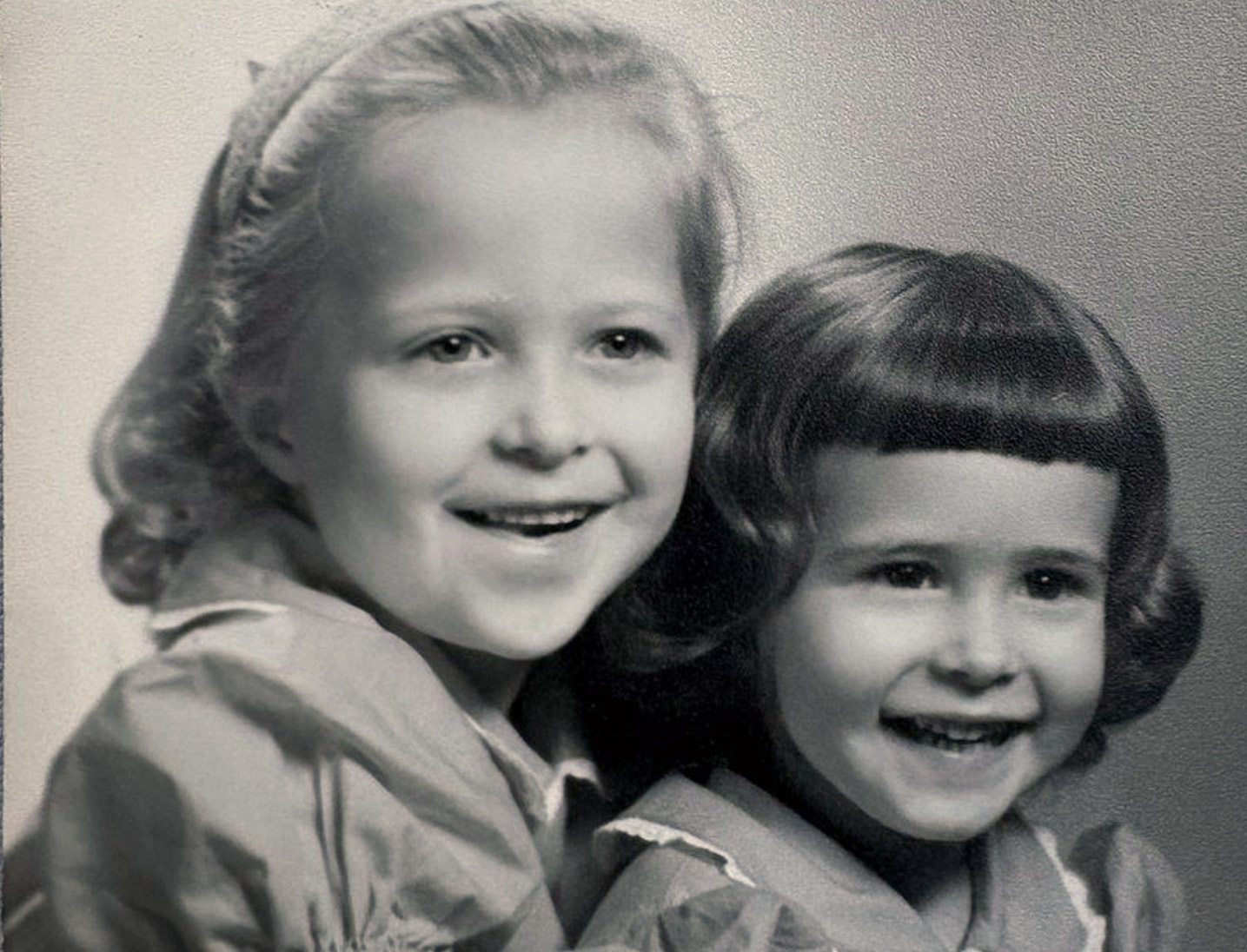
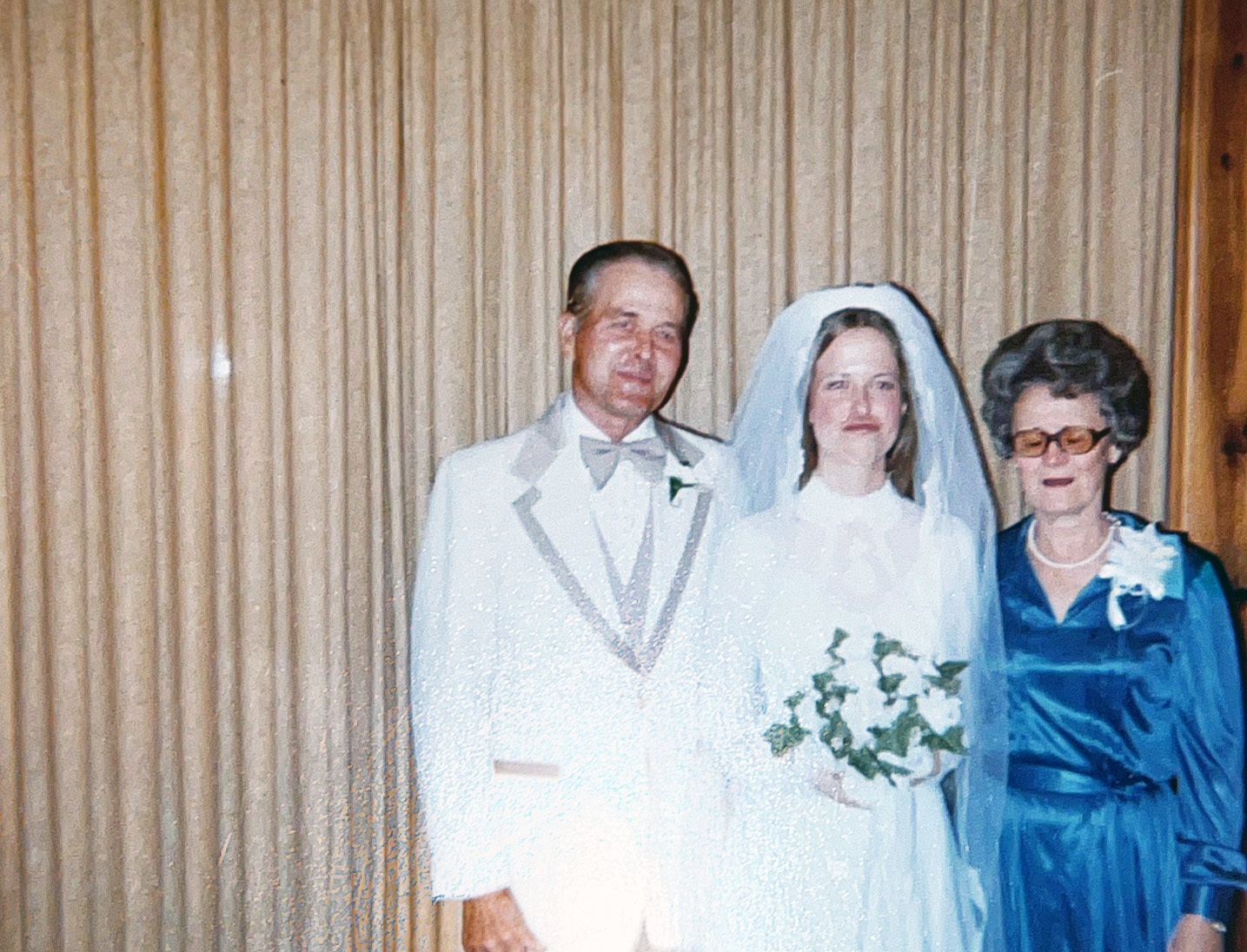
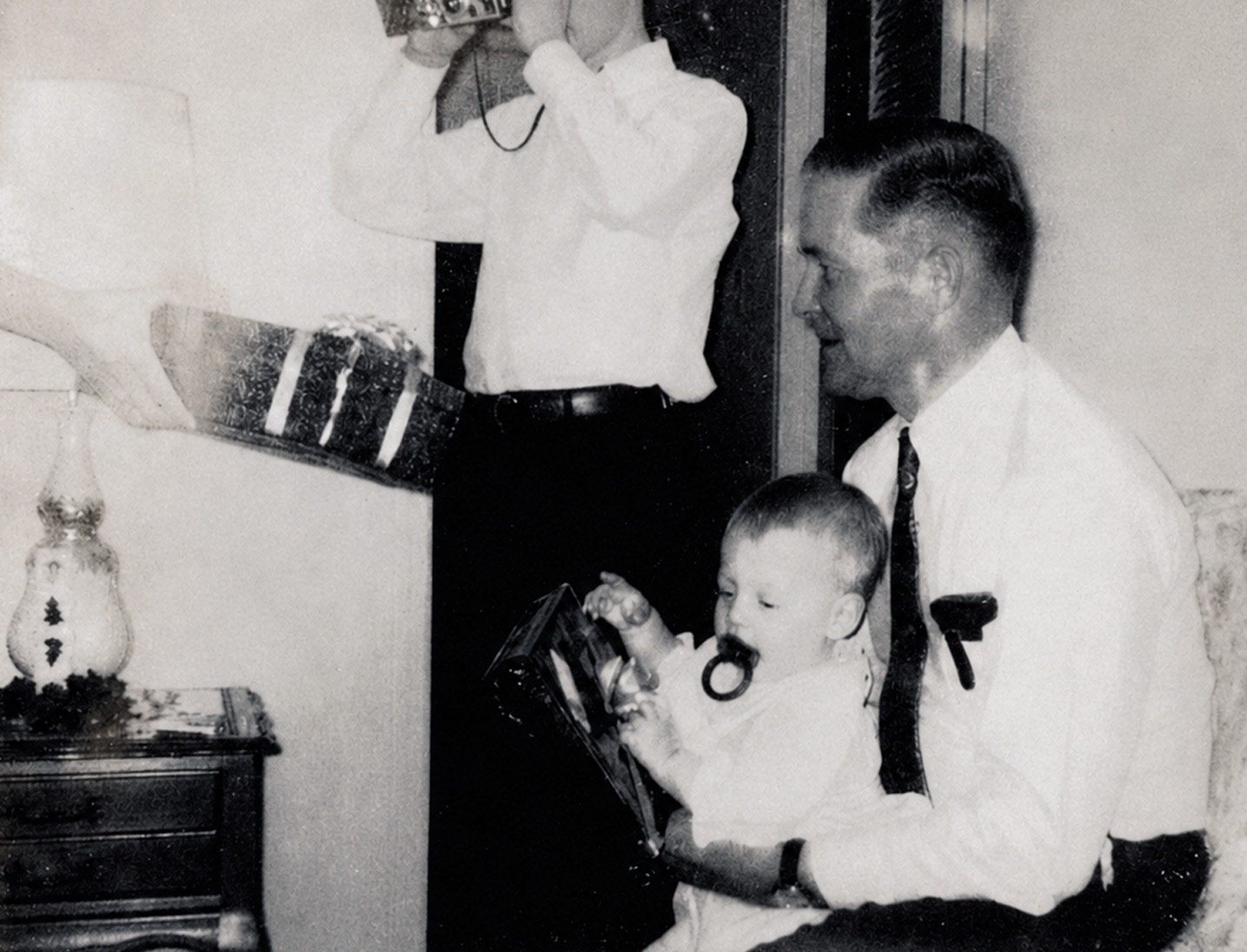
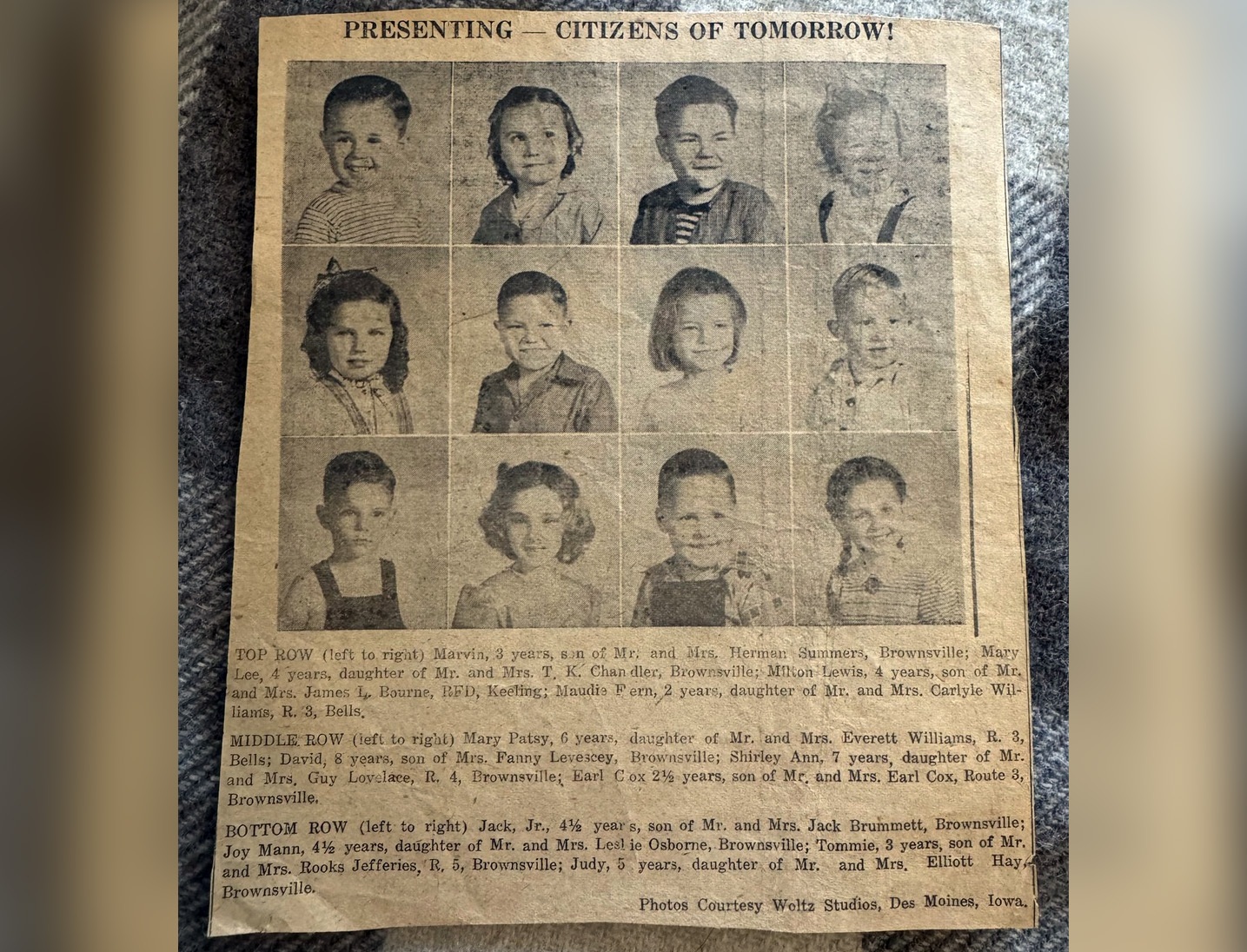
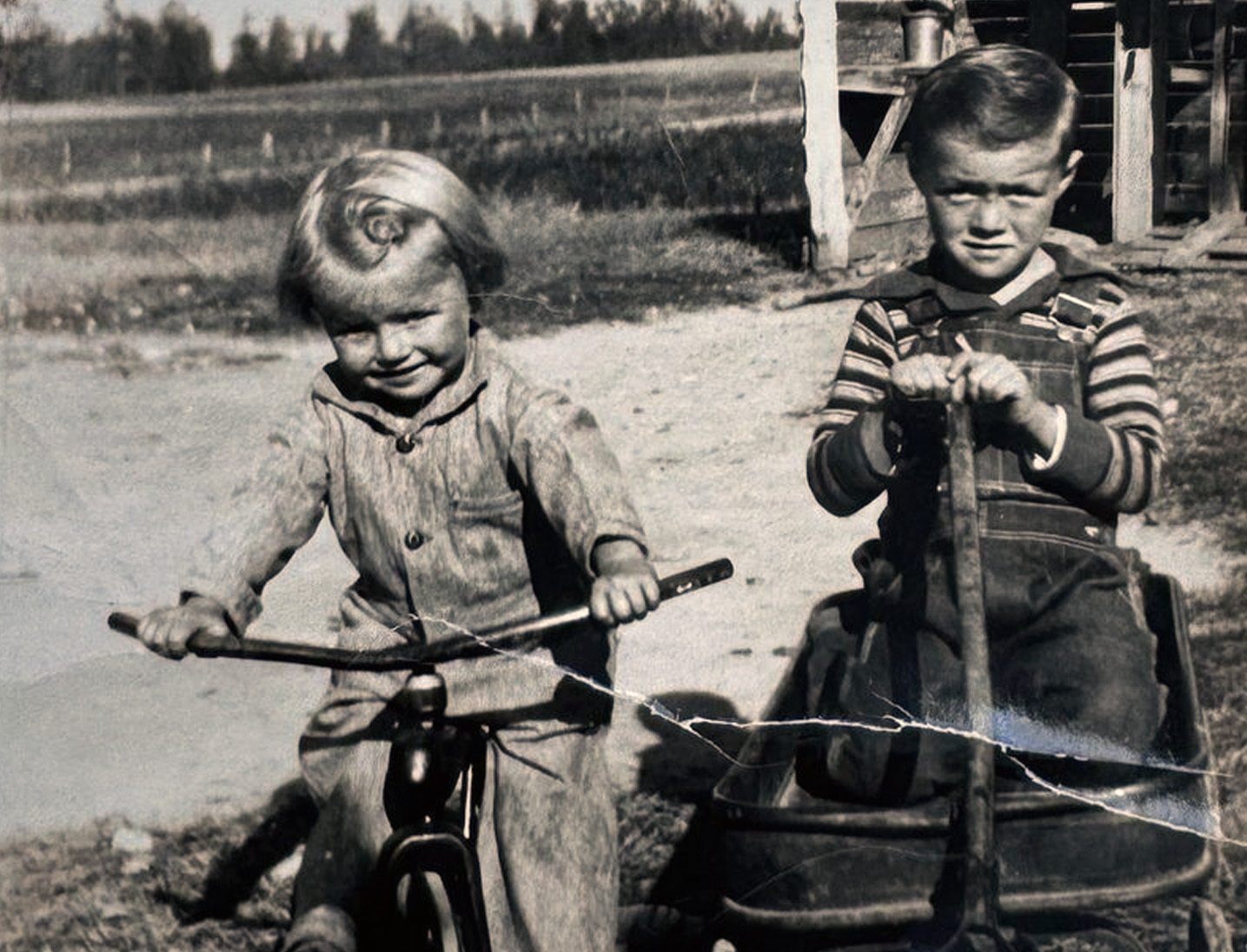
To explore the rest of my family line, visit rscottwilliams.info.